Gilja Vanja, Novaković Katarina, Travas-Sejdic Jadranka, Hrnjak-Murgić Zlata, Roković Marijana Kraljić, Žic Mark
Faculty of Chemical Engineering and Technology, University of Zagreb, Marulićev trg 19, 10000 Zagreb, Croatia.
School of Chemical Sciences, University of Auckland, Polymer Electronics Research Centre, 23 Symonds Street, Auckland 1010, New Zealand.
Nanomaterials (Basel). 2017 Nov 23;7(12):412. doi: 10.3390/nano7120412.
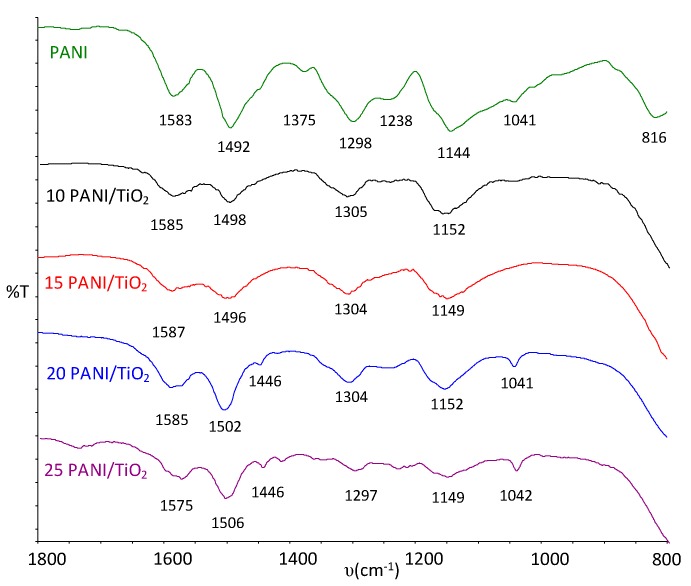
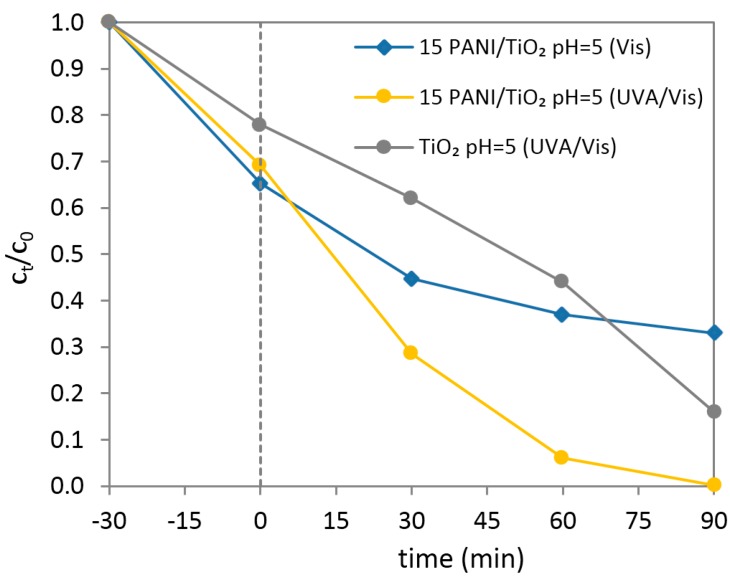
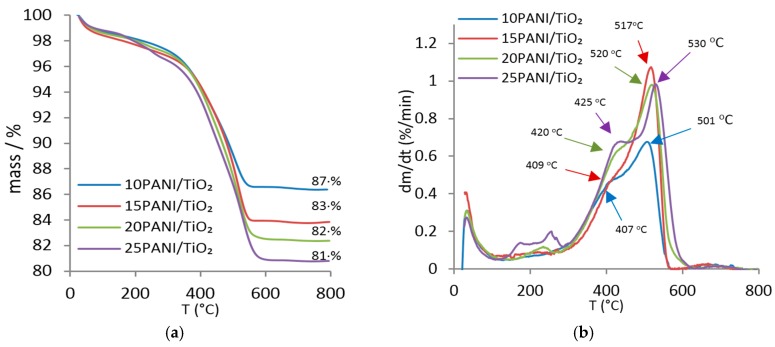
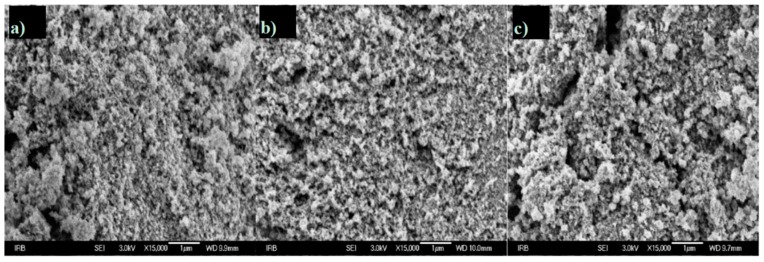
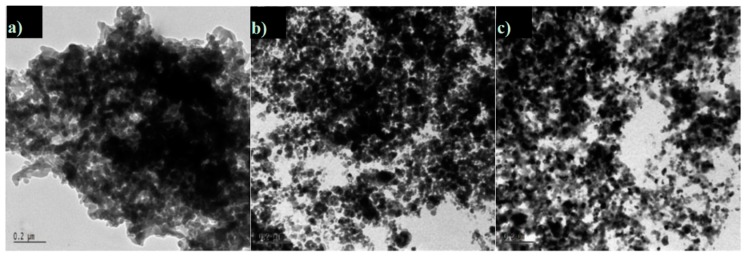
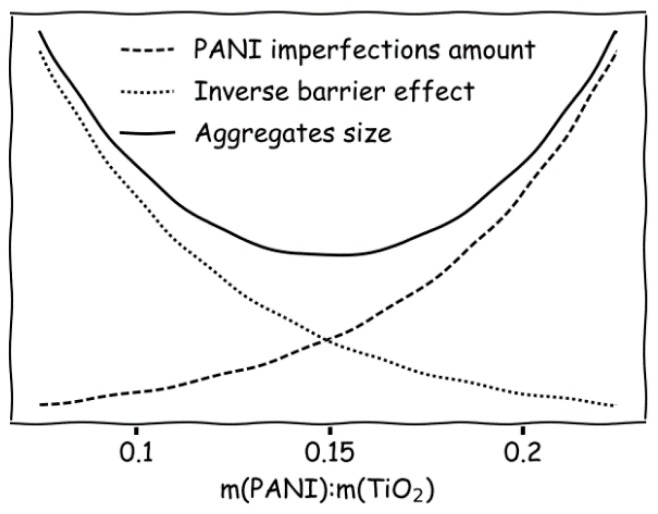
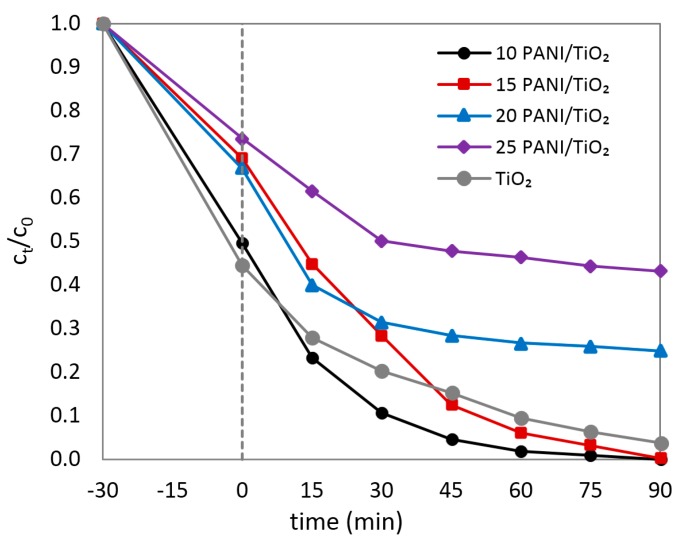
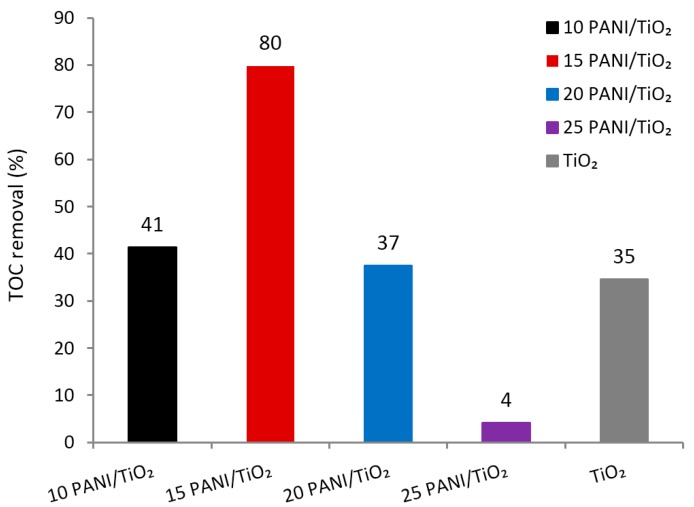
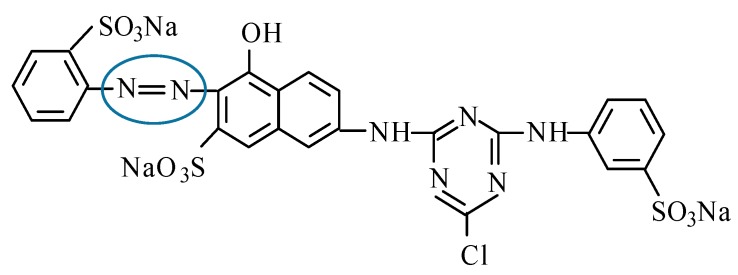
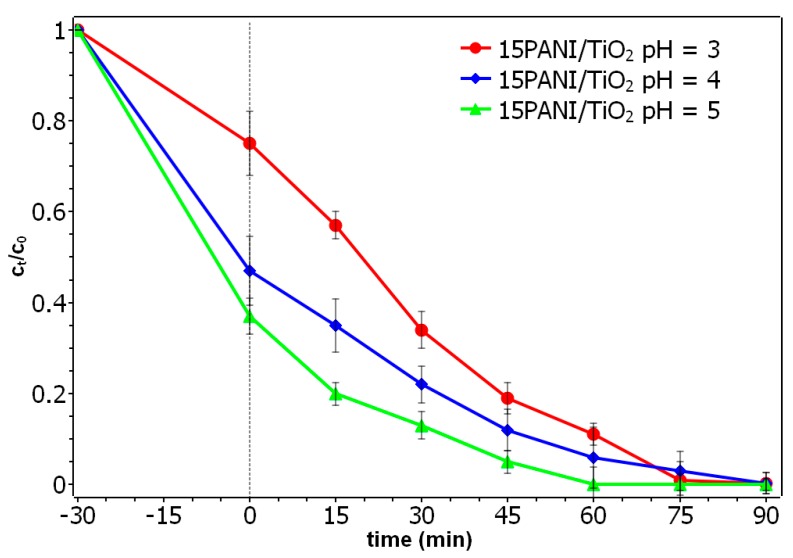
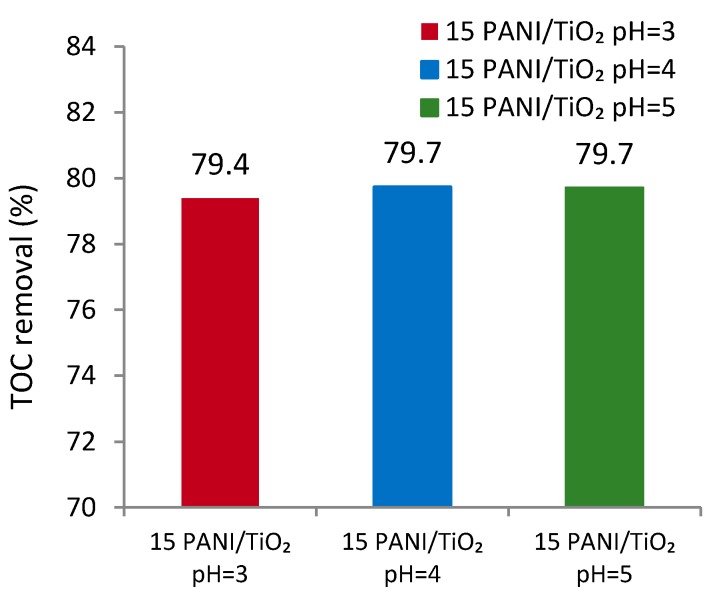
The polyaniline/TiO₂ (PANI/TiO₂) composite photocatalysts were prepared by the in situ chemical oxidation of aniline (An) in the presence of TiO₂ particles. For this purpose, photocatalysts with different amounts of PANI polymer were prepared and analysed. Fourier-transform infrared (FT-IR) spectroscopy and thermogravimetric (TG) analysis indicated successful synthesis of the PANI polymer and its conductivity was also determined. The micrographs of field emission scanning electron microscopy (FE-SEM) and transmission electron microscopy (TEM) were used to explain the impact of the aniline amount on the aggregation process during the synthesis of the composites. The smallest size of aggregates was obtained for the photocatalysts with 15% of PANI (15PANI/TiO₂) due to the formation of homogenous PANI. The photocatalytic activity of studied PANI/TiO₂ photocatalysts was validated by monitoring the discoloration and mineralization of Reactive Red azo dye (RR45) in wastewater. The 15PANI/TiO₂ sample presented the highest photocatalytic efficiency under ultraviolet A (UVA) irradiation, in comparison to pure TiO₂. This was explained by the formation of uniformly dispersed PANI on the TiO₂ particles, which was responsible for the synergistic PANI-TiO₂ effect.
聚苯胺/二氧化钛(PANI/TiO₂)复合光催化剂是通过在TiO₂颗粒存在下对苯胺(An)进行原位化学氧化制备的。为此,制备并分析了具有不同量聚苯胺聚合物的光催化剂。傅里叶变换红外(FT-IR)光谱和热重(TG)分析表明聚苯胺聚合物合成成功,并且还测定了其电导率。用场发射扫描电子显微镜(FE-SEM)和透射电子显微镜(TEM)的显微照片来解释苯胺量对复合材料合成过程中聚集过程的影响。由于形成了均匀的聚苯胺,对于含15%聚苯胺的光催化剂(15PANI/TiO₂),获得了最小尺寸的聚集体。通过监测废水中活性红偶氮染料(RR45)的褪色和矿化来验证所研究的PANI/TiO₂光催化剂的光催化活性。与纯TiO₂相比,15PANI/TiO₂样品在紫外A(UVA)照射下表现出最高的光催化效率。这是由于在TiO₂颗粒上形成了均匀分散的聚苯胺,这导致了聚苯胺-二氧化钛的协同效应。