Department of Microbiology and Immunology, Chicago Medical School, Rosalind Franklin University of Medicine and Science, North Chicago, IL, USA.
Department of Materials Science and Engineering, Northwestern University, Evanston, IL, USA.
Mol Oncol. 2018 Feb;12(2):208-223. doi: 10.1002/1878-0261.12159. Epub 2017 Dec 12.
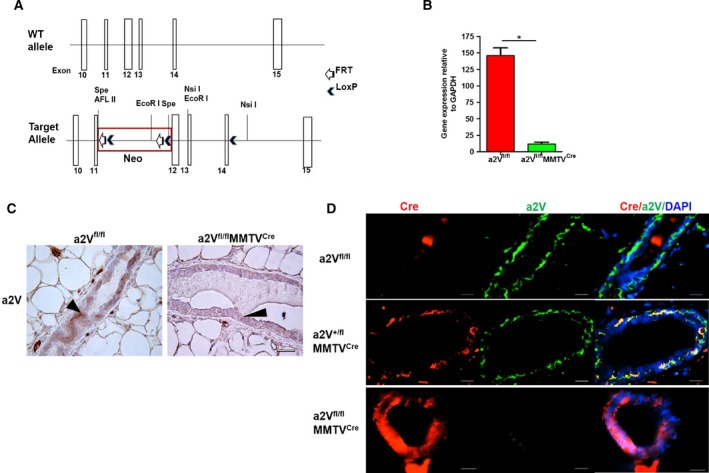
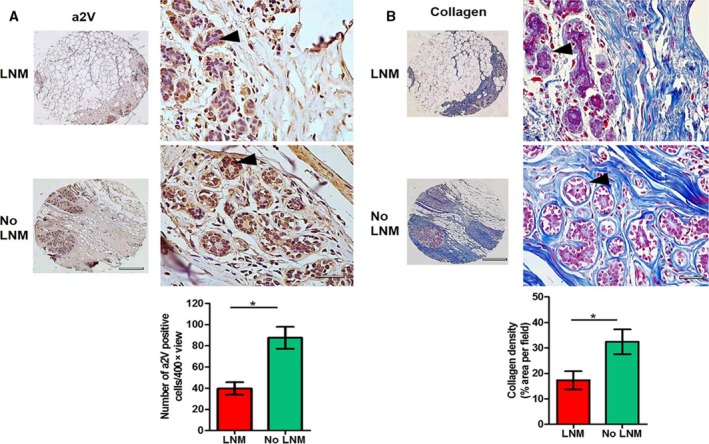
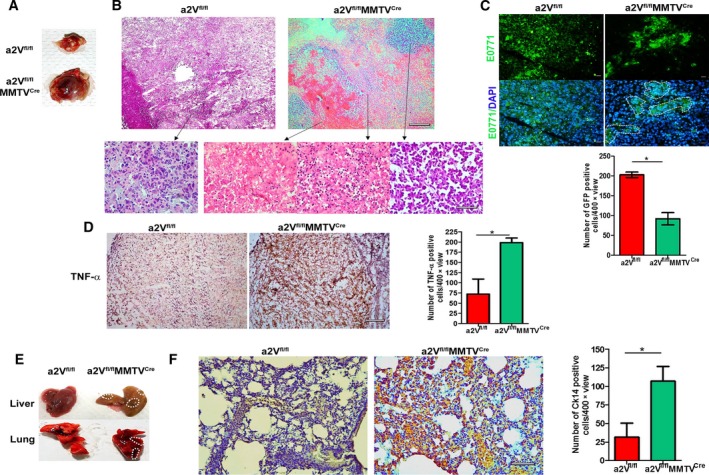
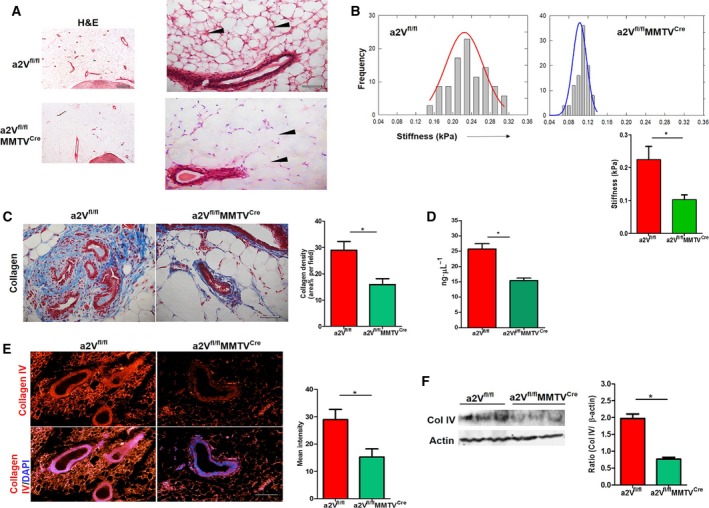
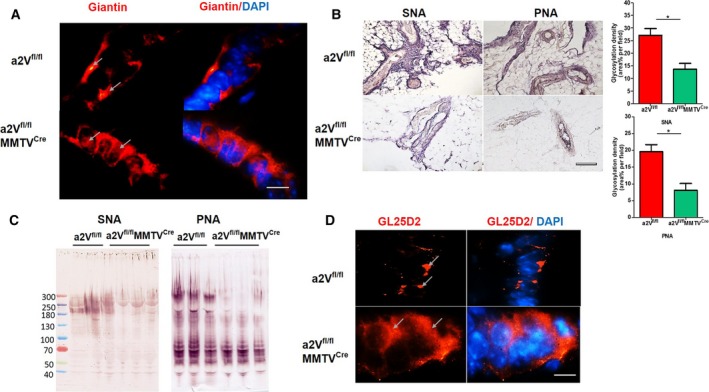
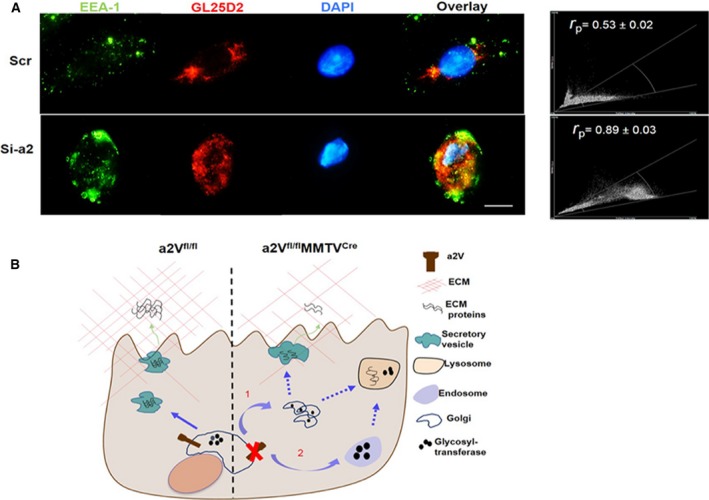
Extracellular matrix (ECM) critically impacts tumor progression and is influenced by both cancer and host tissue cells. While our understanding of cancer cell ECM remodeling is widespread, the importance of host tissue ECM, which provides initial congenial environment for primary tumor formation, is partly understood. Here, we report a novel role of epithelial cell-associated vacuolar ATPase 'a2' isoform (a2V) in regulating breast tissue ECM stiffness to control metastasis. Using a mammary gland-specific a2V-knockout model, we show that in the absence of a2V, breast tumors exhibit atypically soft tumor phenotype, less tumor rigidity, and necrotic tumor microenvironment. These tumors contain a decreased number of cancer cells at primary tumor site, but showed extensive metastases compared to control. Nanomechanical evaluation of normal breast tissues revealed a decrease in stiffness and collagen content in ECM of a2V-deleted breast tissues. Mechanistically, inhibition of a2V expression caused dispersed Golgi morphology with relocation of glycosyltransferase enzymes to early endosomes in mammary epithelial cells. This resulted in defective glycosylation of ECM proteins and production of compromised ECM that further influenced tumor metastasis. Clinically, in patients with cancer, low a2V expression levels in normal breast tissue correlated with lymph node metastasis. Thus, using a new knockout mouse model, we have identified a2V expression in epithelial cells as a key requirement for proper ECM formation in breast tissue and its expression levels can significantly modulate breast tumor dissemination. Evaluation of a2V expression in normal breast tissues can help in identifying patients with high risk of developing metastases.
细胞外基质(ECM)对肿瘤的进展有重要影响,受到癌症和宿主组织细胞的双重影响。虽然我们对癌细胞 ECM 重塑的理解已经很广泛,但对宿主组织 ECM 的重要性的理解还不全面,后者为原发性肿瘤的形成提供了最初的适宜环境。在这里,我们报告了上皮细胞相关液泡型 ATP 酶 'a2' 同工型(a2V)在调节乳腺组织 ECM 硬度以控制转移中的新作用。使用乳腺特异性 a2V 敲除模型,我们表明在缺乏 a2V 的情况下,乳腺肿瘤表现出异常柔软的肿瘤表型、较低的肿瘤刚性和坏死的肿瘤微环境。这些肿瘤在原发性肿瘤部位的癌细胞数量减少,但与对照组相比,转移广泛。正常乳腺组织的纳米力学评估显示,a2V 缺失的乳腺组织中 ECM 的硬度和胶原含量降低。从机制上讲,a2V 表达的抑制导致高尔基形态分散,并使糖基转移酶酶转移到乳腺上皮细胞的早期内体中。这导致 ECM 蛋白的糖基化缺陷和产生有缺陷的 ECM,进一步影响肿瘤转移。临床上,在癌症患者中,正常乳腺组织中低水平的 a2V 表达与淋巴结转移相关。因此,我们使用一种新的敲除小鼠模型,确定了上皮细胞中 a2V 的表达是乳腺组织中 ECM 正常形成的关键要求,其表达水平可显著调节乳腺肿瘤的扩散。评估正常乳腺组织中 a2V 的表达有助于确定具有发生转移高风险的患者。