Blunt Wendy, Gill Dawn P, Sibbald Shannon L, Riggin Brendan, Pulford Roseanne W, Scott Ryan, Danylchuk Karen, Gray Cindy M, Wyke Sally, Bunn Christopher, Petrella Robert J
Department of Family Medicine, Centre for Studies in Family Medicine, Schulich School of Medicine and Dentistry, Western University, London, Ontario, Canada.
Lawson Health Research Institute, London, Ontario, Canada.
BMC Public Health. 2017 Nov 28;17(1):916. doi: 10.1186/s12889-017-4926-z.
The health outcomes of men continue to be poorer than women globally. Challenges in addressing this problem include difficulties engaging men in weight loss programs as they tend to view these programs as contrary to the masculine narrative of independence and self-reliance. Researchers have been turning towards sports fans to engage men in health promotion programs as sports fans are typically male, and tend to have poor health habits.
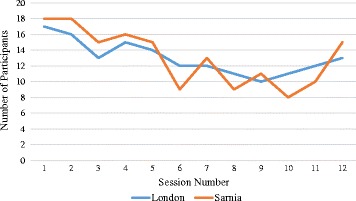
Developed from the highly successful gender-sensitized Football Fans in Training program, Hockey Fans in Training (Hockey FIT) recruited 80 male hockey fans of the London Knights and Sarnia Sting who were overweight or obese into a weekly, 90-minute classroom education and group exercise program held over 12 weeks; a 40-week minimally-supported phase followed. A process evaluation of the Hockey FIT program was completed alongside a pragmatic randomized controlled trial and outcome evaluation in order to fully explore the acceptability of the Hockey FIT program from the perspectives of coaches delivering and participants engaged in the program. Data sources included attendance records, participant focus groups, coach interviews, assessment of fidelity (program observations and post-session coach reflections), and 12-month participant interviews.
Coaches enjoyed delivering the program and found it simple to deliver. Men valued being among others of similar body shape and similar weight loss goals, and found the knowledge they gained through the program helped them to make and maintain health behaviour changes. Suggested improvements include having more hockey-related information and activities, greater flexibility with timing of program delivery, and greater promotion of technology support tools.
We confirmed Hockey FIT was an acceptable "gender-sensitized" health promotion program for male hockey fans who were overweight or obese. Minor changes were required for optimization, which will be evaluated in a future definitive trial.
NCT02396524 (Clinicaltrials.gov). Date of registration: Feb 26, 2015.
在全球范围内,男性的健康状况持续比女性差。解决这一问题面临的挑战包括让男性参与减肥项目存在困难,因为他们往往认为这些项目与男性独立和自力更生的观念相悖。研究人员一直将目光投向体育迷,试图让他们参与健康促进项目,因为体育迷通常为男性,且往往有不良健康习惯。
“冰球迷训练计划”(Hockey FIT)是在非常成功的性别敏感型“球迷训练计划”基础上发展而来的。该计划招募了80名伦敦骑士队和萨尼亚刺客队的超重或肥胖男性冰球迷,参加为期12周的每周一次、每次90分钟的课堂教育和团体锻炼项目;随后是为期40周的最低限度支持阶段。在进行一项实用随机对照试验和结果评估的同时,完成了对“冰球迷训练计划”的过程评估,以便从项目实施教练和参与项目的参与者的角度全面探讨该计划的可接受性。数据来源包括出勤记录、参与者焦点小组、教练访谈、保真度评估(项目观察和课后教练反思)以及12个月后的参与者访谈。
教练们乐于实施该计划,并发现实施起来很简单。男性重视与体型和减肥目标相似的人在一起,并且发现他们通过该计划获得的知识有助于他们做出并保持健康行为改变。建议的改进包括增加更多与冰球相关的信息和活动、在项目实施时间上有更大的灵活性,以及更多地推广技术支持工具。
我们证实,“冰球迷训练计划”对于超重或肥胖的男性冰球迷来说是一个可接受的“性别敏感型”健康促进项目。需要进行一些小的改变以进行优化,这将在未来的确定性试验中进行评估。
NCT02396524(Clinicaltrials.gov)。注册日期:2015年2月26日。