Department of Medicine, University of Massachusetts Medical School, Worcester, Massachusetts, USA
Department of Medicine, University of Massachusetts Medical School, Worcester, Massachusetts, USA.
mBio. 2017 Nov 28;8(6):e01872-17. doi: 10.1128/mBio.01872-17.
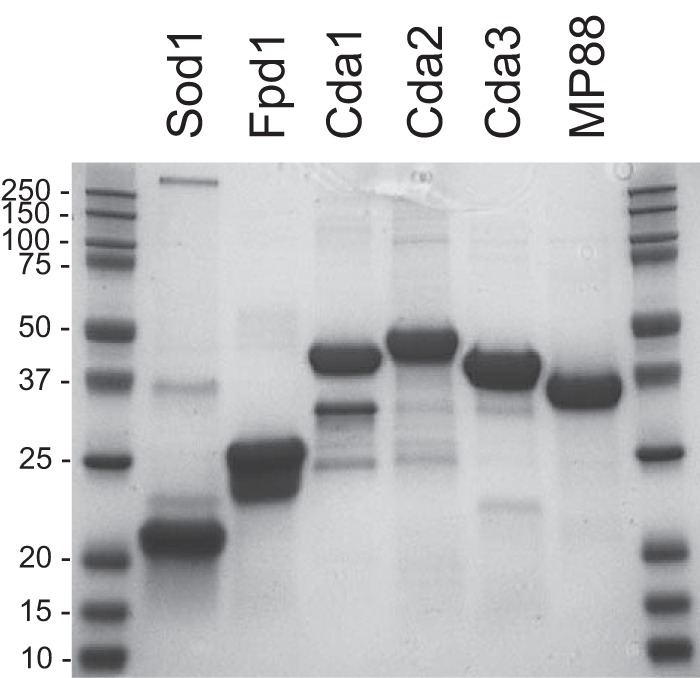
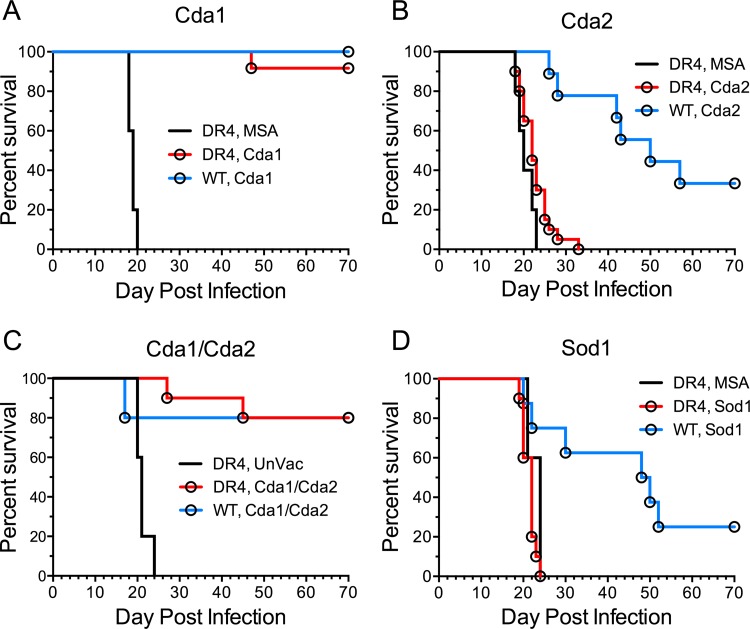
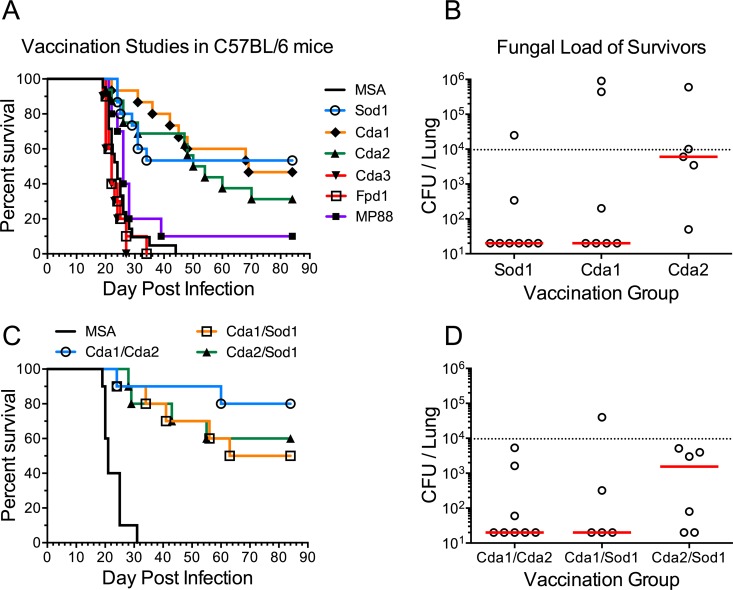
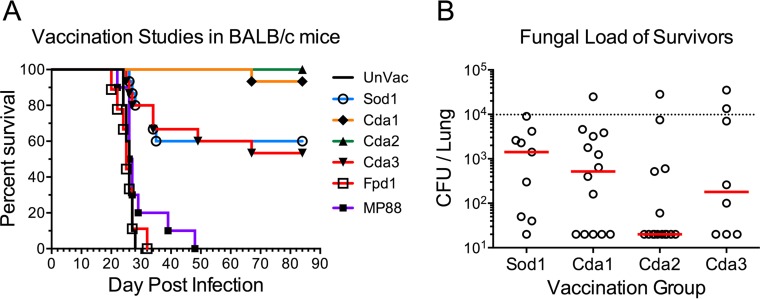
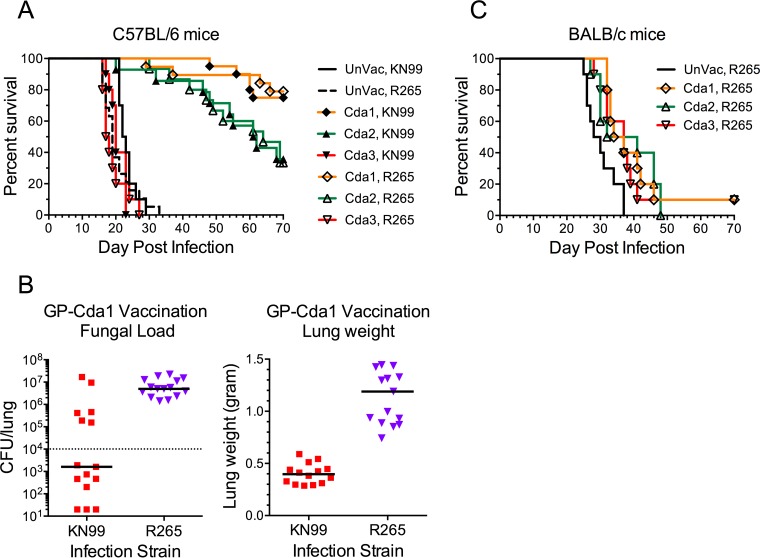
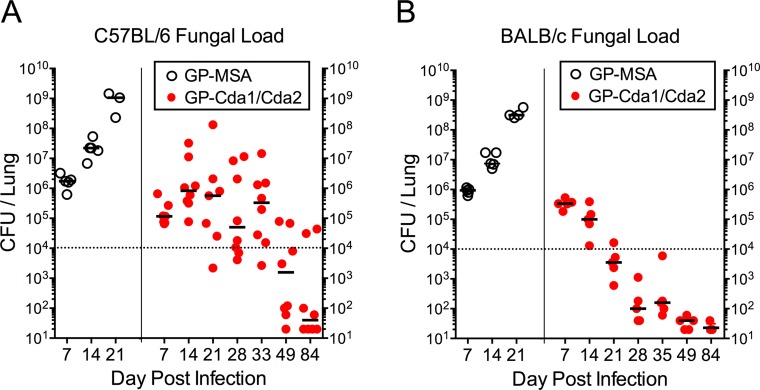
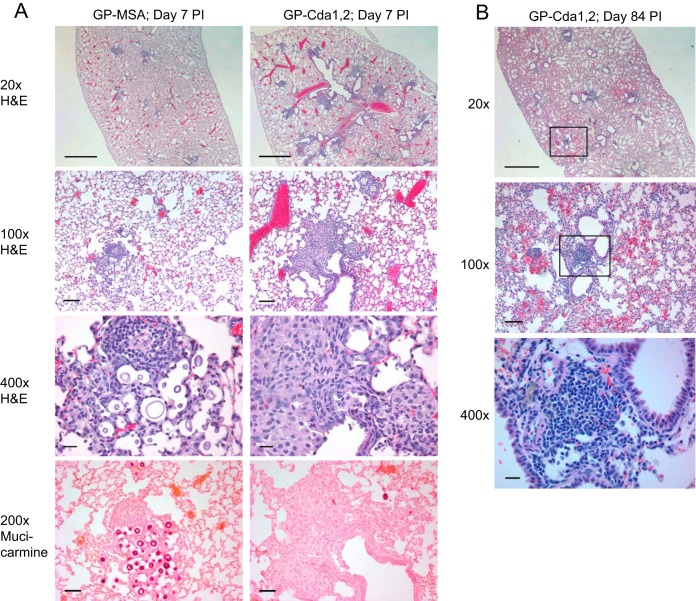
Development of a vaccine to protect against cryptococcosis is a priority given the enormous global burden of disease in at-risk individuals. Using glucan particles (GPs) as a delivery system, we previously demonstrated that mice vaccinated with crude -derived alkaline extracts were protected against lethal challenge with and The goal of the present study was to identify protective protein antigens that could be used in a subunit vaccine. Using biased and unbiased approaches, six candidate antigens (Cda1, Cda2, Cda3, Fpd1, MP88, and Sod1) were selected, recombinantly expressed in , purified, and loaded into GPs. Three mouse strains (C57BL/6, BALB/c, and DR4) were then vaccinated with the antigen-laden GPs, following which they received a pulmonary challenge with virulent and strains. Four candidate vaccines (GP-Cda1, GP-Cda2, GP-Cda3, and GP-Sod1) afforded a significant survival advantage in at least one mouse model; some vaccine combinations provided added protection over that seen with either antigen alone. Vaccine-mediated protection against did not necessarily predict protection against Vaccinated mice developed pulmonary inflammatory responses that effectively contained the infection; many surviving mice developed sterilizing immunity. Predicted T helper cell epitopes differed between mouse strains and in the degree to which they matched epitopes predicted in humans. Thus, we have discovered cryptococcal proteins that make promising candidate vaccine antigens. Protection varied depending on the mouse strain and cryptococcal species, suggesting that a successful human subunit vaccine will need to contain multiple antigens, including ones that are species specific. The encapsulated fungi and are responsible for nearly 200,000 deaths annually, mostly in immunocompromised individuals. An effective vaccine could substantially reduce the burden of cryptococcosis. However, a major gap in cryptococcal vaccine development has been the discovery of protective antigens to use in vaccines. Here, six cryptococcal proteins with potential as vaccine antigens were expressed recombinantly and purified. Mice were then vaccinated with glucan particle preparations containing each antigen. Of the six candidate vaccines, four protected mice from a lethal cryptococcal challenge. However, the degree of protection varied as a function of mouse strain and cryptococcal species. These preclinical studies identify cryptococcal proteins that could serve as candidate vaccine antigens and provide a proof of principle regarding the feasibility of protein antigen-based vaccines to protect against cryptococcosis.
开发一种针对隐球菌病的疫苗是当务之急,因为这种疾病在高危人群中的全球负担巨大。我们之前使用葡聚糖颗粒(GP)作为递送系统,证明了用粗制碱性提取物免疫的小鼠能够抵抗致死性挑战。本研究的目的是鉴定可用于亚单位疫苗的保护性蛋白抗原。使用有偏和无偏方法,选择了六个候选抗原(Cda1、Cda2、Cda3、Fpd1、MP88 和 Sod1),在 中重组表达、纯化并加载到 GP 中。然后,用抗原负载的 GP 对三种小鼠品系(C57BL/6、BALB/c 和 DR4)进行疫苗接种,随后用毒力强的 和 株对它们进行肺部攻击。四种候选疫苗(GP-Cda1、GP-Cda2、GP-Cda3 和 GP-Sod1)在至少一种小鼠模型中提供了显著的生存优势;一些疫苗组合提供了比单独使用任何一种抗原更高的保护作用。疫苗介导的对 的保护并不一定预示着对 的保护。接种疫苗的小鼠产生了有效的肺部炎症反应,有效地控制了感染;许多幸存的小鼠产生了绝育性免疫。预测的辅助性 T 细胞表位在不同的小鼠品系之间存在差异,在与预测的人类表位的匹配程度上也存在差异。因此,我们发现了一些有希望成为候选疫苗抗原的隐球菌蛋白。保护作用因小鼠品系和隐球菌种类而异,这表明成功的人类亚单位疫苗将需要包含多种抗原,包括特定于物种的抗原。囊泡真菌 和 是每年导致近 20 万人死亡的主要原因,主要发生在免疫功能低下的个体中。一种有效的疫苗可以大大减轻隐球菌病的负担。然而,隐球菌疫苗开发的一个主要差距是发现可用作疫苗的保护性抗原。在这里,六个具有疫苗潜力的隐球菌蛋白被重组表达和纯化。然后,用含有每种抗原的葡聚糖颗粒制剂对小鼠进行疫苗接种。在六种候选疫苗中,有四种疫苗能保护小鼠免受致命的隐球菌挑战。然而,保护程度因小鼠品系和隐球菌种类而异。这些临床前研究确定了一些隐球菌蛋白,它们可以作为候选疫苗抗原,并为基于蛋白质抗原的疫苗提供了保护隐球菌病的可行性的原理证明。