Li Yan, Wang Xiaomin, O'Mara Edward, Dimopoulos Meletios A, Sonneveld Pieter, Weisel Katja C, Matous Jeffrey, Siegel David S, Shah Jatin J, Kueenburg Elisabeth, Sternas Lars, Cavanaugh Chloe, Zaki Mohamed, Palmisano Maria, Zhou Simon
Translational Development and Clinical Pharmacology, Celgene Corporation, Summit, NJ, USA.
Non-Clinical Development and Drug Metabolism and Pharmacokinetics, Celgene Corporation, Summit, NJ, USA.
Clin Pharmacol. 2017 Nov 8;9:133-145. doi: 10.2147/CPAA.S144606. eCollection 2017.
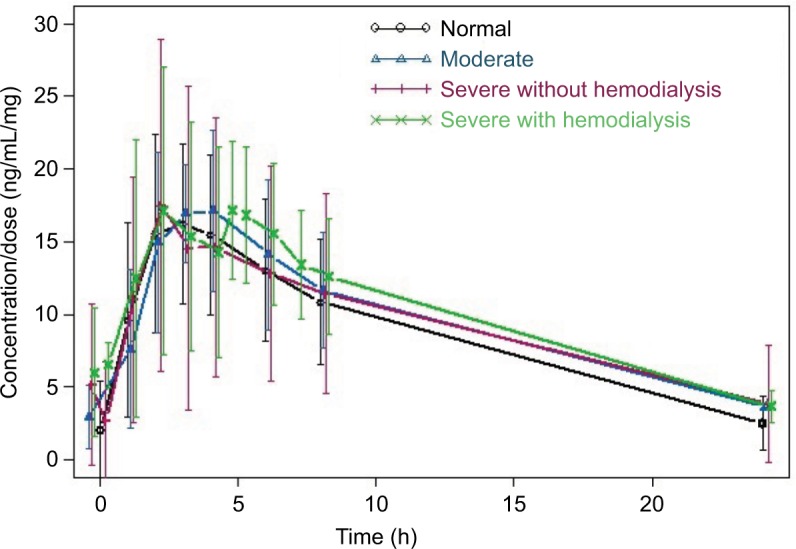
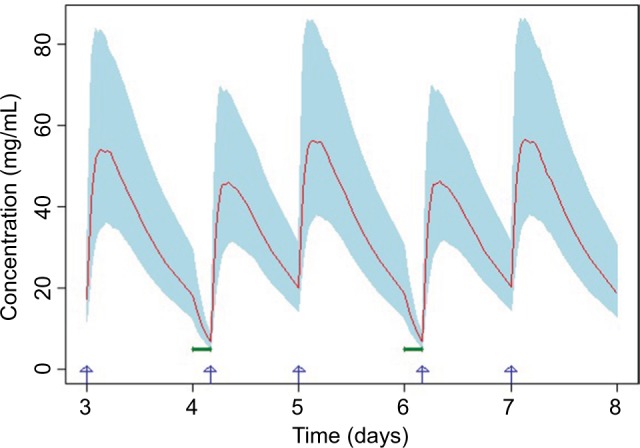
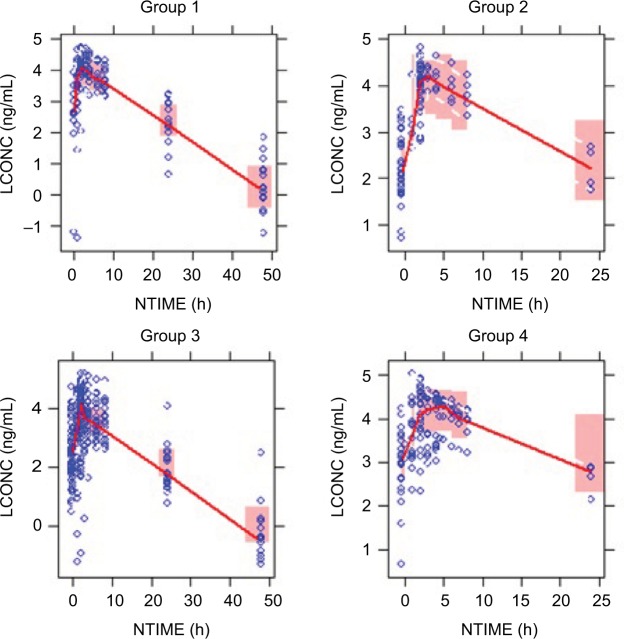
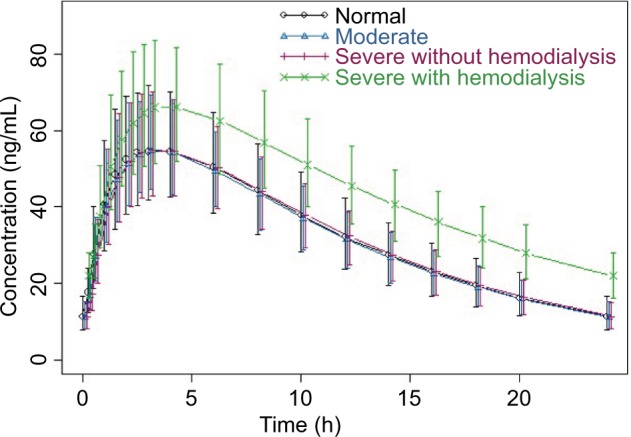
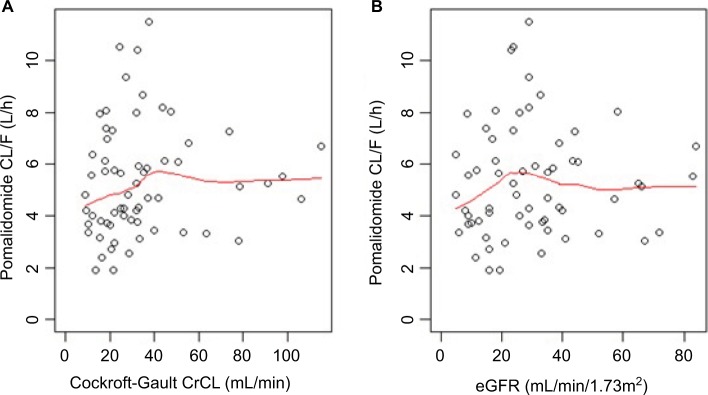
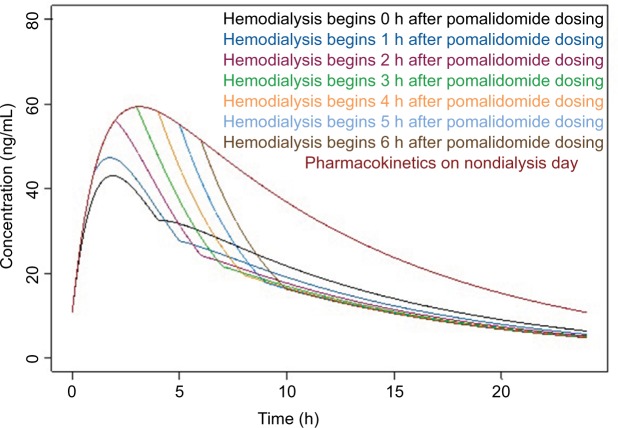
Pomalidomide is an immunomodulatory drug for treatment of relapsed or refractory multiple myeloma (rrMM) in patients who often have comorbid renal conditions. To assess the impact of renal impairment on pomalidomide exposure, a population pharmacokinetics (PPK) model of pomalidomide in rrMM patients with various degrees of impaired renal function was developed. Intensive and sparse pomalidomide concentration data collected from two clinical studies in rrMM patients with normal renal function, moderately impaired renal function, severely impaired renal function not requiring dialysis, and with severely impaired renal function requiring dialysis were pooled over the dose range of 2 to 4 mg, to assess specifically the influence of the impaired renal function as a categorical variable and a continuous variable on pomalidomide clearance and plasma exposure. In addition, pomalidomide concentration data collected on dialysis days from both the withdrawal (arterial) side and from the returning (venous) side of the dialyzer, from rrMM patients with severely impaired renal function requiring dialysis, were used to assess the extent to which dialysis contributes to the removal of pomalidomide from blood circulation. PPK analyses demonstrated that moderate to severe renal impairment not requiring dialysis has no influence on pomalidomide clearance or plasma exposure, as compared to those patients with normal renal function, while pomalidomide exposure increased approximately 35% in patients with severe renal impairment requiring dialysis on nondialysis days. In addition, dialysis increased total body pomalidomide clearance from 5 L/h to 12 L/h, indicating that dialysis will significantly remove pomalidomide from the blood circulation. Thus, pomalidomide should be administered post-dialysis on the days of dialysis.
泊马度胺是一种免疫调节药物,用于治疗复发或难治性多发性骨髓瘤(rrMM)患者,这些患者常伴有肾脏合并症。为评估肾功能损害对泊马度胺暴露的影响,建立了一个针对不同程度肾功能损害的rrMM患者的泊马度胺群体药代动力学(PPK)模型。从两项针对肾功能正常、中度受损、重度受损但无需透析以及重度受损且需要透析的rrMM患者的临床研究中收集的密集和稀疏的泊马度胺浓度数据,在2至4毫克的剂量范围内进行汇总,以具体评估作为分类变量和连续变量的肾功能损害对泊马度胺清除率和血浆暴露的影响。此外,从重度肾功能受损且需要透析的rrMM患者透析器的撤出(动脉)侧和返回(静脉)侧收集的透析日泊马度胺浓度数据,用于评估透析对从血液循环中清除泊马度胺的贡献程度。PPK分析表明,与肾功能正常的患者相比,中度至重度肾功能损害但无需透析对泊马度胺清除率或血浆暴露没有影响,但在非透析日,重度肾功能受损且需要透析的患者中,泊马度胺暴露增加了约35%。此外,透析使全身泊马度胺清除率从5升/小时增加到12升/小时,表明透析将显著从血液循环中清除泊马度胺。因此,泊马度胺应在透析日透析后给药。