Chiang Ming-Hsien, Liang Chan-Jung, Liu Chen-Wei, Pan Bo-Jhih, Chen Wen-Ping, Yang Yi-Fan, Lee I-Ta, Tsai Jaw-Shiun, Lee Chiang-Wen, Chen Yuh-Lien
Department of Anatomy and Cell Biology, College of Medicine, National Taiwan University, Taipei, Taiwan.
Lipid Science and Aging Research Center, Kaohsiung Medical University, Kaohsiung, Taiwan.
Front Pharmacol. 2017 Nov 14;8:819. doi: 10.3389/fphar.2017.00819. eCollection 2017.
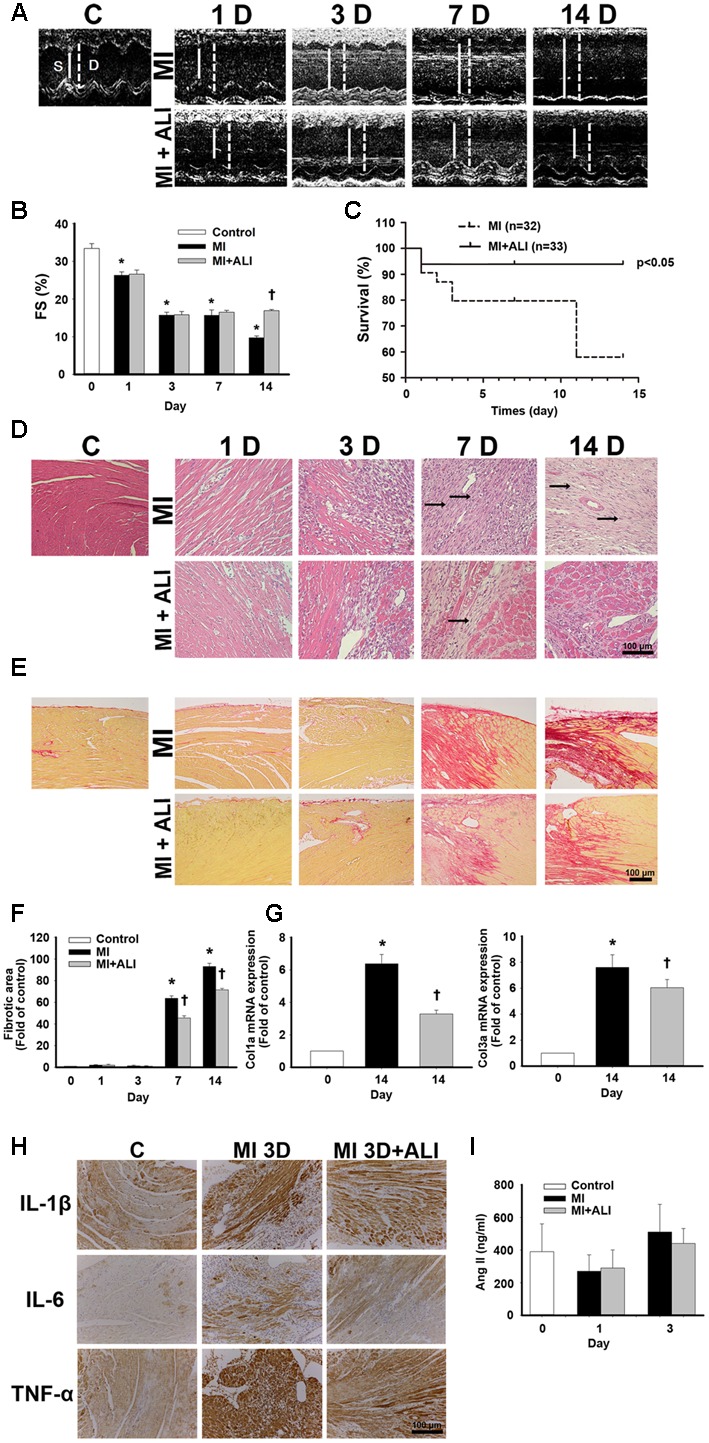
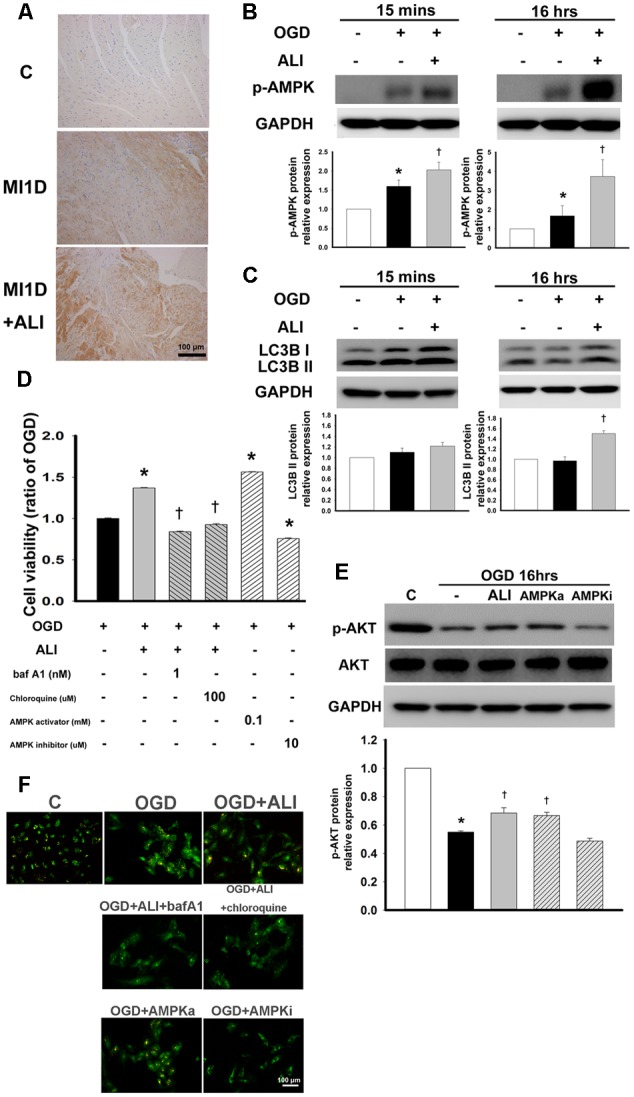
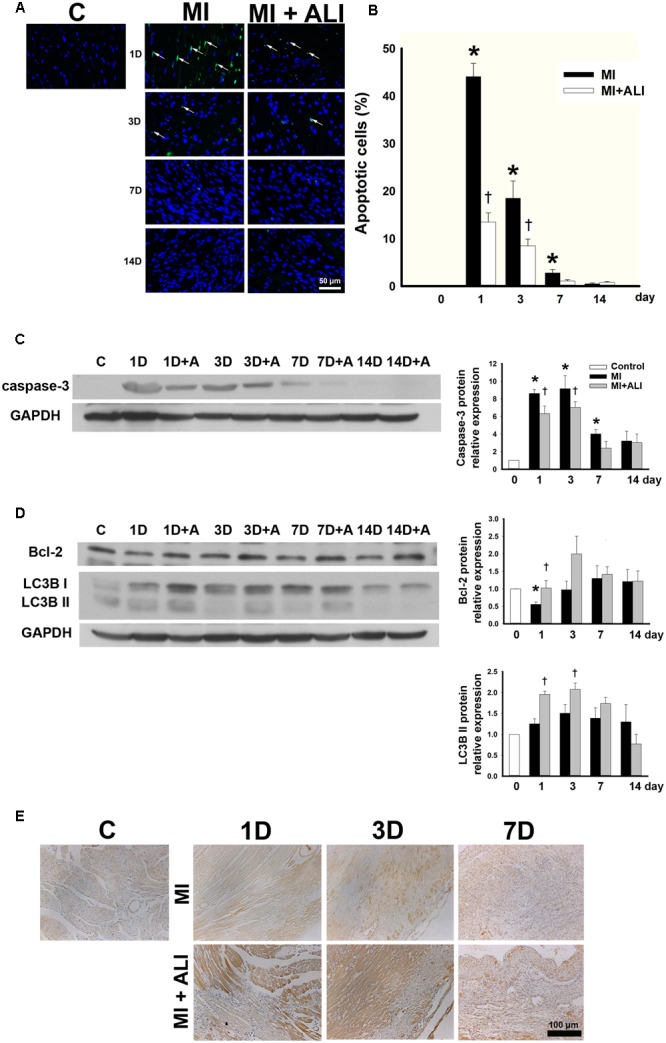
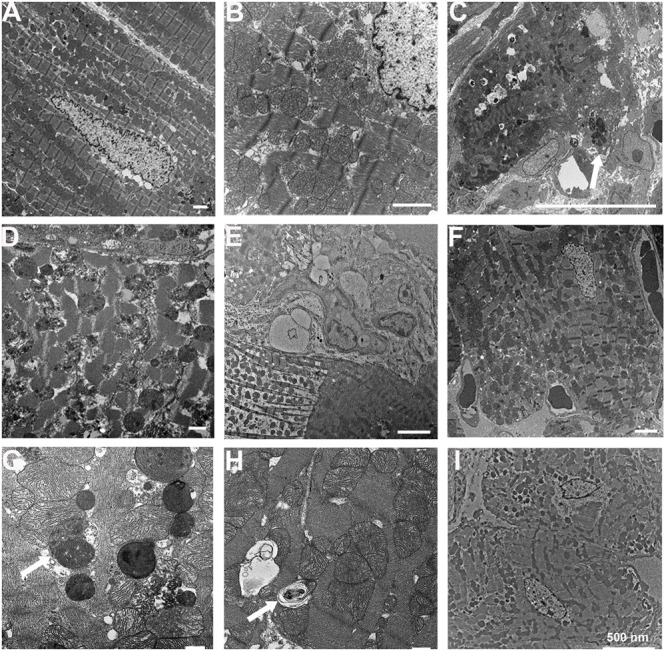
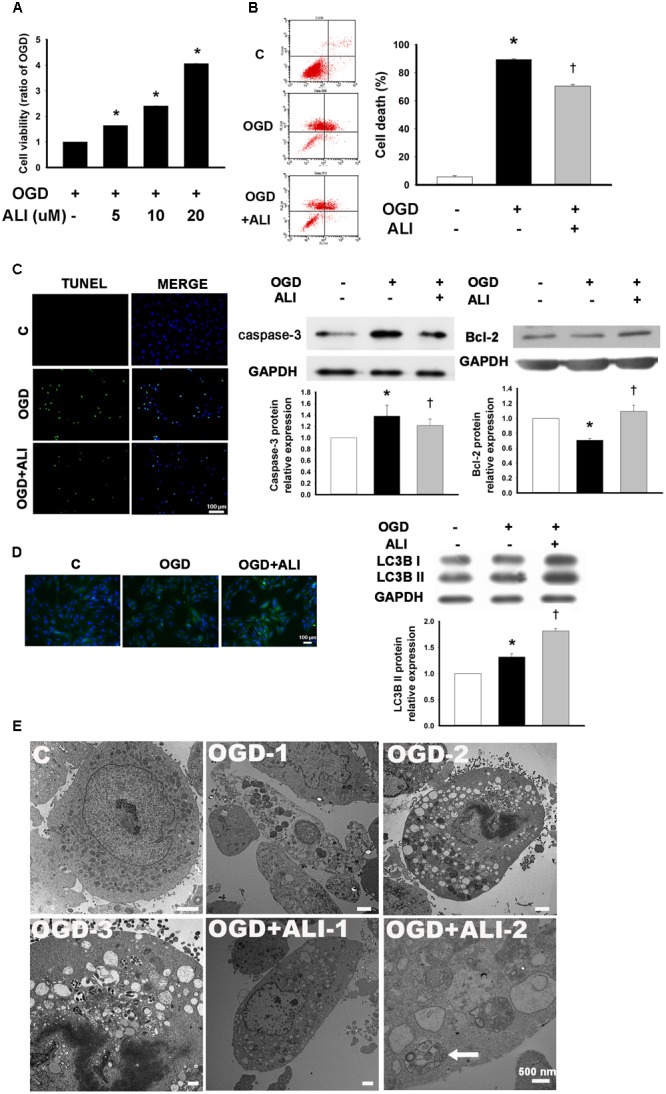
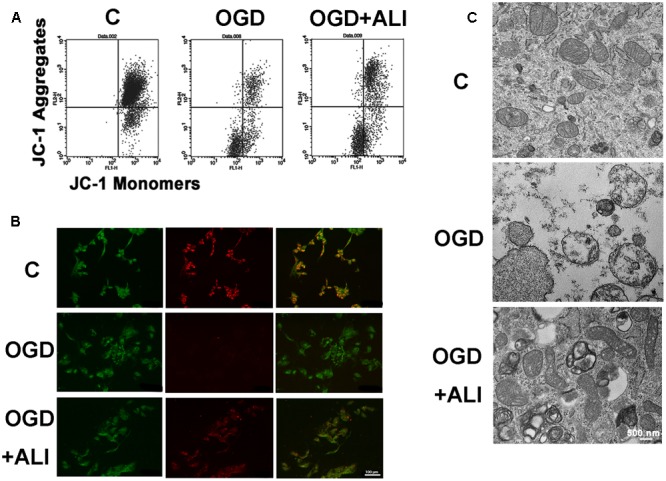
Aliskiren is a direct renin inhibitor that has been effective in anti-hypertension. We investigated whether aliskiren could improve the ischemia-induced cardiac injury and whether the autophagy was involved in this effect. A myocardial infarction (MI) model was created by the ligation of the left anterior coronary artery in C57J/BL6 mice. They were treated for 1, 3, 7, and 14 days with vehicle or aliskiren (25 mg/kg/day via subcutaneous injection). , the MI mice exhibited worse cardiac function by echocardiographic assessment and showed larger myocardial scarring by light microscopy, whereas aliskiren treatment reversed these effects, which were also associated with the changes in caspase-3 and Bcl-2 expression as well as in the number of apoptotic cells. Aliskiren increased autophagy, as demonstrated by LC3B-II expression and transmission electron microscopy. Furthermore, H9c2 cardiomyocytes were employed as an model to examine the effects of aliskiren on apoptosis and autophagy under oxygen glucose deprivation (OGD)-induced injury. Aliskiren significantly increased cell viability in a dose-dependent manner. The beneficial effects of aliskiren were associated with decreased apoptosis and mitochondrial membrane potential as well as increased autophagy via increased autophagosome formation. We also found that aliskiren-induced cardiomyocyte survival occurred via AMP-activated protein kinase (AMPK)-dependent autophagy. Taken together, these results indicated that aliskiren increased cardiomyocyte survival through increased autophagosomal formation and decreased apoptosis and necrosis via modulating AMPK expression. AMPK-dependent autophagy may represent a novel mechanism for aliskiren in ischemic cardiac disease therapy.
阿利吉仑是一种直接肾素抑制剂,已被证明在抗高血压方面有效。我们研究了阿利吉仑是否能改善缺血诱导的心脏损伤以及自噬是否参与了这一作用。通过结扎C57J/BL6小鼠的左冠状动脉创建心肌梗死(MI)模型。它们用载体或阿利吉仑(通过皮下注射,25mg/kg/天)治疗1、3、7和14天。通过超声心动图评估,MI小鼠表现出更差的心脏功能,并且通过光学显微镜显示出更大的心肌瘢痕形成,而阿利吉仑治疗逆转了这些作用,这也与半胱天冬酶-3和Bcl-2表达以及凋亡细胞数量的变化有关。阿利吉仑增加了自噬,这通过LC3B-II表达和透射电子显微镜得以证明。此外,采用H9c2心肌细胞作为模型来研究阿利吉仑在氧葡萄糖剥夺(OGD)诱导的损伤下对凋亡和自噬的影响。阿利吉仑以剂量依赖性方式显著增加细胞活力。阿利吉仑的有益作用与凋亡减少、线粒体膜电位降低以及通过增加自噬体形成而增加的自噬有关。我们还发现阿利吉仑诱导的心肌细胞存活是通过AMP激活的蛋白激酶(AMPK)依赖性自噬发生的。综上所述,这些结果表明阿利吉仑通过增加自噬体形成和通过调节AMPK表达减少凋亡和坏死来增加心肌细胞存活。AMPK依赖性自噬可能代表阿利吉仑在缺血性心脏病治疗中的一种新机制。