Mabbott Neil A
The Roslin Institute & Royal (Dick) School of Veterinary Sciences, University of Edinburgh, Easter Bush, Midlothian EH25 9RG, UK
Pathogens. 2017 Nov 24;6(4):60. doi: 10.3390/pathogens6040060.
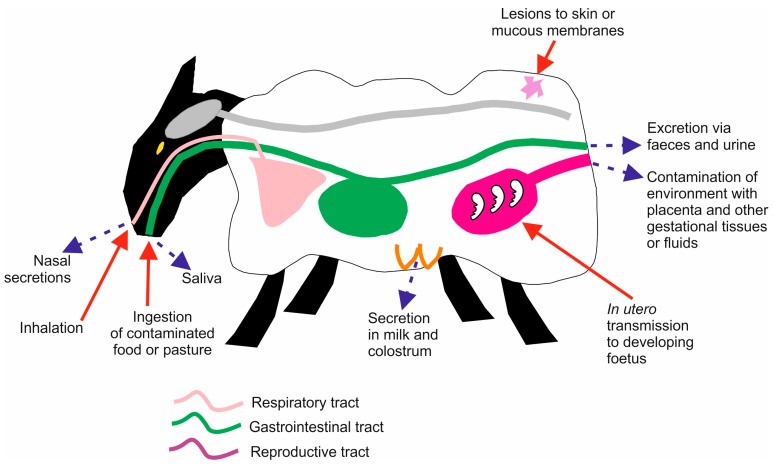
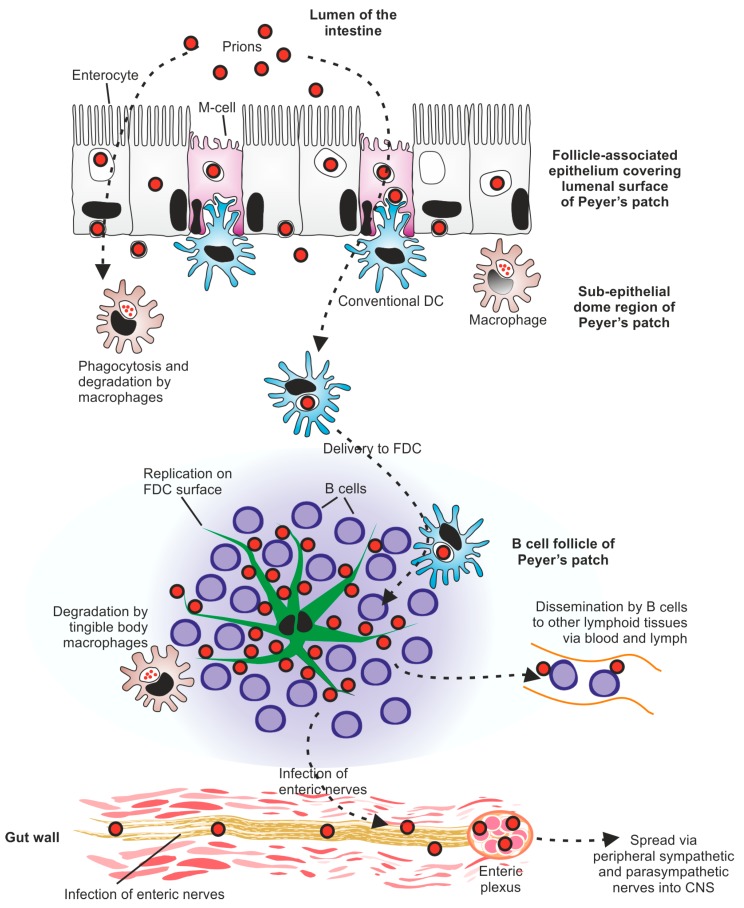
Prion diseases are sub-acute neurodegenerative diseases that affect humans and some domestic and free-ranging animals. Infectious prion agents are considered to comprise solely of abnormally folded isoforms of the cellular prion protein known as PrP. Pathology during prion disease is restricted to the central nervous system where it causes extensive neurodegeneration and ultimately leads to the death of the host. The first half of this review provides a thorough account of our understanding of the various ways in which PrP prions may spread between individuals within a population, both horizontally and vertically. Many natural prion diseases are acquired peripherally, such as by oral exposure, lesions to skin or mucous membranes, and possibly also via the nasal cavity. Following peripheral exposure, some prions accumulate to high levels within the secondary lymphoid organs as they make their journey from the site of infection to the brain, a process termed neuroinvasion. The replication of PrP prions within secondary lymphoid organs is important for their efficient spread to the brain. The second half of this review describes the key tissues, cells and molecules which are involved in the propagation of PrP prions from peripheral sites of exposure (such as the lumen of the intestine) to the brain. This section also considers how additional factors such as inflammation and aging might influence prion disease susceptibility.
朊病毒病是一种亚急性神经退行性疾病,可影响人类以及一些家养和野生的动物。传染性朊病毒因子被认为仅由细胞朊蛋白(称为PrP)的异常折叠异构体组成。朊病毒病期间的病理学仅限于中枢神经系统,在那里它会导致广泛的神经退行性变,并最终导致宿主死亡。本综述的前半部分全面阐述了我们对PrP朊病毒在群体内个体之间水平和垂直传播的各种方式的理解。许多自然发生的朊病毒病是通过外周途径获得的,例如通过口服接触、皮肤或粘膜损伤,也可能通过鼻腔。外周接触后,一些朊病毒在从感染部位到大脑的过程中在二级淋巴器官中大量积累,这一过程称为神经侵袭。PrP朊病毒在二级淋巴器官中的复制对于其有效传播到大脑很重要。本综述的后半部分描述了参与PrP朊病毒从外周暴露部位(如肠腔)传播到大脑的关键组织、细胞和分子。本节还考虑了炎症和衰老等其他因素可能如何影响朊病毒病易感性。