Department of Pharmacology, Vanderbilt University, Nashville, TN 37232, USA
Int J Mol Sci. 2017 Nov 24;18(12):2519. doi: 10.3390/ijms18122519.
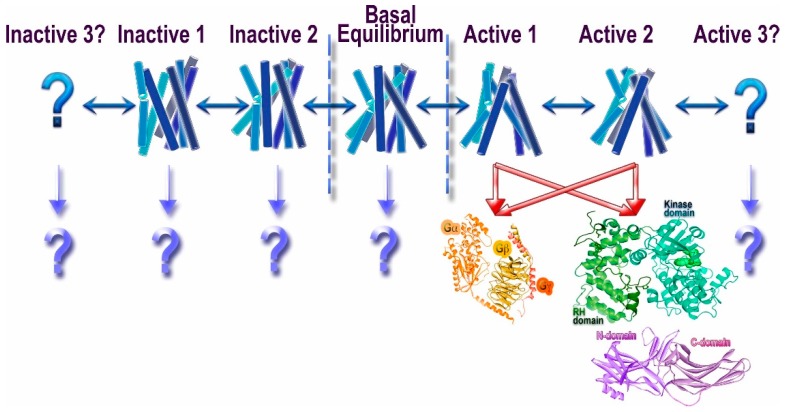
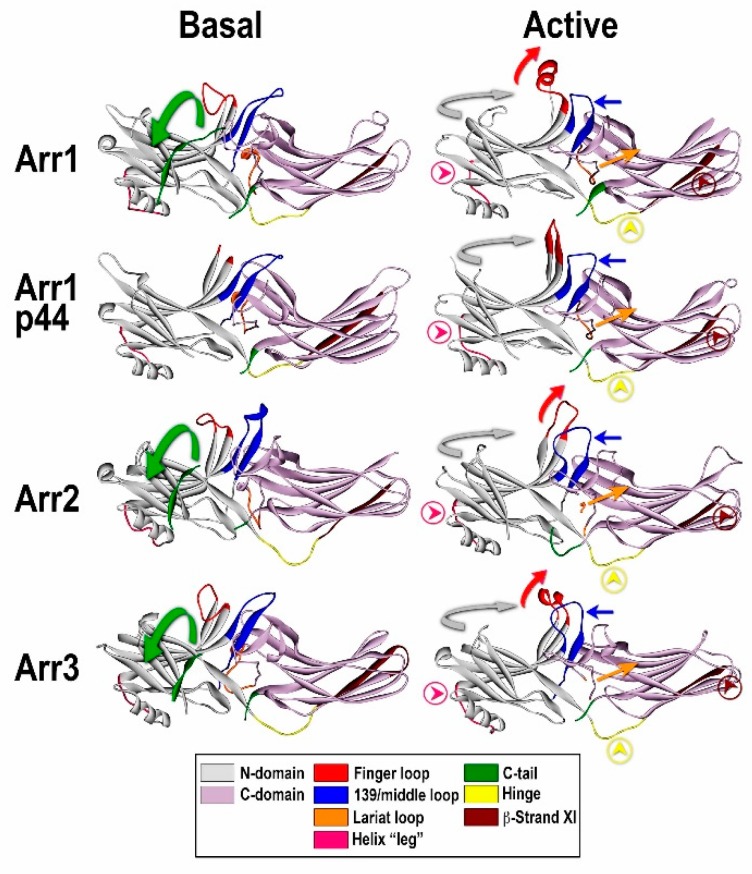
G protein-coupled receptors (GPCRs) are cell surface receptors that respond to a wide variety of stimuli, from light, odorants, hormones, and neurotransmitters to proteins and extracellular calcium. GPCRs represent the largest family of signaling proteins targeted by many clinically used drugs. Recent studies shed light on the conformational changes that accompany GPCR activation and the structural state of the receptor necessary for the interactions with the three classes of proteins that preferentially bind active GPCRs, G proteins, G protein-coupled receptor kinases (GRKs), and arrestins. Importantly, structural and biophysical studies also revealed activation-related conformational changes in these three types of signal transducers. Here, we summarize what is already known and point out questions that still need to be answered. Clear understanding of the structural basis of signaling by GPCRs and their interaction partners would pave the way to designing signaling-biased proteins with scientific and therapeutic potential.
G 蛋白偶联受体(GPCRs)是细胞表面受体,可对各种刺激做出反应,包括光、气味、激素、神经递质、蛋白质和细胞外钙。GPCRs 是许多临床应用药物靶向的最大信号蛋白家族。最近的研究揭示了与 GPCR 激活伴随的构象变化,以及与优先结合活性 GPCR 的三种蛋白(G 蛋白、G 蛋白偶联受体激酶(GRK)和 arrestin)相互作用所必需的受体的结构状态。重要的是,结构和生物物理研究还揭示了这三种信号转导器的激活相关构象变化。在这里,我们总结了已知的内容,并指出了仍需要回答的问题。对 GPCR 及其相互作用伙伴的信号转导的结构基础的清晰理解将为设计具有科学和治疗潜力的信号偏向性蛋白铺平道路。