Rodriguez Irene B, Ho Tung-Yuan
Research Center for Environmental Changes, Academia Sinica, Taipei, Taiwan.
Institute of Oceanography, National Taiwan University, Taipei, Taiwan.
PLoS One. 2017 Nov 30;12(11):e0188777. doi: 10.1371/journal.pone.0188777. eCollection 2017.
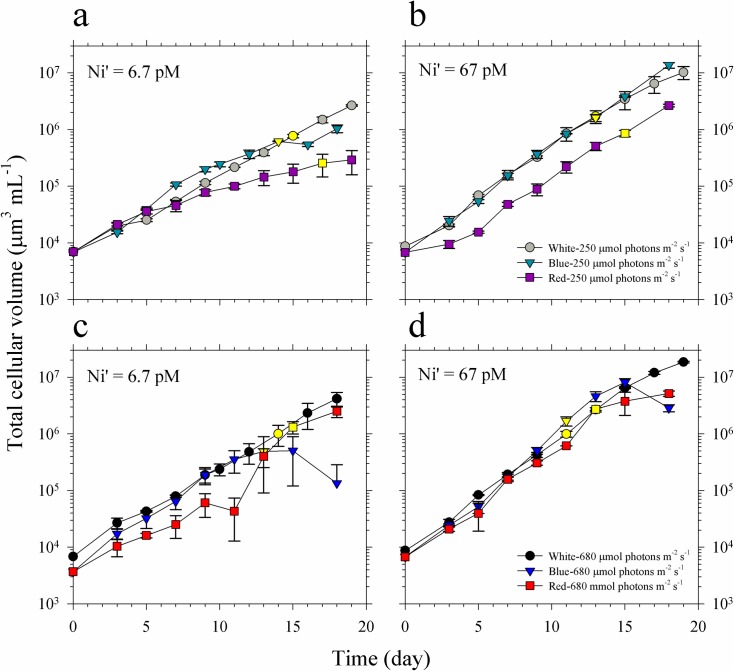
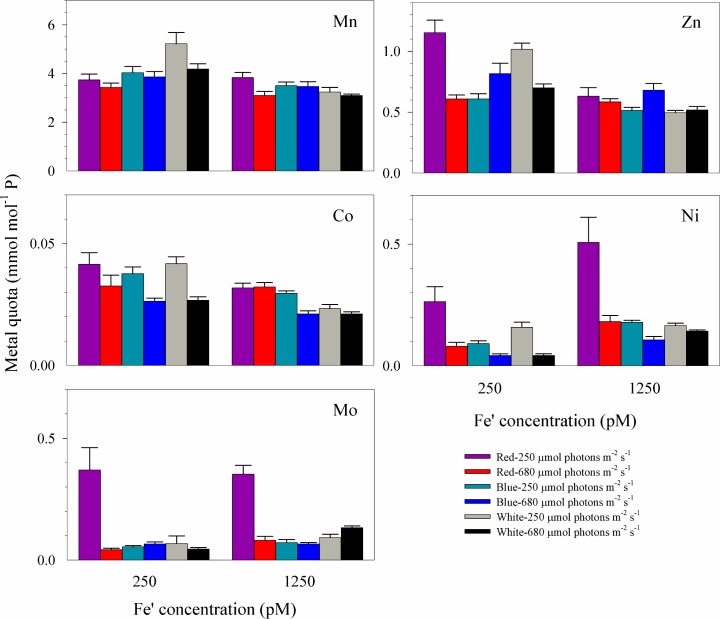
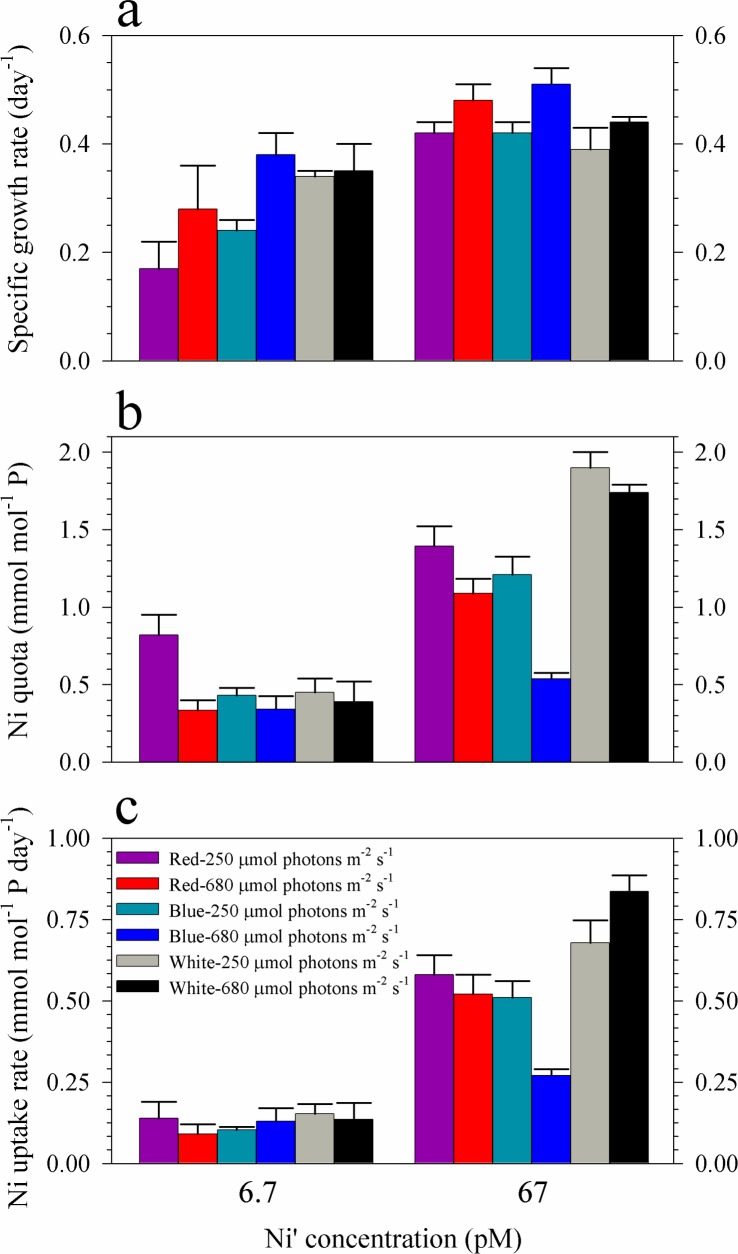
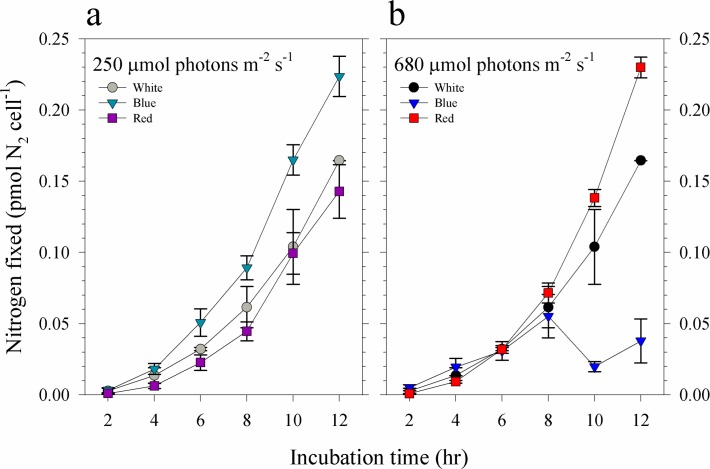
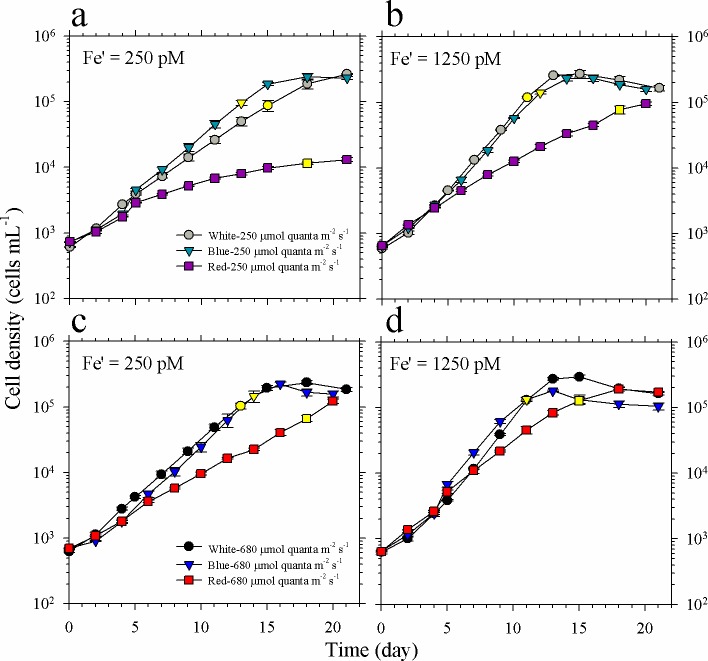
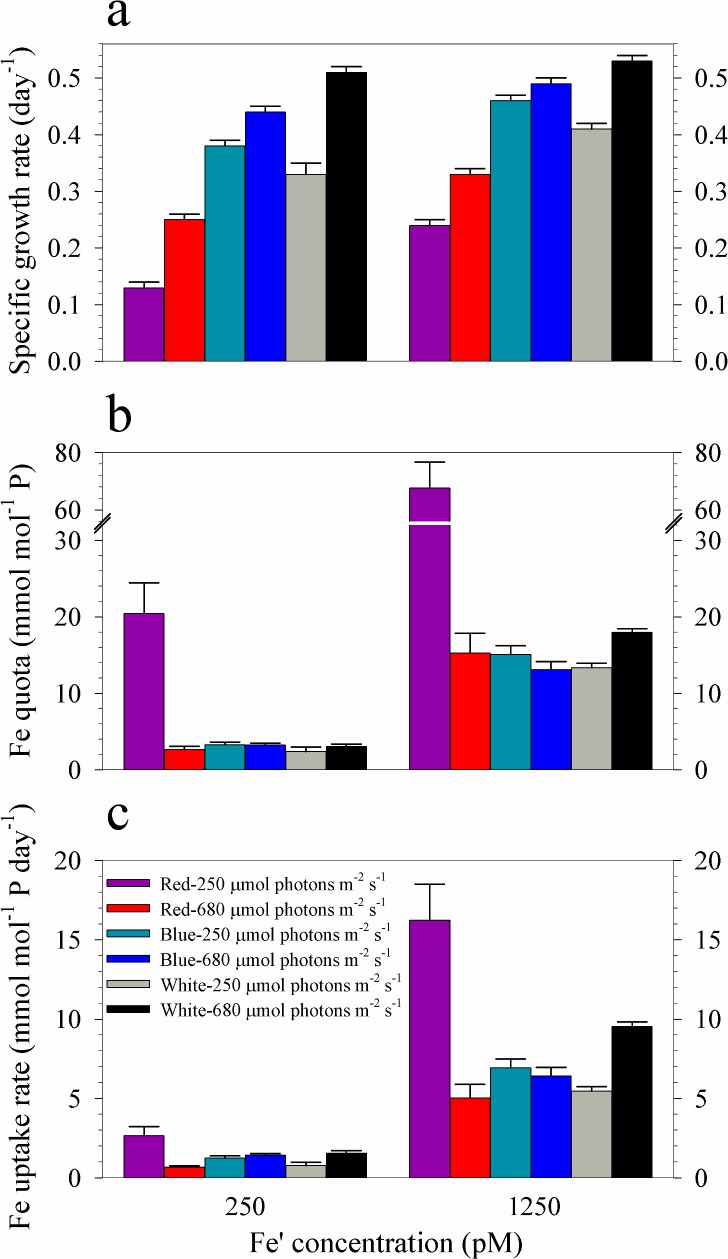
Light and trace metals are critical growth factors for algae but how the interdependence of light quality and metal availability affects algal growth remains largely unknown. Our previous studies have demonstrated the importance of Ni and Fe on the growth of Trichodesmium and Symbiodinium, respectively, two important marine primary producers inhabiting environments with high light intensities. Here, we investigated the effects of light quality and intensity with availability of either Ni or Fe on their growth. For Trichodesmium, we found that specific growth rates for high Ni treatments were all significantly higher than in corresponding low Ni treatments with varying light quality and intensity. The inhibitory effect of low intensity red light was also countered by sufficient Ni supply. For Symbiodinium, we found that growth rates and biomass were reduced by 75% under low intensity red light and the stress can only be partially relieved by sufficient Fe supply. The results show that trace metal availability plays an important role in relieving the stress induced by low red light condition for both Trichodesmium and Symbiodinium although the cyanobacterium performs better in this growth condition. The difference may be attributed to the presence of phycocyanin, a unique pigment attuned to absorption of red light, in Trichodesmium. Our study shows that the concerted effects of light intensity and quality compounded with trace metal availability may influence the growth of photosynthetic organisms in the ocean.
轻金属和微量金属是藻类生长的关键因素,但光质与金属可利用性之间的相互依存关系如何影响藻类生长,在很大程度上仍不为人知。我们之前的研究分别证明了镍和铁对束毛藻和共生藻生长的重要性,这两种重要的海洋初级生产者栖息于高光强环境中。在此,我们研究了光质和光强以及镍或铁的可利用性对它们生长的影响。对于束毛藻,我们发现,在不同光质和光强条件下,高镍处理组的比生长速率均显著高于相应的低镍处理组。充足的镍供应也抵消了低强度红光的抑制作用。对于共生藻,我们发现,在低强度红光下,其生长速率和生物量降低了75%,充足的铁供应只能部分缓解这种胁迫。结果表明,尽管蓝细菌在这种生长条件下表现更好,但微量金属的可利用性在缓解束毛藻和共生藻因低红光条件诱导的胁迫方面发挥着重要作用。这种差异可能归因于束毛藻中存在藻蓝蛋白,这是一种独特的色素,适合吸收红光。我们的研究表明,光强和光质与微量金属可利用性的协同作用可能会影响海洋中光合生物的生长。