Department of Parasitology, Medical College of Soochow University, Suzhou, Jiangsu Province, China.
State Key Laboratory of Veterinary Etiological Biology, Key Laboratory of Veterinary Parasitology of Gansu Province, Lanzhou Veterinary Research Institute, Chinese Academy of Agricultural Sciences, Lanzhou, Gansu Province, China.
Sci Rep. 2017 Nov 30;7(1):16682. doi: 10.1038/s41598-017-16783-7.
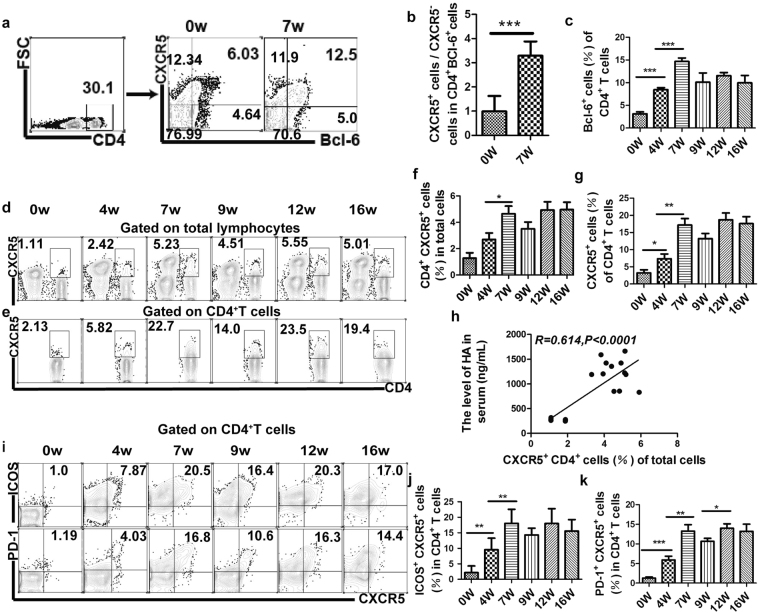
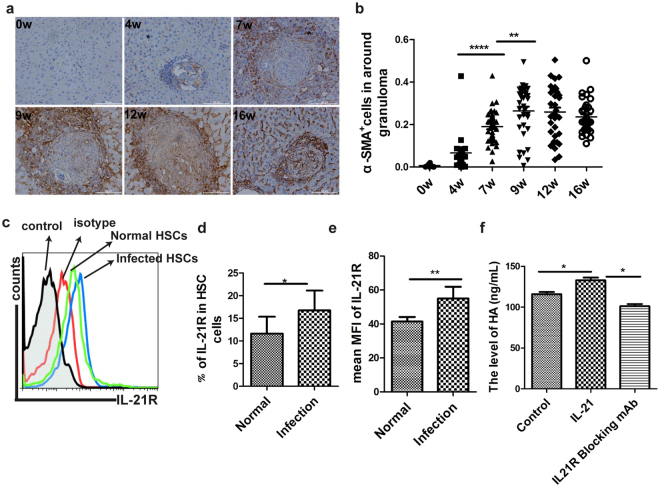
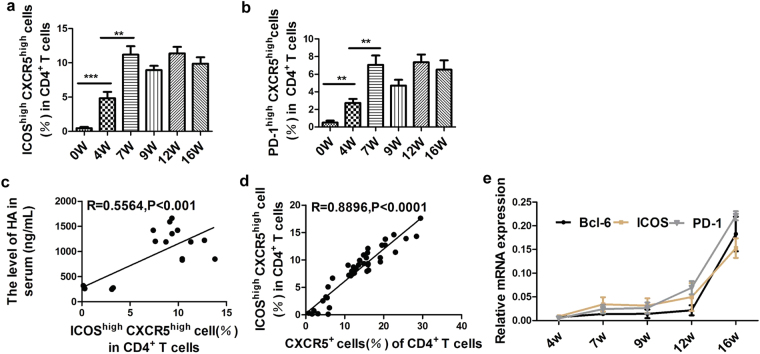
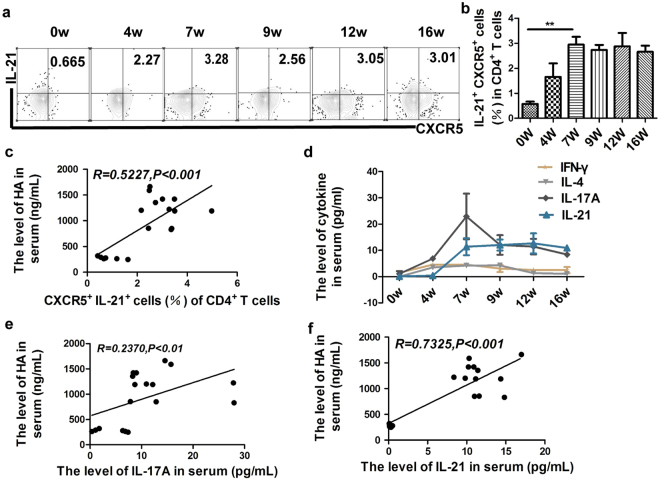
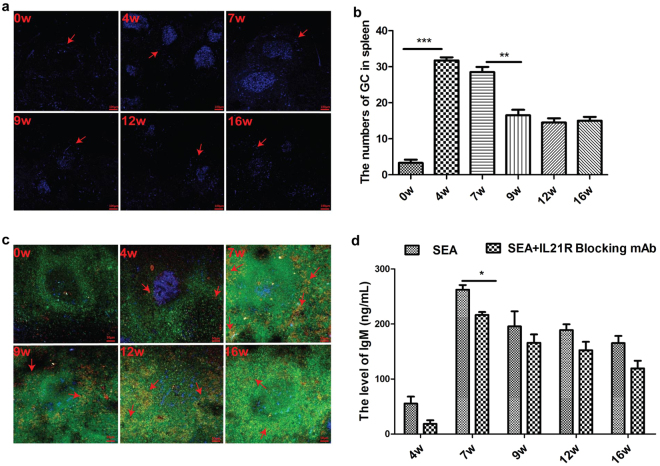
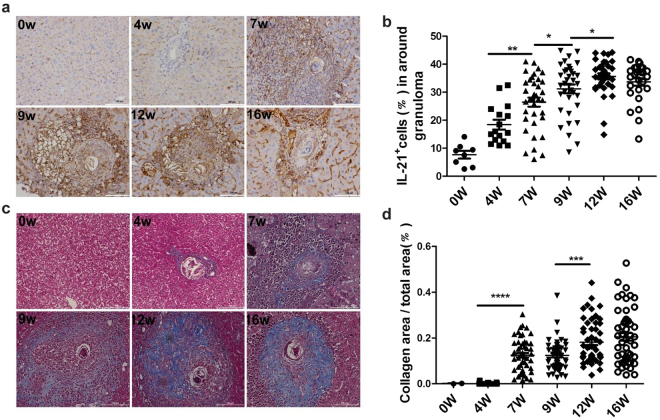
The pathology of schistosome egg-induced liver granuloma, fibrosis and eventually liver scarring is complicated. CD4 helper T (Th) cells play critical roles in both host humoral immunity and cellular immunity against parasitic infection and immunopathology in schistosomiasis. Follicular helper T (Tfh) cells are another specialized subset of Th cells and involved in infectious diseases. However, the immune regulatory mechanism of Tfh cells in severe liver pathology of schistosomiasis is still poorly understood. In this study, using a S. japonicum-infected mouse model, we studied the dynamics and effects of Tfh cells in vivo and demonstrated that Tfh phenotype molecules ICOS, PD-1 and functional factor IL-21 were positively correlated with disease development by flow cytometry. Meanwhile, our results also showed that Tfh cells enriched in splenic germinal center (GC) and promoted B cells producing IgM with the progress of hepatic immunopathology by B-T co-culture experiments. More importantly, our data indicated that IL-21 contributed to the formation and development of hepatic egg granuloma and subsequent fibrosis by driving GC responses and activating HSCs by immunohistochemical detection and blocking assay in vitro. Our findings contribute to the better understanding of the immunopathogenesis of schistosomiasis and have implications for therapeutic intervention of hepatic fibrotic diseases.
血吸虫卵诱导的肝肉芽肿、纤维化,最终导致肝瘢痕的病理学过程非常复杂。CD4 辅助性 T(Th)细胞在宿主体液免疫和细胞免疫抵抗寄生虫感染以及血吸虫病的免疫病理学中发挥着关键作用。滤泡辅助性 T(Tfh)细胞是 Th 细胞的另一个特化亚群,参与了传染病的发生。然而,Tfh 细胞在血吸虫病严重肝病理学中的免疫调节机制仍知之甚少。在这项研究中,我们使用日本血吸虫感染的小鼠模型,研究了体内 Tfh 细胞的动态变化及其效应,通过流式细胞术证实 Tfh 表型分子 ICOS、PD-1 和功能因子 IL-21 与疾病的发展呈正相关。同时,我们的结果还表明,Tfh 细胞在脾脏生发中心(GC)中富集,并通过 B-T 共培养实验促进 B 细胞产生 IgM,随着肝免疫病理学的进展。更重要的是,我们的数据表明,IL-21 通过驱动 GC 反应和体外免疫组化检测和阻断实验激活 HSCs,促进了肝虫卵肉芽肿的形成和发展以及随后的纤维化。我们的研究结果有助于更好地理解血吸虫病的免疫发病机制,并为肝纤维化疾病的治疗干预提供了依据。