Raleigh M D, Peterson S J, Laudenbach M, Baruffaldi F, Carroll F I, Comer S D, Navarro H A, Langston T L, Runyon S P, Winston S, Pravetoni M, Pentel P R
Minneapolis Medical Research Foundation, Minneapolis, MN, United States of America.
Research Triangle Institute, Research Triangle Park, NC, United States of America.
PLoS One. 2017 Dec 1;12(12):e0184876. doi: 10.1371/journal.pone.0184876. eCollection 2017.
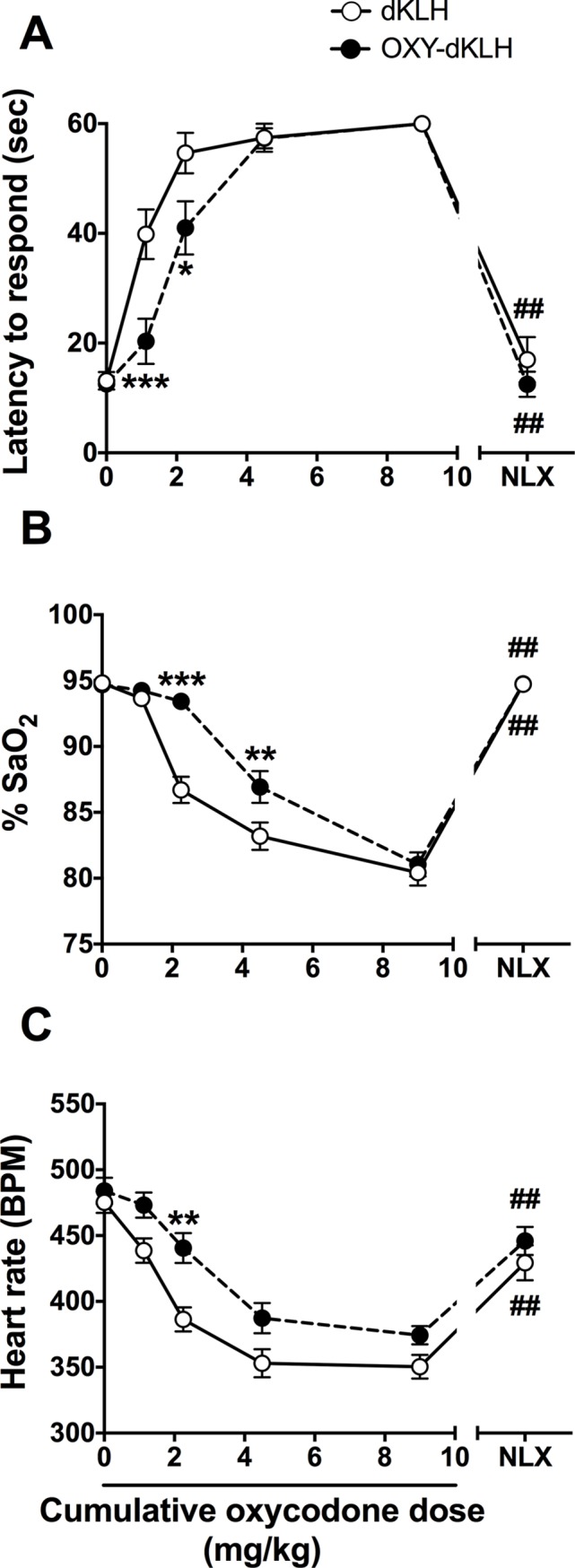
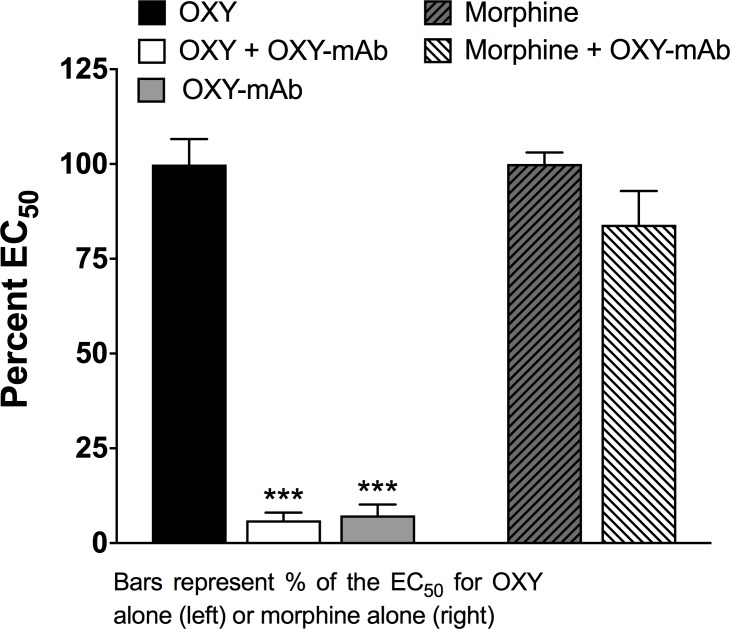
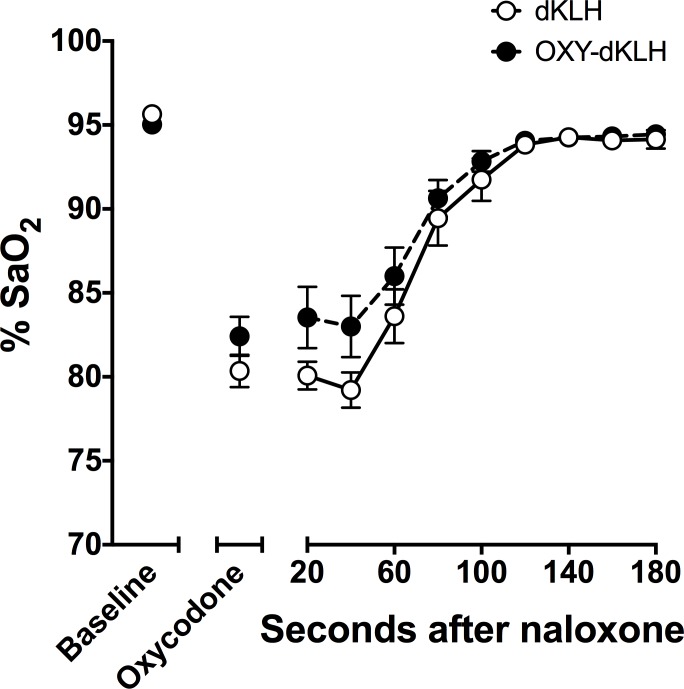
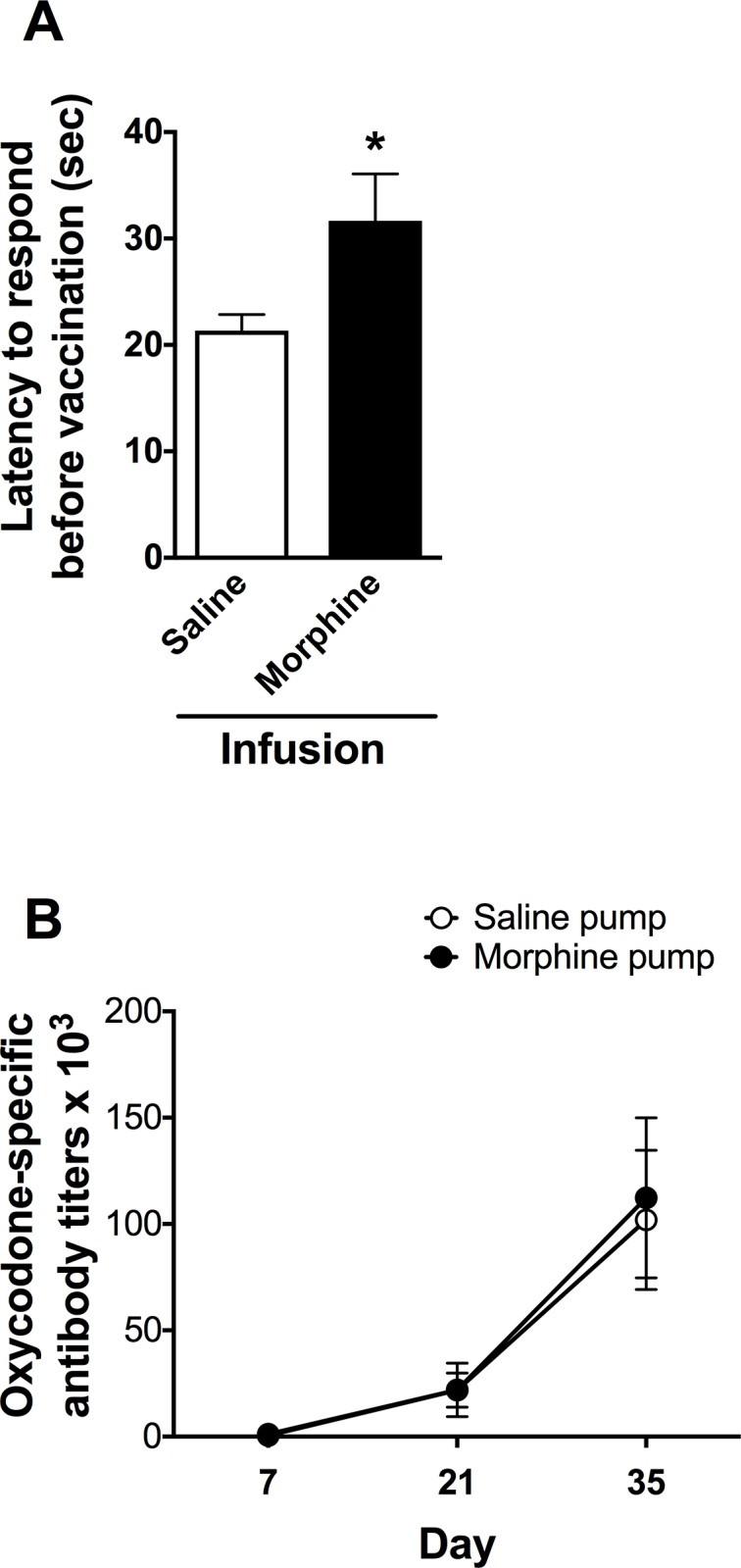
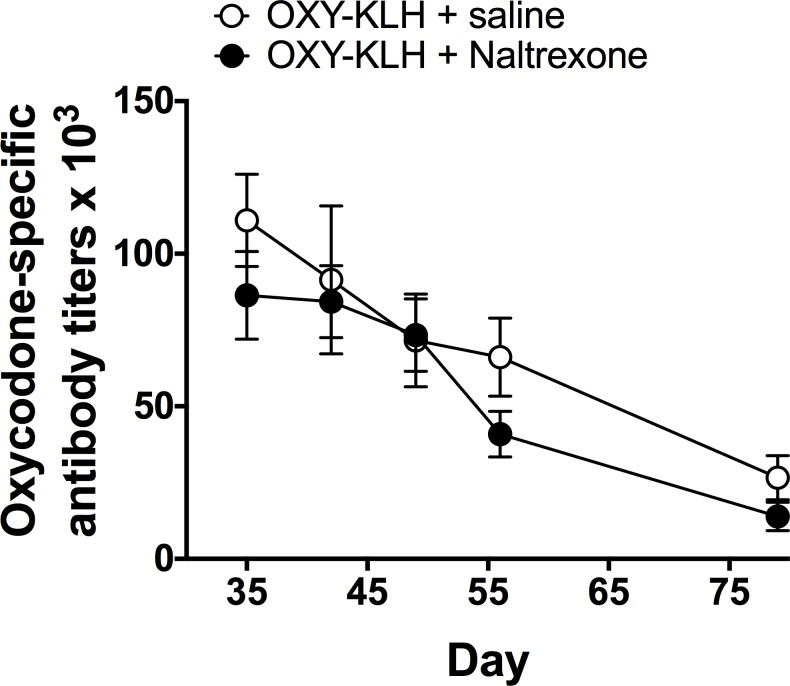
Among vaccines aimed at treating substance use disorders, those targeting opioids present several unique medication development challenges. 1) Opioid overdose is a common complication of abuse, so it is desirable for an opioid vaccine to block the toxic as well as the addictive effects of opioids. 2) It is important that an opioid vaccine not interfere with the action of opioid antagonists used to reverse opioid overdose or treat addiction. 3) Some opioids are immunosuppressive and chronic ongoing opioid use could interfere with vaccine immunogenicity. 4) Although antibody-bound oxycodone is unable to enter the brain because of its size, it might still be able to activate peripheral opioid receptors. To assess vaccine impact on opioid toxicity, rats vaccinated with oxycodone conjugated to keyhole limpet hemocyanin subunit dimer (OXY-dKLH) adsorbed to alum or controls vaccinated with dKLH were compared with regard to oxycodone-induced hotplate analgesia and oxycodone-induced respiratory depression and bradycardia. Vaccination shifted the dose-response curves to the right, representing protection, for each of these endpoints. Naloxone was equally effective in both OXY-dKLH and control groups, providing complete and rapid reversal of respiratory depression. The administration of a long-acting naltrexone formulation during vaccination did not impair vaccine immunogenicity in mice. Similarly, serum anti-oxycodone antibody titers were not altered by continuous morphine infusion during vaccination compared to opioid-naïve controls. Competitive ELISA assay showed negligible or low affinity of immune antiserum for endogenous opioids or opioid antagonists. In vitro receptor binding assays showed that antibody-bound oxycodone does not activate mu opioid receptors. These data support further study of OXY-dKLH as a potential treatment for oxycodone abuse and suggest that vaccination might also reduce the severity of oxycodone overdose.
在旨在治疗物质使用障碍的疫苗中,针对阿片类药物的疫苗面临着一些独特的药物研发挑战。1)阿片类药物过量是滥用的常见并发症,因此阿片类疫苗既要阻断阿片类药物的成瘾作用,也要阻断其毒性作用。2)阿片类疫苗不干扰用于逆转阿片类药物过量或治疗成瘾的阿片类拮抗剂的作用,这一点很重要。3)一些阿片类药物具有免疫抑制作用,长期持续使用阿片类药物可能会干扰疫苗的免疫原性。4)尽管与抗体结合的羟考酮因其大小无法进入大脑,但它仍可能激活外周阿片类受体。为了评估疫苗对阿片类药物毒性的影响,将接种了吸附于明矾上的与钥孔戚血蓝蛋白亚基二聚体偶联的羟考酮(OXY-dKLH)的大鼠与接种dKLH的对照大鼠在羟考酮诱导的热板镇痛、羟考酮诱导的呼吸抑制和心动过缓方面进行了比较。接种疫苗使这些终点指标的剂量反应曲线右移,表明具有保护作用。纳洛酮在OXY-dKLH组和对照组中同样有效,能完全且迅速地逆转呼吸抑制。在接种疫苗期间给予长效纳曲酮制剂不会损害小鼠的疫苗免疫原性。同样,与未接触过阿片类药物的对照相比,接种疫苗期间持续输注吗啡不会改变血清抗羟考酮抗体滴度。竞争性ELISA检测显示免疫抗血清对内源性阿片类药物或阿片类拮抗剂的亲和力可忽略不计或很低。体外受体结合试验表明,与抗体结合的羟考酮不会激活μ阿片类受体。这些数据支持进一步研究OXY-dKLH作为羟考酮滥用的潜在治疗方法,并表明接种疫苗可能还会降低羟考酮过量的严重程度。