D'Amico Pino, Calzolari Arrigo, Ruini Alice, Catellani Alessandra
Dipartimento di Scienze Fisiche, Informatiche e Matematiche, Università di Modena e Reggio Emilia, I-41125, Modena, Italy.
Istituto Nanoscienze CNR-NANO-S3, I-41125, Modena, Italy.
Sci Rep. 2017 Dec 1;7(1):16805. doi: 10.1038/s41598-017-17156-w.
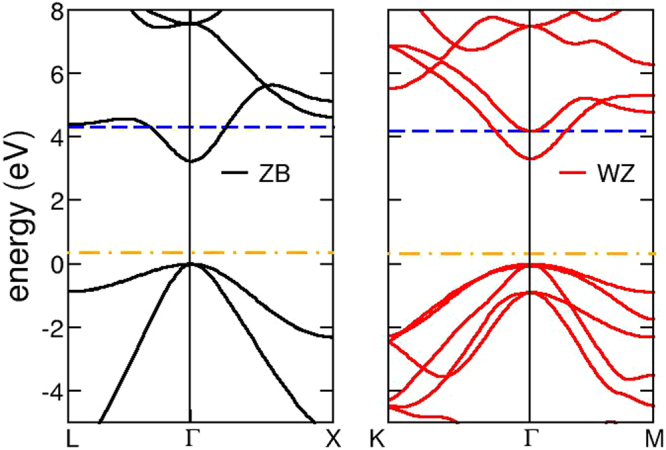
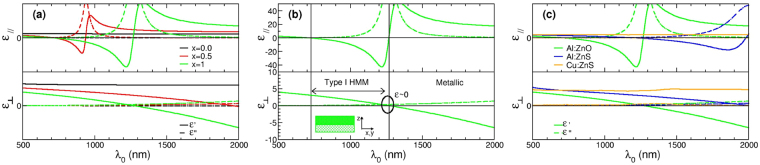
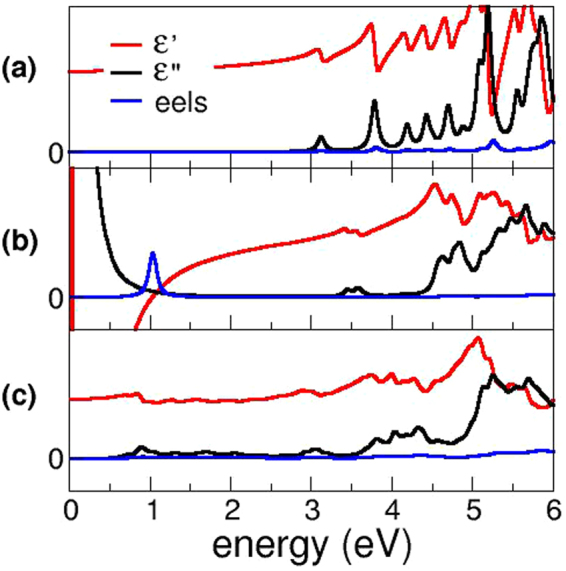
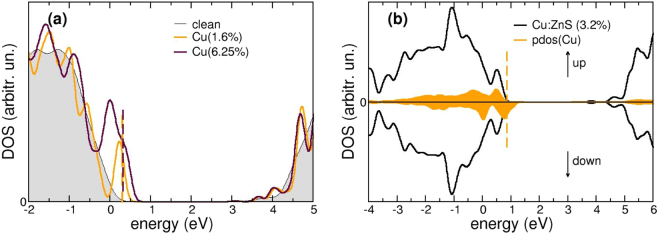
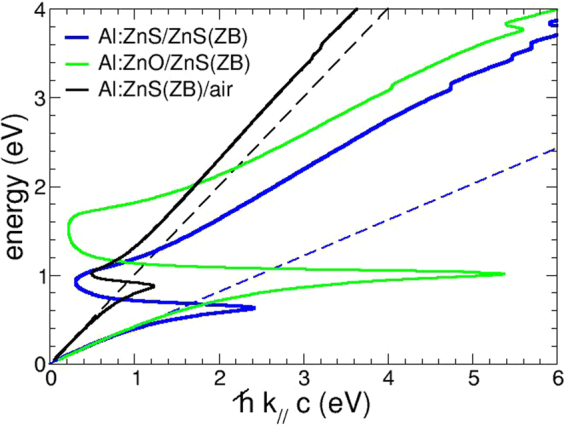
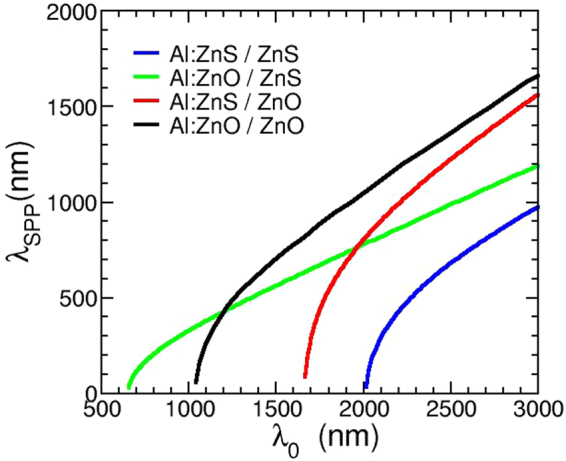
We revise the electronic and optical properties of ZnS on the basis of first principles simulations, in view of novel routes for optoelectronic and photonic devices, such as transparent conductors and plasmonic applications. In particular, we consider doping effects, as induced by Al and Cu. It is shown that doping ZnS with Al imparts a n-character and allows for a plasmonic activity in the mid-IR that can be exploited for IR metamaterials, while Cu doping induces a spin dependent p-type character to the ZnS host, opening the way to the engineering of transparent p-n junctions, p-type transparent conductive materials and spintronic applications. The possibility of promoting the wurtzite lattice, presenting a different symmetry with respect to the most stable and common zincblende structure, is explored. Homo- and heterojunctions to twin ZnO are discussed as a possible route to transparent metamaterial devices for communications and energy.
鉴于用于光电器件和光子器件的新途径,如透明导体和等离子体应用,我们基于第一性原理模拟研究了硫化锌(ZnS)的电学和光学性质。特别地,我们考虑了由铝(Al)和铜(Cu)引起的掺杂效应。结果表明,用Al掺杂ZnS会赋予其n型特性,并使其在中红外区域具有等离子体活性,可用于红外超材料;而Cu掺杂则会使ZnS主体呈现自旋相关的p型特性,为透明p-n结、p型透明导电材料和自旋电子学应用的工程设计开辟了道路。我们还探讨了促进纤锌矿晶格的可能性,纤锌矿晶格相对于最稳定且常见的闪锌矿结构具有不同的对称性。本文讨论了与孪晶氧化锌(ZnO)形成的同质结和异质结,这是通往用于通信和能源的透明超材料器件的一种可能途径。