Posner Mason, Murray Kelly L, McDonald Matthew S, Eighinger Hayden, Andrew Brandon, Drossman Amy, Haley Zachary, Nussbaum Justin, David Larry L, Lampi Kirsten J
Department of Biology/Toxicology, Ashland University, Ashland, OH, United States of America.
Department of Biology, Lakeland Community College, Kirtland, OH, United States of America.
PeerJ. 2017 Nov 27;5:e4093. doi: 10.7717/peerj.4093. eCollection 2017.
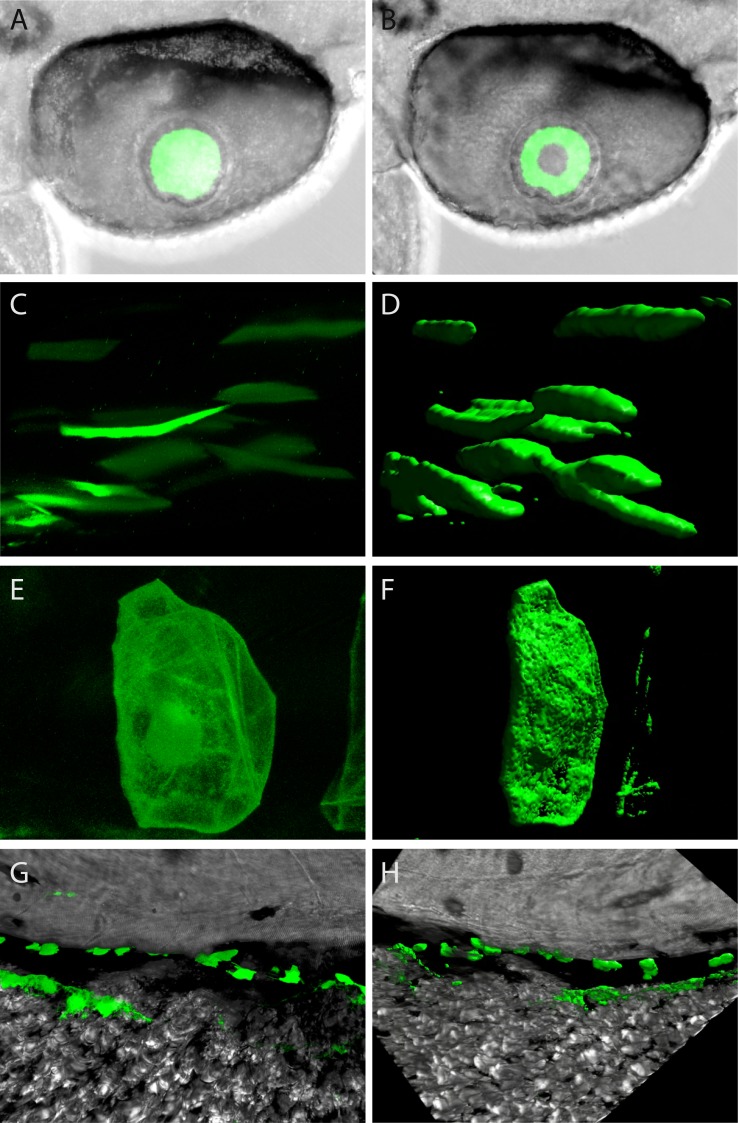
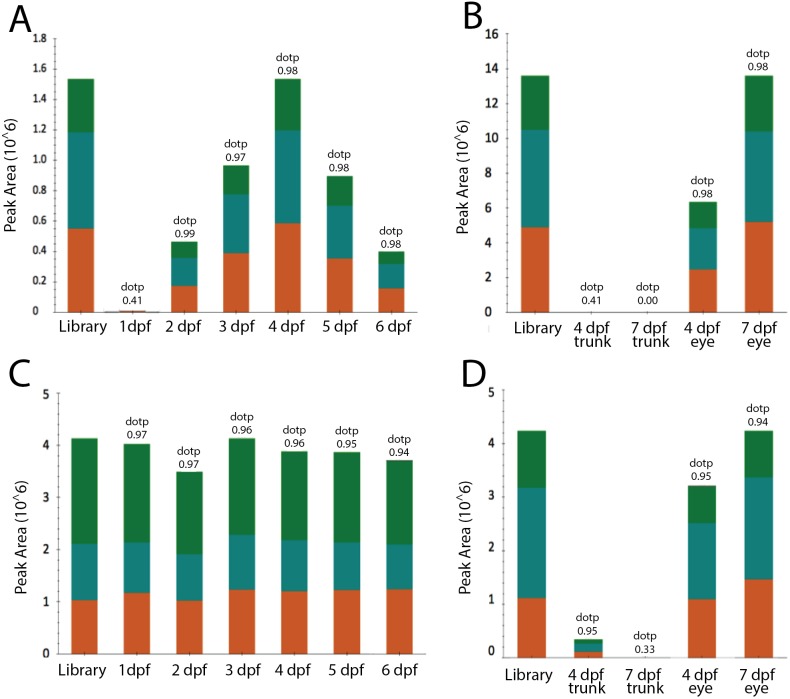
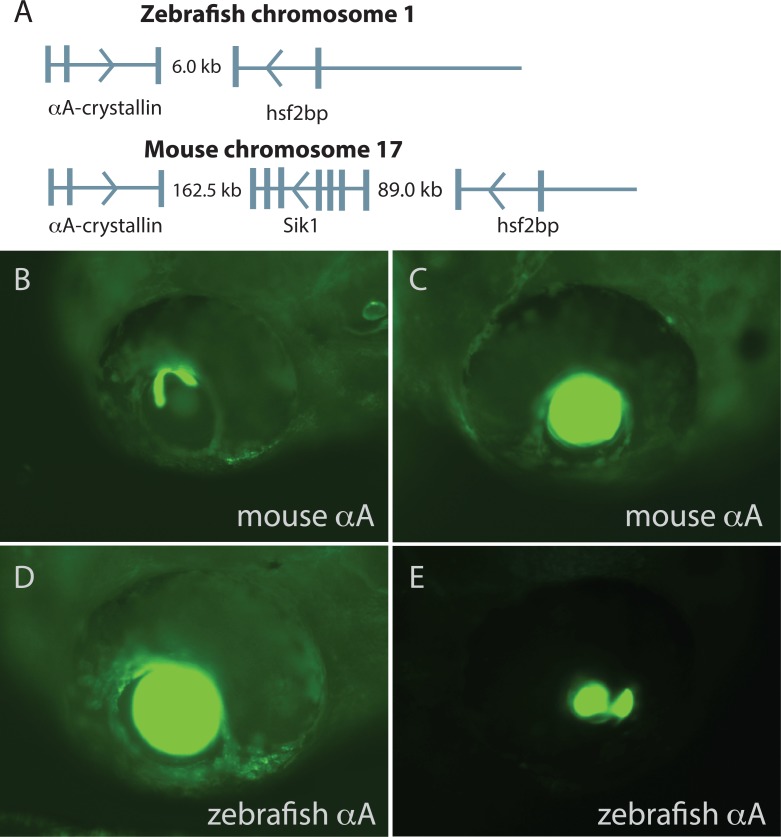
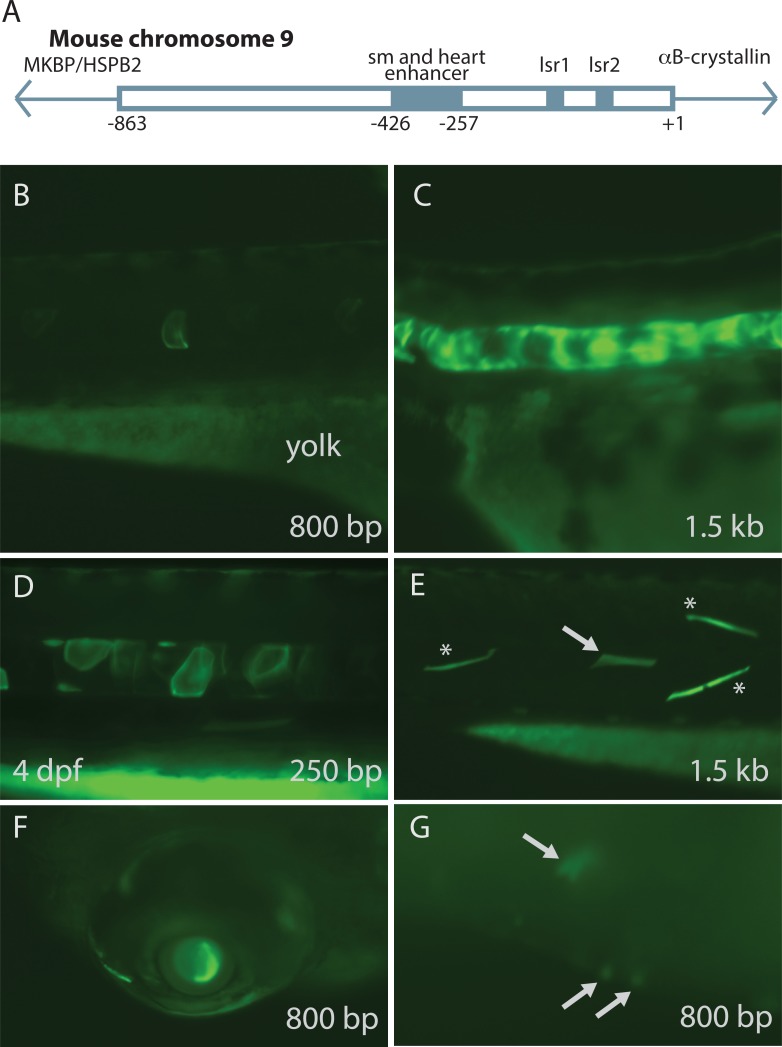
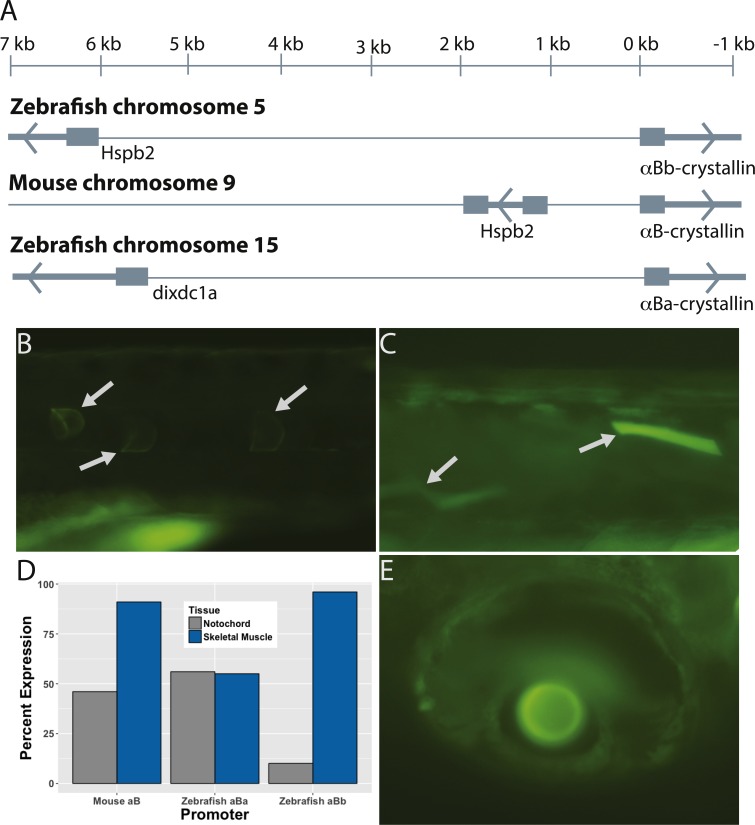
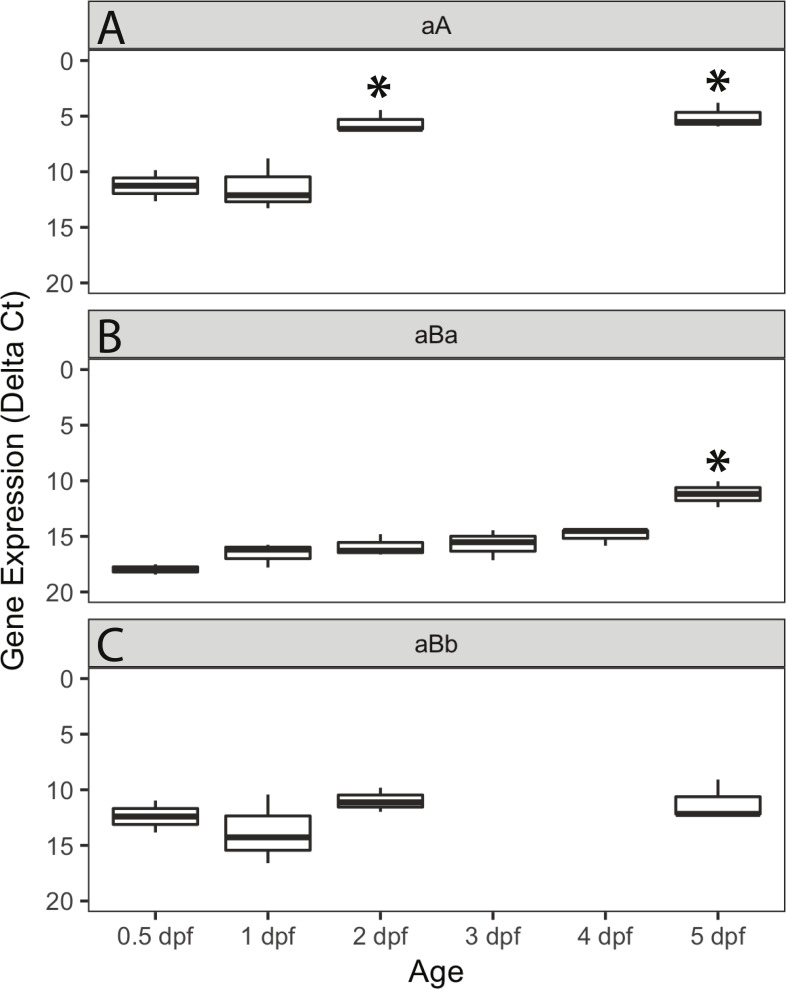
Previous studies have used the zebrafish to investigate the biology of lens crystallin proteins and their roles in development and disease. However, little is known about zebrafish α-crystallin promoter function, how it compares to that of mammals, or whether mammalian α-crystallin promoter activity can be assessed using zebrafish embryos. We injected a variety of α-crystallin promoter fragments from each species combined with the coding sequence for green fluorescent protein (GFP) into zebrafish zygotes to determine the resulting spatiotemporal expression patterns in the developing embryo. We also measured mRNA levels and protein abundance for all three zebrafish α-crystallins. Our data showed that mouse and zebrafish αA-crystallin promoters generated similar GFP expression in the lens, but with earlier onset when using mouse promoters. Expression was also found in notochord and skeletal muscle in a smaller percentage of embryos. Mouse αB-crystallin promoter fragments drove GFP expression primarily in zebrafish skeletal muscle, with less common expression in notochord, lens, heart and in extraocular regions of the eye. A short fragment containing only a lens-specific enhancer region increased lens and notochord GFP expression while decreasing muscle expression, suggesting that the influence of mouse promoter control regions carries over into zebrafish embryos. The two paralogous zebrafish αB-crystallin promoters produced subtly different expression profiles, with the aBa promoter driving expression equally in notochord and skeletal muscle while the αBb promoter resulted primarily in skeletal muscle expression. Messenger RNA for zebrafish αA increased between 1 and 2 days post fertilization (dpf), αBa increased between 4 and 5 dpf, but Bb remained at baseline levels through 5 dpf. Parallel reaction monitoring (PRM) mass spectrometry was used to detect αA, aBa, and αBb peptides in digests of zebrafish embryos. In whole embryos, αA-crystallin was first detected by 2 dpf, peaked in abundance by 4-5 dpf, and was localized to the eye. αBa was detected in whole embryo at nearly constant levels from 1-6 dpf, was also localized primarily to the eye and its abundance in extraocular tissues decreased from 4-7 dpf. In contrast, due to its low abundance, no αBb protein could be detected in whole embryo, or dissected eye and extraocular tissues. Our results show that mammalian α-crystallin promoters can be efficiently screened in zebrafish embryos and that their controlling regions are well conserved. An ontogenetic shift in zebrafish aBa-crystallin promoter activity provides an interesting system for examining the evolution and control of tissue specificity. Future studies that combine these promoter based approaches with the expanding ability to engineer the zebrafish genome via techniques such as CRISPR/Cas9 will allow the manipulation of protein expression to test hypotheses about lens crystallin function and its relation to lens biology and disease.
以往的研究利用斑马鱼来研究晶状体晶状体蛋白的生物学特性及其在发育和疾病中的作用。然而,关于斑马鱼α-晶状体蛋白启动子的功能、与哺乳动物启动子功能的比较,或者是否可以使用斑马鱼胚胎评估哺乳动物α-晶状体蛋白启动子活性,我们所知甚少。我们将来自每个物种的多种α-晶状体蛋白启动子片段与绿色荧光蛋白(GFP)的编码序列相结合,注射到斑马鱼受精卵中,以确定发育胚胎中产生的时空表达模式。我们还测量了所有三种斑马鱼α-晶状体蛋白的mRNA水平和蛋白质丰度。我们的数据表明,小鼠和斑马鱼的αA-晶状体蛋白启动子在晶状体中产生了相似的GFP表达,但使用小鼠启动子时表达开始得更早。在较小比例的胚胎中,在脊索和骨骼肌中也发现了表达。小鼠αB-晶状体蛋白启动子片段主要在斑马鱼骨骼肌中驱动GFP表达,在脊索、晶状体、心脏和眼外区域的表达较少见。一个仅包含晶状体特异性增强子区域的短片段增加了晶状体和脊索中的GFP表达,同时降低了肌肉中的表达,这表明小鼠启动子控制区域的影响在斑马鱼胚胎中也存在。两个同源的斑马鱼αB-晶状体蛋白启动子产生了略有不同的表达谱,αBa启动子在脊索和骨骼肌中驱动表达的程度相同,而αBb启动子主要导致骨骼肌表达。斑马鱼αA的信使RNA在受精后1至2天(dpf)之间增加,αBa在4至5 dpf之间增加,但Bb在5 dpf之前一直保持在基线水平。平行反应监测(PRM)质谱法用于检测斑马鱼胚胎消化物中的αA、αBa和αBb肽段。在整个胚胎中,αA-晶状体蛋白在2 dpf时首次被检测到,在4至5 dpf时丰度达到峰值,并定位于眼睛。αBa在1至6 dpf的整个胚胎中以几乎恒定的水平被检测到,也主要定位于眼睛,其在眼外组织中的丰度在4至7 dpf之间下降。相比之下,由于其丰度较低,在整个胚胎、解剖的眼睛和眼外组织中均未检测到αBb蛋白。我们的结果表明,哺乳动物α-晶状体蛋白启动子可以在斑马鱼胚胎中进行有效筛选,并且它们的控制区域具有良好的保守性。斑马鱼αBa-晶状体蛋白启动子活性的个体发育转变为研究组织特异性的进化和控制提供了一个有趣的系统。未来将这些基于启动子的方法与通过CRISPR/Cas9等技术对斑马鱼基因组进行工程改造的不断扩展的能力相结合的研究,将允许对蛋白质表达进行操纵,以检验关于晶状体晶状体蛋白功能及其与晶状体生物学和疾病关系的假设。