Zhang Yunquan, Feng Renjie, Wu Ran, Zhong Peirong, Tan Xiaodong, Wu Kai, Ma Lu
Department of Epidemiology and Biostatistics, School of Health Sciences, Wuhan University, 185 Donghu Road, Wuchang District, Wuhan, 430071 China.
Department of Occupational and Environmental Health, School of Health Sciences, Wuhan University, 185 Donghu Road, Wuchang District, Wuhan, 430071 China.
Glob Health Res Policy. 2017 Apr 5;2:10. doi: 10.1186/s41256-017-0030-2. eCollection 2017.
There was no consistent definition for heat wave worldwide, while a limited number of studies have compared the mortality effect of heat wave as defined differently. This paper aimed to provide epidemiological evidence for policy makers to determine the most appropriate definition for local heat wave warning systems.
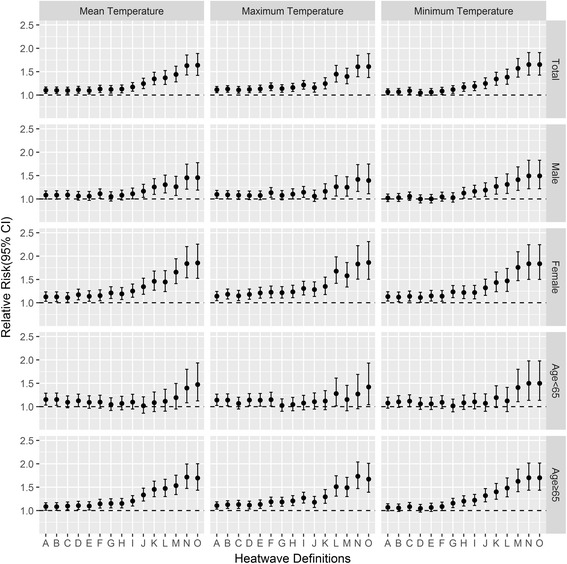
We developed 45 heat wave definitions (HWs) combining temperature indicators and temperature thresholds with durations. We then assessed the impact of heat waves under various definitions on non-accidental mortality in hot season (May-September) in Wuhan, China during 2003-2010.
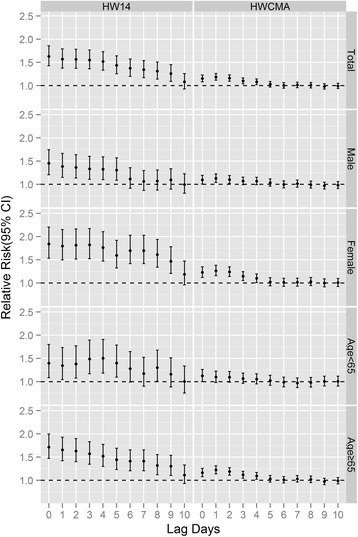
Heat waves defined by HW14 (daily mean temperature ≥ 99.0th percentile and duration ≥ 3 days) had the best predictive ability in assessing the mortality effects of heat wave with the relative risk of 1.63 (95% : 1.43, 1.89) for total mortality. The group-specific mortality risk using official heat wave definition of Chinese Meteorological Administration was much smaller than that using HW14. We also found that women, and the elderly (age ≥ 65) were more susceptible to heat wave effects which were stronger and longer lasting.
These findings suggest that region specific heat wave definitions are crucial and necessary for developing efficient local heat warning systems and for providing evidence for policy makers to protect the vulnerable population.
全球范围内对热浪尚无统一的定义,仅有少数研究比较了不同定义的热浪对死亡率的影响。本文旨在为政策制定者确定当地热浪预警系统的最恰当定义提供流行病学依据。
我们通过将温度指标、温度阈值与持续时间相结合,制定了45种热浪定义(HWs)。随后,我们评估了2003年至2010年期间中国武汉夏季(5月至9月)各种定义的热浪对非意外死亡率的影响。
由HW14定义的热浪(日平均温度≥第99百分位数且持续时间≥3天)在评估热浪对死亡率的影响方面具有最佳预测能力,总死亡率的相对风险为1.63(95%:1.43,1.89)。使用中国气象局官方热浪定义得出的特定人群死亡率风险远低于使用HW14定义得出的结果。我们还发现,女性和老年人(年龄≥65岁)更容易受到热浪影响,且这种影响更强、持续时间更长。
这些研究结果表明,特定地区的热浪定义对于建立有效的当地热浪预警系统以及为政策制定者保护弱势群体提供证据至关重要且很有必要。