Stem Cell Institute at James Graham Brown Cancer Center, University of Louisville, Louisville, KY 40202, USA.
Department of Regenerative Medicine, Medical University of Warsaw, 02-091 Warsaw, Poland.
Oncol Rep. 2018 Feb;39(2):851-859. doi: 10.3892/or.2017.6108. Epub 2017 Nov 24.
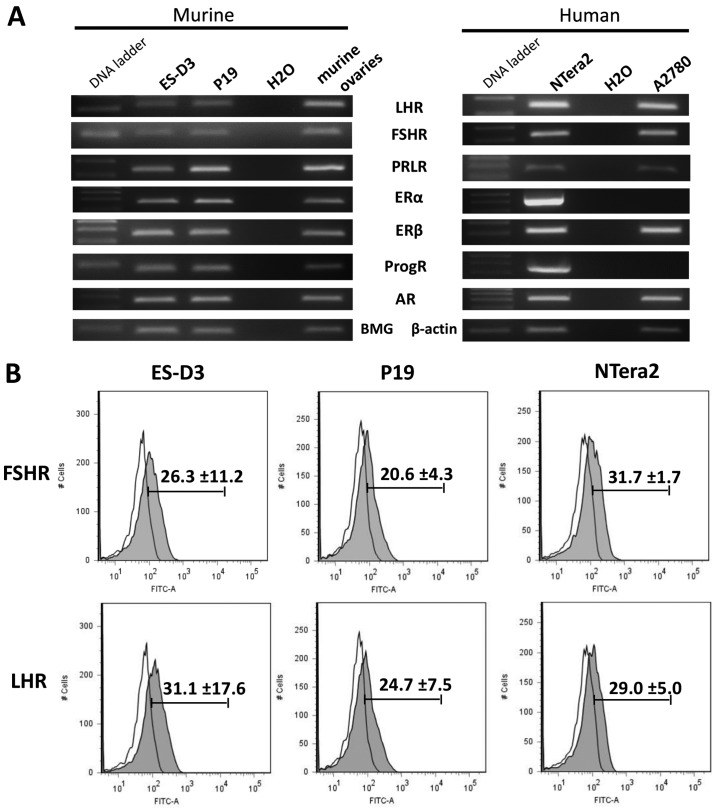
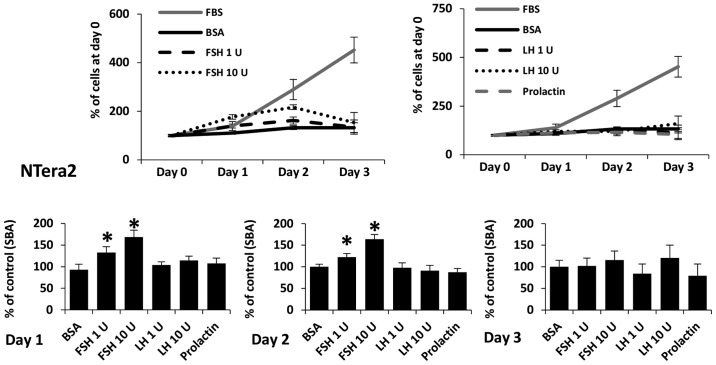
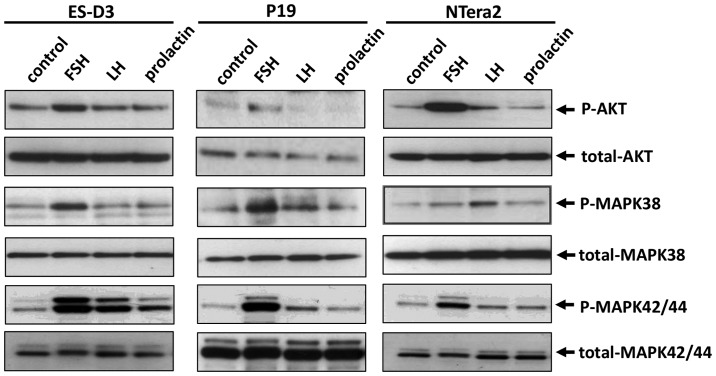
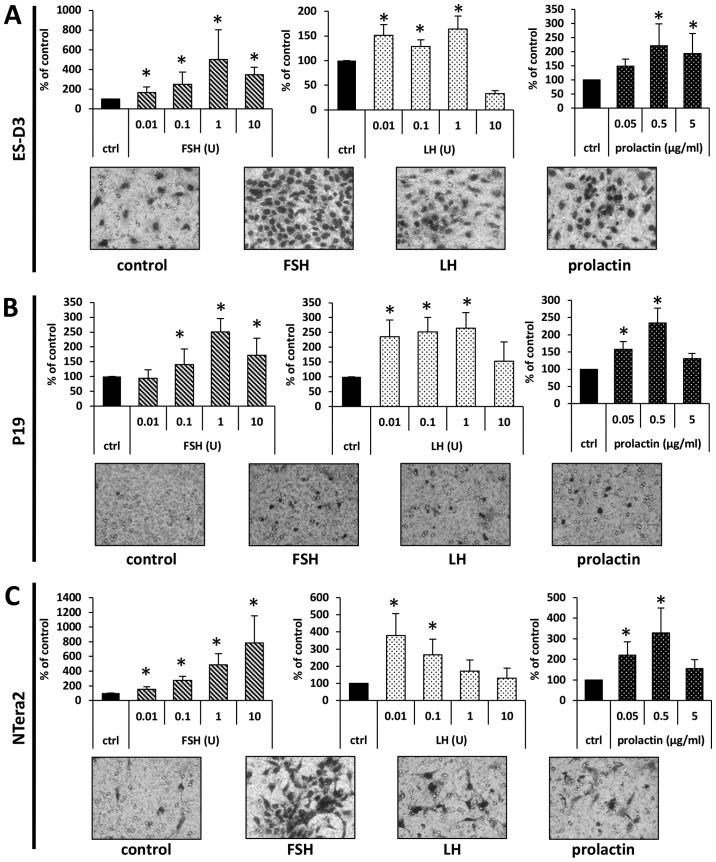
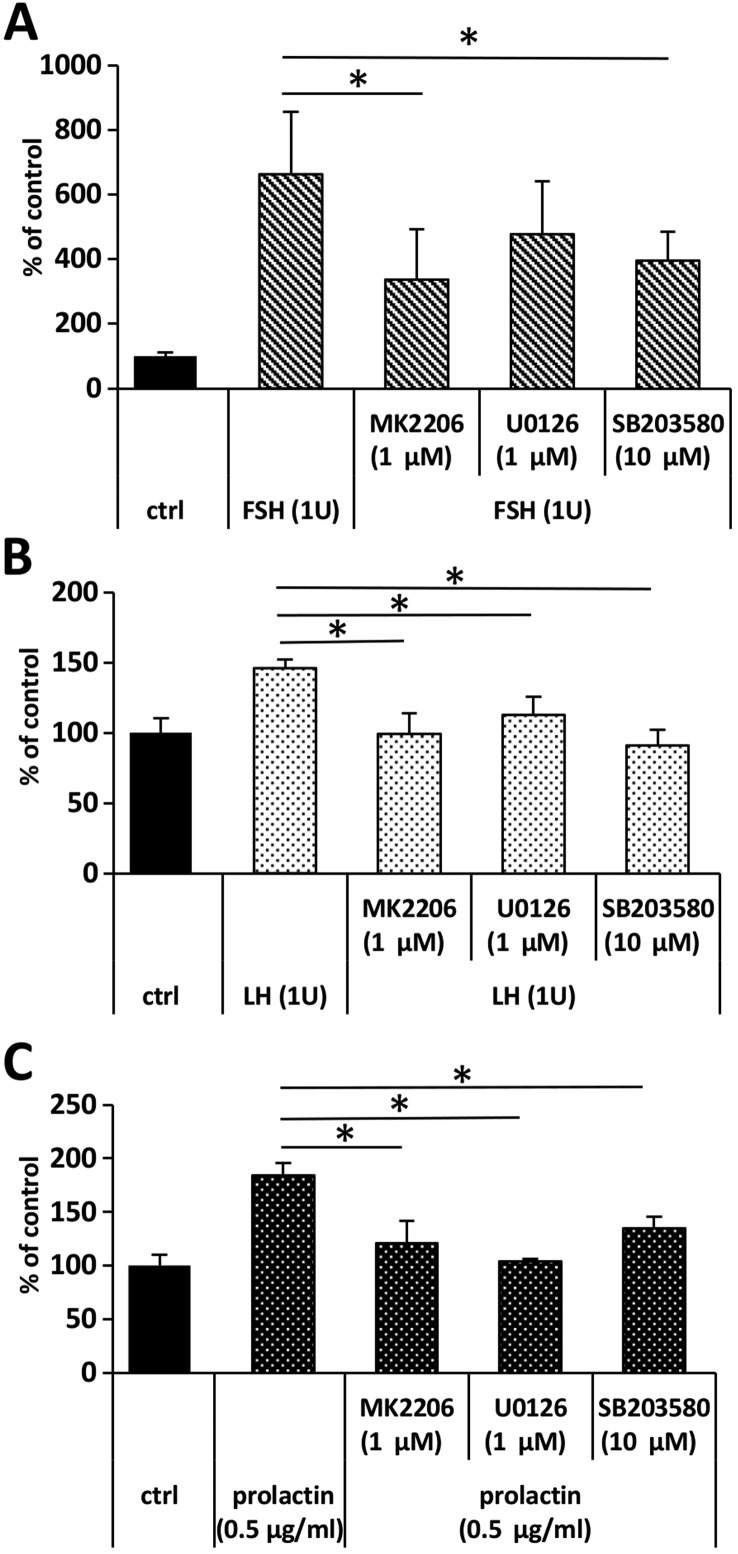
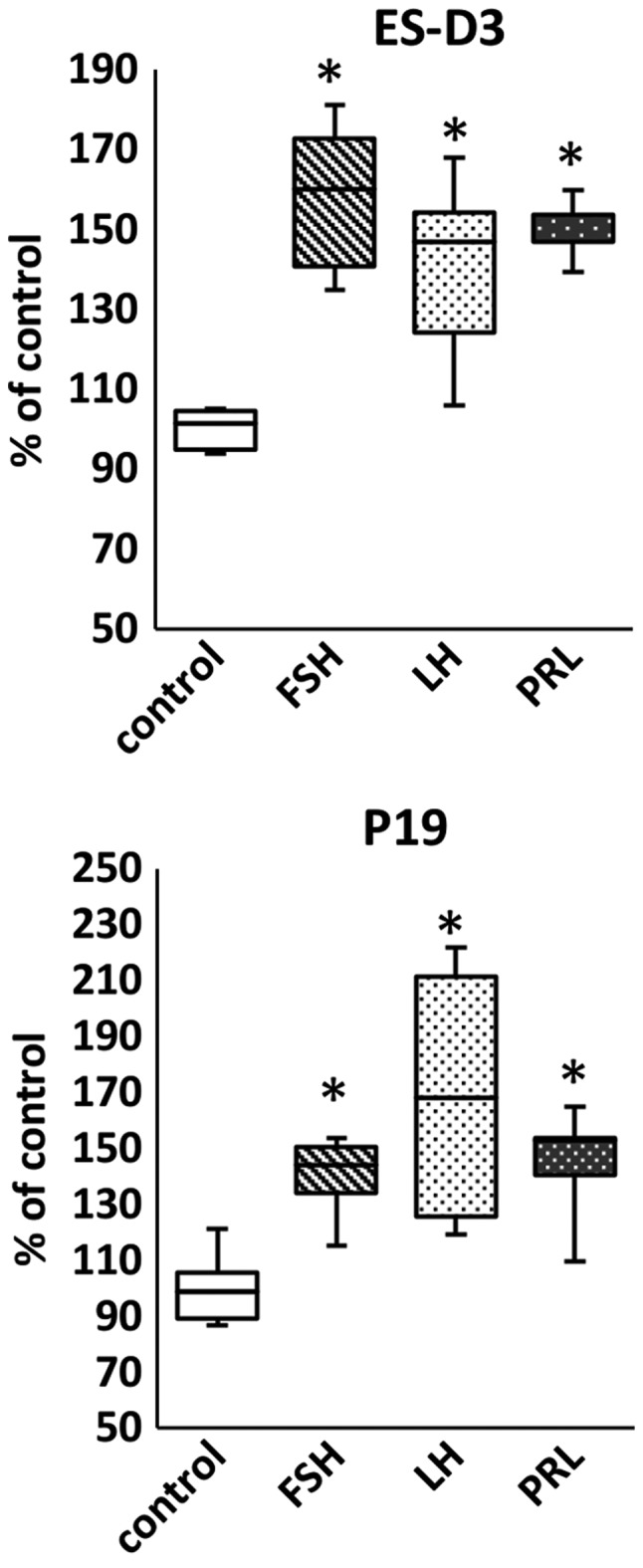
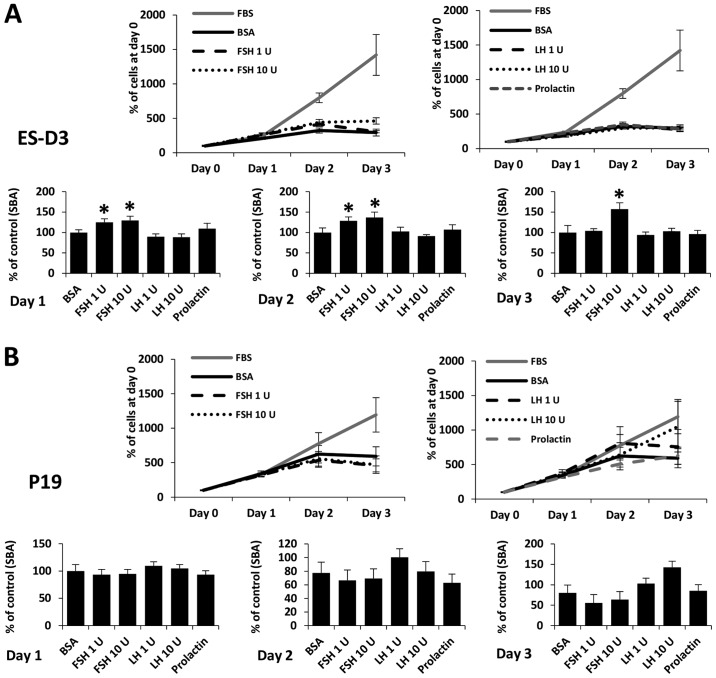
The pituitary sex hormones (SexHs): follicle‑stimulating hormone (FSH), luteinizing hormone (LH), and prolactin (PRL) regulate several functions crucial for reproduction, including oogenesis, spermatogenesis, and lactation. An important source of prolactin-like hormones, known as lactogens, is the placenta, and lactogens bind to the PRL receptor (PRLR) with high affinity and thereby mimic the actions of PRL. Recently, it has been demonstrated that pituitary SexHs were involved in metastatic lung cancer, certain sarcomas, and leukemia. In the present study we aimed to investigate whether FSH, LH, and PRL were able to stimulate stem cells involved in early development. To address this issue we employed a murine embryonic stem cell line (ES-D3) as well as two teratocarcinoma cell lines, P19 (murine) and NTera2 (human). We determined that all these cells expressed SexH receptors at the mRNA and protein levels and that stimulation of these receptors induced phosphorylation of p42/44 MAPK, p38 MAPK, and AKT. Moreover, ES-D3, P19, and NTera2 cells responded with increased migration and adhesion to physiological concentrations of pituitary SexHs. In view of these findings we proposed that maternal-derived pituitary SexHs regulate the biology of stem cells involved in early development.
垂体生殖激素(SexHs):卵泡刺激素(FSH)、黄体生成素(LH)和催乳素(PRL)调节生殖所必需的多种功能,包括卵母细胞发生、精子发生和泌乳。胎盘是催乳素样激素(称为乳糖)的重要来源,乳糖与 PRL 受体(PRLR)具有高亲和力结合,从而模拟 PRL 的作用。最近,已经证明垂体 SexHs 参与转移性肺癌、某些肉瘤和白血病。在本研究中,我们旨在研究 FSH、LH 和 PRL 是否能够刺激早期发育中涉及的干细胞。为了解决这个问题,我们使用了小鼠胚胎干细胞系(ES-D3)以及两个畸胎瘤细胞系 P19(鼠)和 Ntera2(人)。我们确定这些细胞在 mRNA 和蛋白质水平上都表达 SexH 受体,并且这些受体的刺激诱导了 p42/44 MAPK、p38 MAPK 和 AKT 的磷酸化。此外,ES-D3、P19 和 Ntera2 细胞对生理浓度的垂体 SexHs 的反应是迁移和黏附增加。鉴于这些发现,我们提出母体来源的垂体 SexHs 调节早期发育中涉及的干细胞的生物学特性。