Institute of Pharmaceutical Research and Development, College of Pharmacy, Wonkwang University, Iksan 54538, Korea.
Institute of Marine Biochemistry, Vietnam Academy of Science and Technology (VAST), 18 Hoang Quoc Viet, Caugiay, Hanoi 122102, Vietnam.
Molecules. 2017 Dec 2;22(12):2130. doi: 10.3390/molecules22122130.
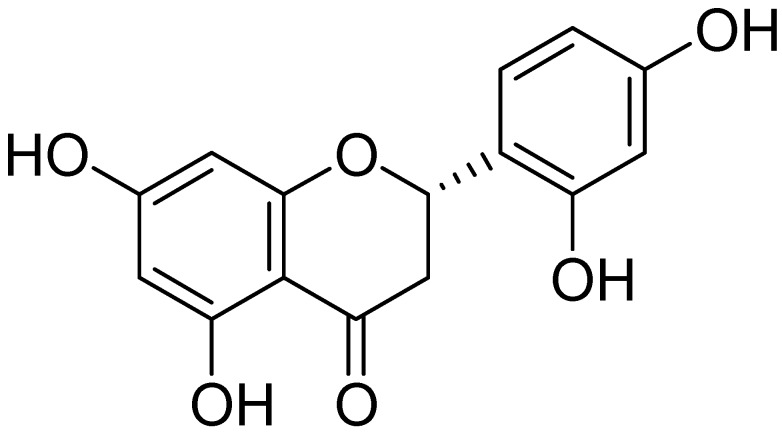
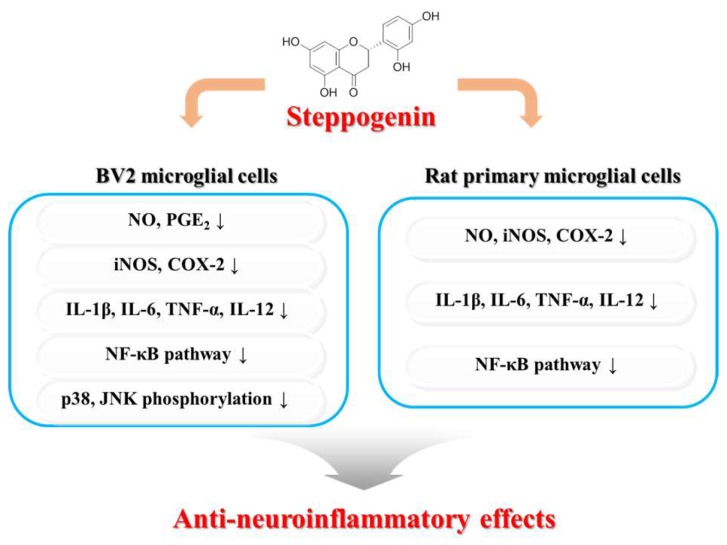
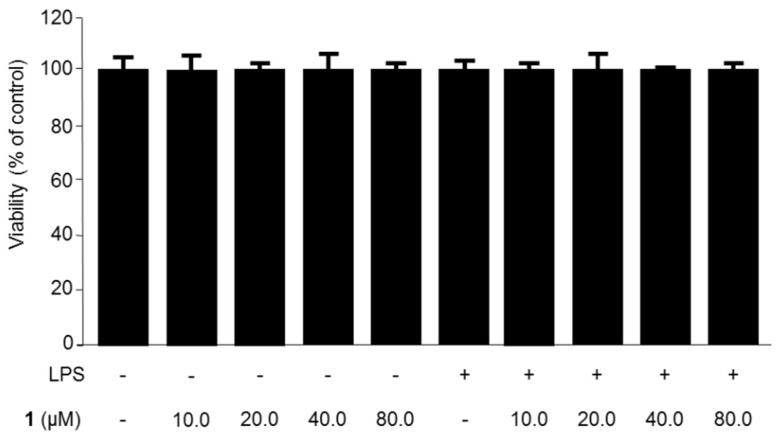
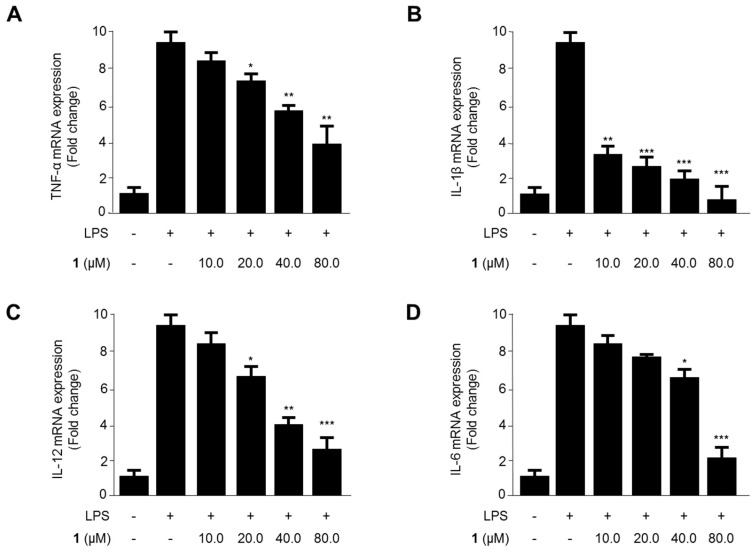
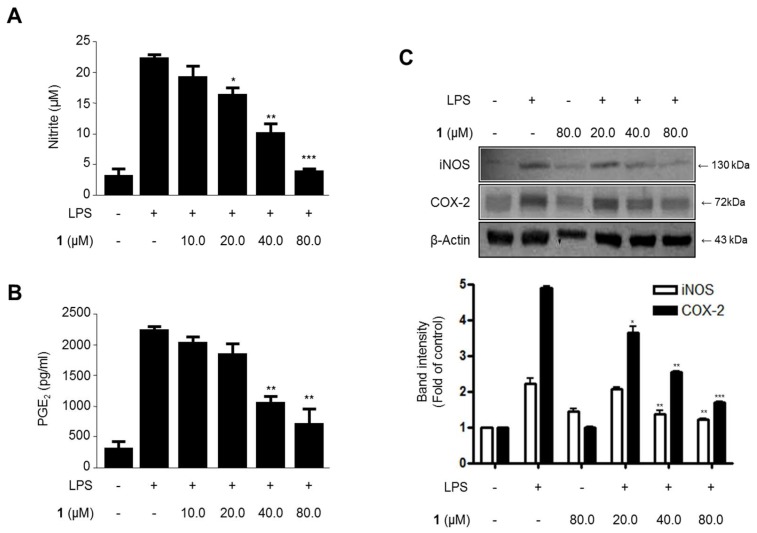
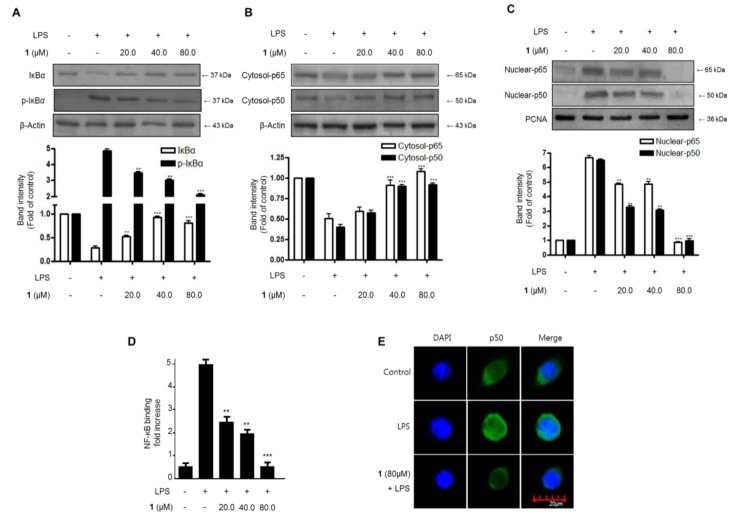
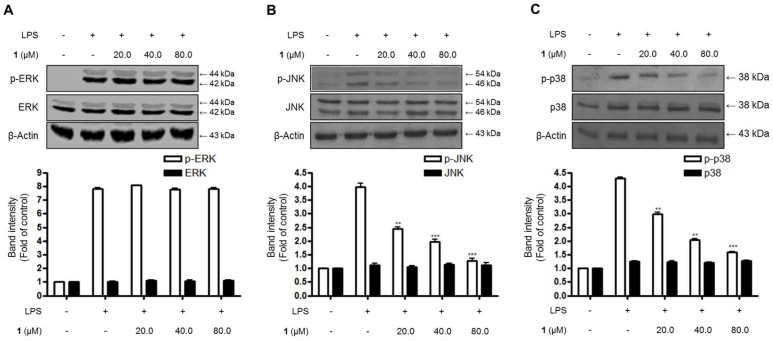
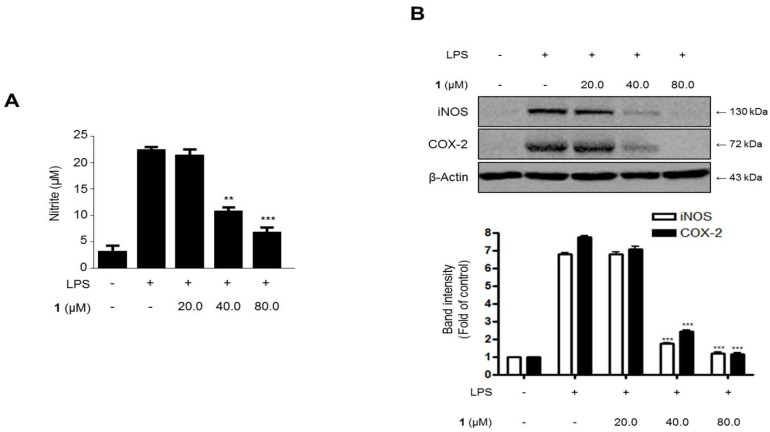
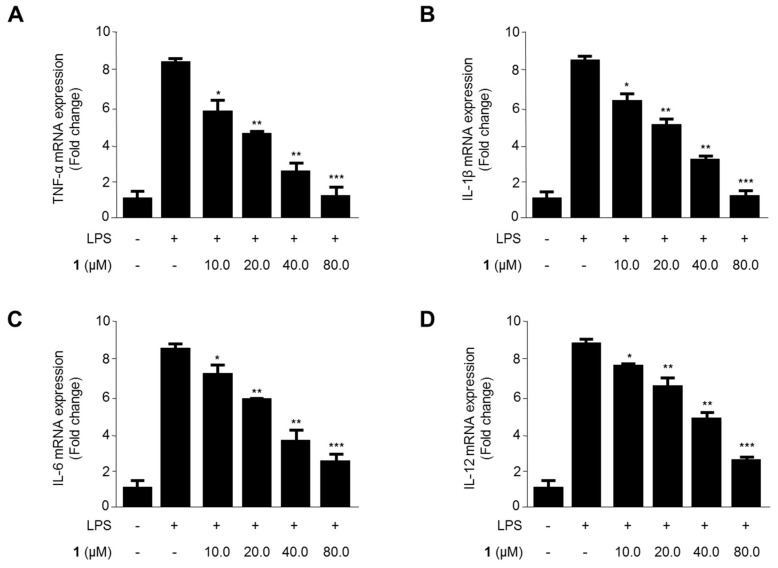
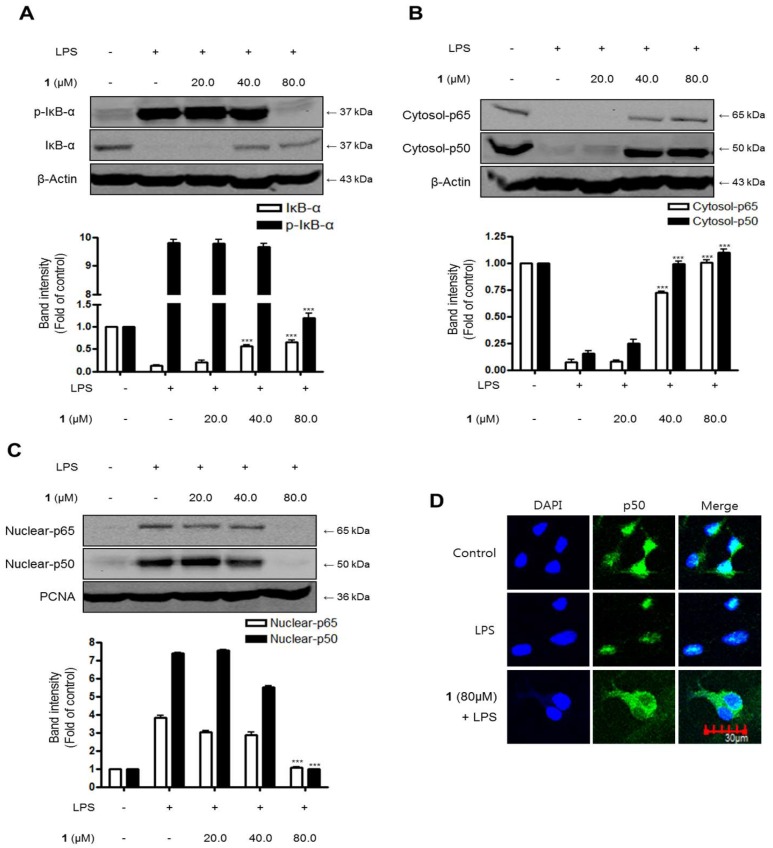
Excessive microglial stimulation has been recognized in several neurodegenerative diseases, including Parkinson's disease (PD), Alzheimer's disease (AD), amyotropic lateral sclerosis (ALS), HIV-associated dementia (HAD), multiple sclerosis (MS), and stroke. When microglia are stimulated, they produce proinflammatory mediators and cytokines, including nitric oxide (NO) derived from inducible NO synthase (iNOS), prostaglandin E2 (PGE₂) derived from cyclooxygenase-2 (COX-2), tumor necrosis factor-α (TNF-α), interleukin-1β (IL-1β), interleukin-12 (IL-12), and interleukin-6 (IL-6). These inflammatory reactions are related to the nuclear factor-kappa B (NF-κB) and mitogen-activated protein kinase (MAPK) signaling pathways. Therefore, the modulation of NF-κB and MAPK is vital to prevent microglial activation and confer resistance against neuronal injury. In this study, steppogenin () isolated from suppressed the neuroinflammatory responses to lipopolysaccharide (LPS). Steppogenin () inhibited the production of proinflammatory mediators and cytokines in LPS-challenged BV2 and rat primary microglial cells. Moreover, western blot analysis and immunofluorescence revealed that the nuclear translocation of NF-κB was inhibited in LPS-induced BV2 and rat primary microglial cells. The LPS-stimulated activation of BV2 and rat primary microglial cells was inhibited by steppogenin () through the suppression of c-Jun NH2-terminal kinase (JNK) and p38 MAPK signaling. These results suggested that steppogenin () exerted antineuroinflammatory effects against acute neuroinflammation in BV2 and rat primary microglial cells by suppressing the activation of NF-κB and MAPK signaling and the production of proinflammatory mediators and cytokines.
过度的小胶质细胞刺激已在几种神经退行性疾病中得到认识,包括帕金森病 (PD)、阿尔茨海默病 (AD)、肌萎缩性侧索硬化症 (ALS)、HIV 相关痴呆 (HAD)、多发性硬化症 (MS) 和中风。当小胶质细胞受到刺激时,它们会产生促炎介质和细胞因子,包括诱导型一氧化氮合酶 (iNOS) 衍生的一氧化氮 (NO)、环氧化酶-2 (COX-2) 衍生的前列腺素 E2 (PGE₂)、肿瘤坏死因子-α (TNF-α)、白细胞介素-1β (IL-1β)、白细胞介素-12 (IL-12) 和白细胞介素-6 (IL-6)。这些炎症反应与核因子-κB (NF-κB) 和丝裂原活化蛋白激酶 (MAPK) 信号通路有关。因此,调节 NF-κB 和 MAPK 对于防止小胶质细胞激活和抵抗神经元损伤至关重要。在这项研究中,从 中分离出的 steppogenin () 抑制了脂多糖 (LPS) 引起的神经炎症反应。Steppogenin () 抑制了 LPS 刺激的 BV2 和大鼠原代小胶质细胞中促炎介质和细胞因子的产生。此外,Western blot 分析和免疫荧光显示,LPS 诱导的 BV2 和大鼠原代小胶质细胞中 NF-κB 的核转位被抑制。Steppogenin () 通过抑制 c-Jun NH2-末端激酶 (JNK) 和 p38 MAPK 信号通路抑制 LPS 刺激的 BV2 和大鼠原代小胶质细胞的激活。这些结果表明,Steppogenin () 通过抑制 NF-κB 和 MAPK 信号通路的激活以及促炎介质和细胞因子的产生,对 LPS 诱导的 BV2 和大鼠原代小胶质细胞中的急性神经炎症发挥抗炎作用。