Kim Dong-Cheol, Yoon Chi-Su, Quang Tran Hong, Ko Wonmin, Kim Jong-Su, Oh Hyuncheol, Kim Youn-Chul
Institute of Pharmaceutical Research and Development, College of Pharmacy, Wonkwang University, Iksan 570-749, Korea.
Institute of Marine Biochemistry, Vietnam Academy of Science and Technology (VAST), 18 Hoang Quoc Viet, Caugiay, Hanoi 10000, Vietnam.
Int J Mol Sci. 2016 Feb 19;17(2):255. doi: 10.3390/ijms17020255.
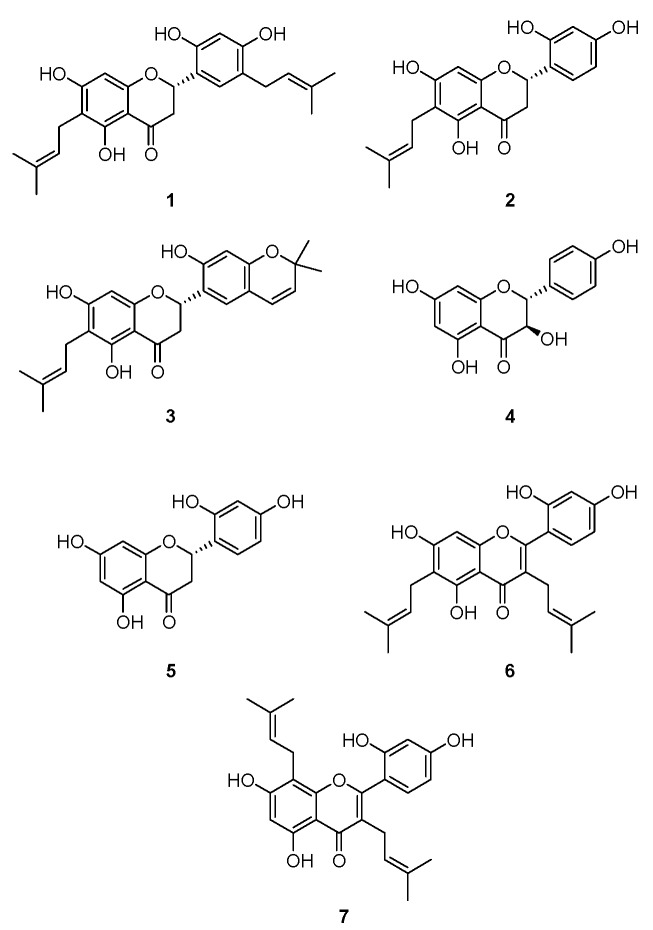
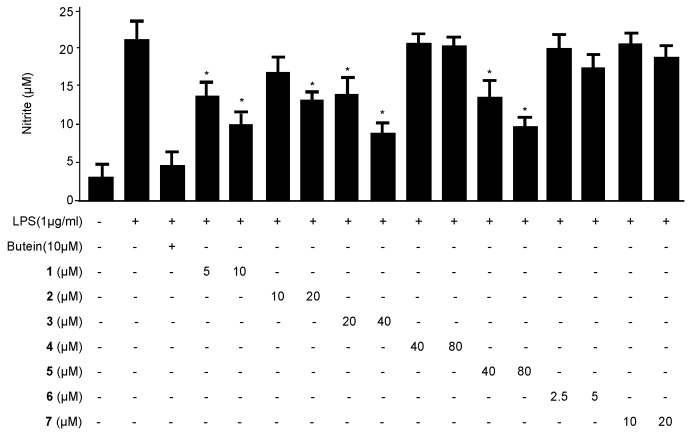
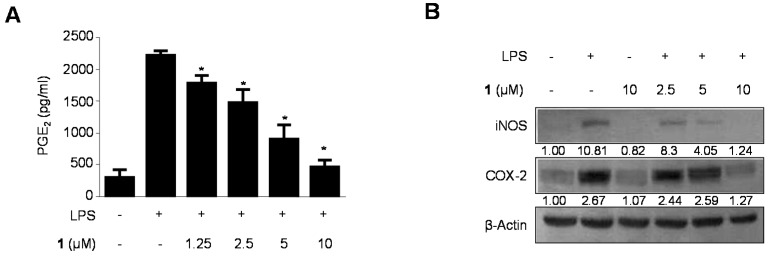
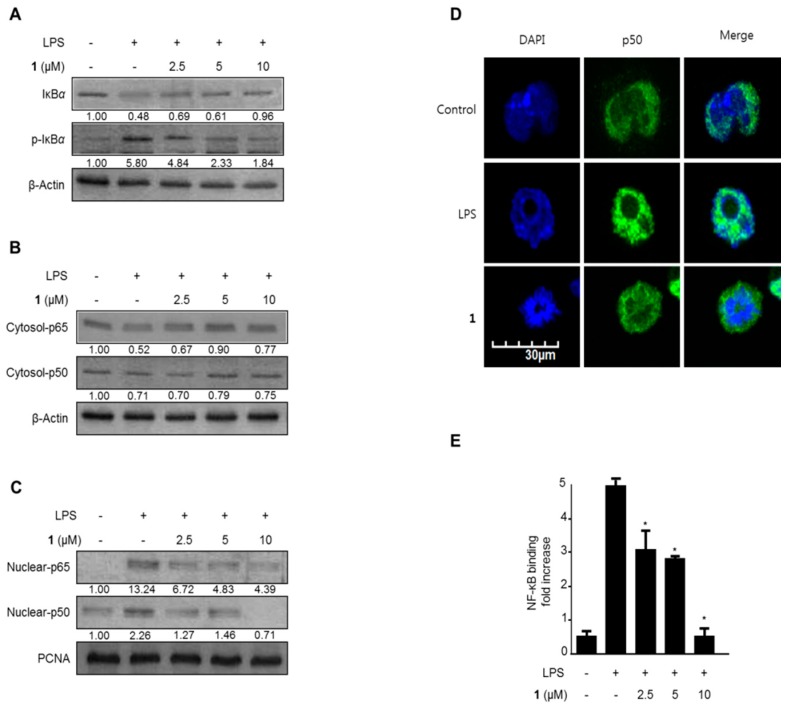
In Korea and China, Cudrania tricuspidata Bureau (Moraceae) is an important traditional medicinal plant used to treat lumbago, hemoptysis, and contusions. The C. tricuspidata methanol extract suppressed both production of NO and PGE₂ in BV2 microglial cells. Cudraflavanone D (1), isolated from this extract, remarkably suppressed the protein expression of inducible NO synthase and cyclooxygenase-2, and decreased the levels of NO and PGE₂ in BV2 microglial cells exposed to lipopolysaccharide. Cudraflavanone D (1) also decreased IL-6, TNF-α, IL-12, and IL-1β production, blocked nuclear translocation of NF-κB heterodimers (p50 and p65) by interrupting the degradation and phosphorylation of inhibitor of IκB-α, and inhibited NF-κB binding. In addition, cudraflavanone D (1) suppressed the phosphorylation of c-Jun N-terminal kinase (JNK) and p38 MAPK pathways. This study indicated that cudraflavanone D (1) can be a potential drug candidate for the cure of neuroinflammation.
在韩国和中国,柘树(桑科)是一种重要的传统药用植物,用于治疗腰痛、咯血和挫伤。柘树甲醇提取物可抑制BV2小胶质细胞中NO和PGE₂的产生。从该提取物中分离得到的柘黄酮D(1)显著抑制诱导型NO合酶和环氧化酶-2的蛋白表达,并降低暴露于脂多糖的BV2小胶质细胞中NO和PGE₂的水平。柘黄酮D(1)还可降低IL-6、TNF-α、IL-12和IL-1β的产生,通过阻断IκB-α抑制剂的降解和磷酸化来阻止NF-κB异二聚体(p50和p65)的核转位,并抑制NF-κB结合。此外,柘黄酮D(1)可抑制c-Jun N端激酶(JNK)和p38 MAPK信号通路的磷酸化。本研究表明,柘黄酮D(1)可能是治疗神经炎症的潜在候选药物。