Ansari Marc, Curtis Patricia Huezo-Diaz, Uppugunduri Chakradhara Rao S, Rezgui Mohammed Aziz, Nava Tiago, Mlakar Vid, Lesne Laurence, Théoret Yves, Chalandon Yves, Dupuis Lee L, Schechter Tao, Bartelink Imke H, Boelens Jaap J, Bredius Robbert, Dalle Jean-Hugues, Azarnoush Saba, Sedlacek Petr, Lewis Victor, Champagne Martin, Peters Christina, Bittencourt Henrique, Krajinovic Maja
Department of Pediatrics, CANSEARCH Research Laboratory, Faculty of Medicine, Geneva, Switzerland.
Department of Pediatrics, Onco-Hematology Unit, Geneva University Hospital, Geneva, Switzerland.
Oncotarget. 2017 Aug 27;8(53):90852-90867. doi: 10.18632/oncotarget.20310. eCollection 2017 Oct 31.
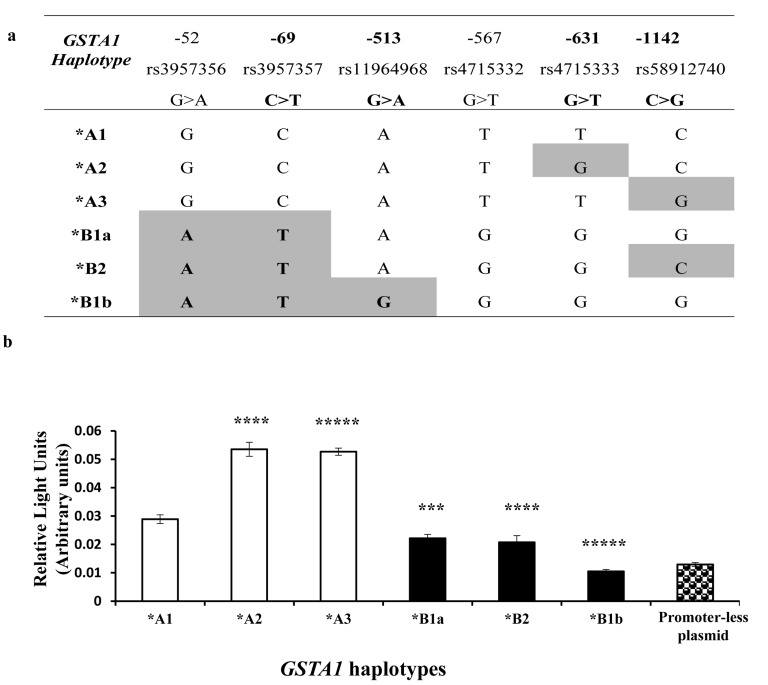
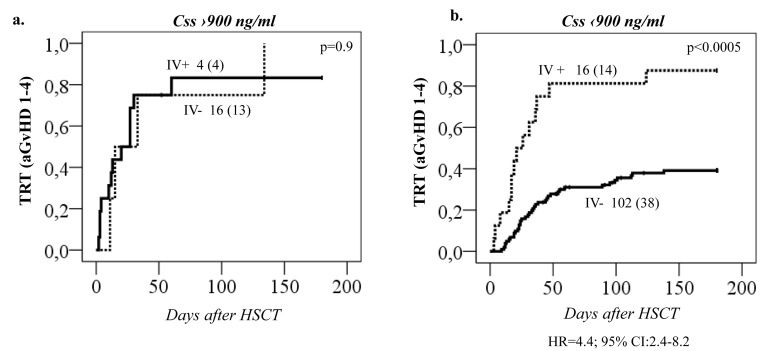
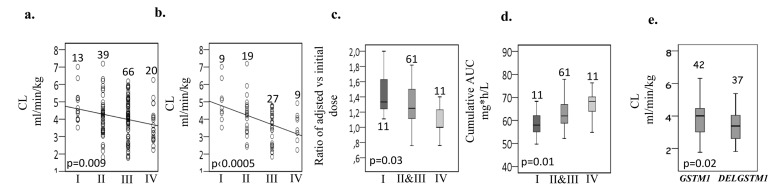
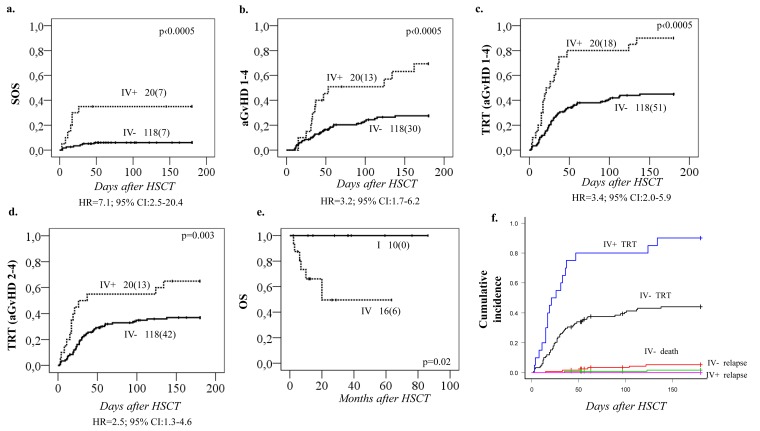
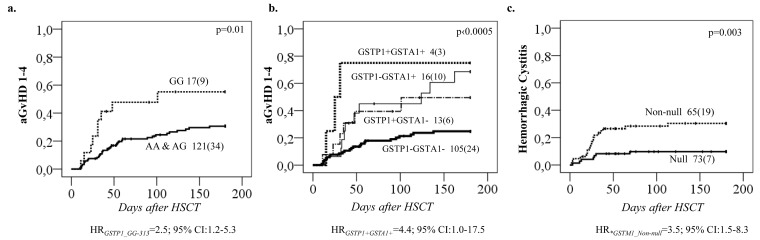
Busulfan (BU) dose adjustment following therapeutic drug monitoring contributes to better outcome of hematopoietic stem cell transplantation (HSCT). Further improvement could be achieved through genotype-guided BU dose adjustments. To investigate this aspect, polymorphism within glutathione S transferase genes were assessed. Particularly, promoter haplotypes of the glutathione S transferase A1 () were evaluated with reporter gene assays and clinically, in a pediatric multi-center study (N =138) through association with BU pharmacokinetics (PK) and clinical outcomes. Promoter activity significantly differed between the haplotypes (p<0.001) supporting their importance in capturing PK variability. Four diplotype groups that significantly correlated with clearance (p=0.009) were distinguished. Diplotypes underlying fast and slow metabolizing capacity showed higher and lower BU clearance (ml/min/kg), respectively. diplotypes with slow metabolizing capacity were associated with higher incidence of sinusoidal obstruction syndrome, acute graft versus host disease and combined treatment-related toxicity (p<0.0005). Among other genes investigated, correlated with acute graft versus host disease grade 1-4 (p=0.01) and genotype was associated with hemorrhagic cystitis (p=0.003). This study further strengthens the hypothesis that diplotypes/genotypes could be incorporated into already existing population pharmacokinetic models for improving first BU dose prediction and HSCT outcomes. (N Clinicaltrials.gov identifier: NCT01257854. Registered 8 December 2010, retrospectively registered).
治疗药物监测后进行白消安(BU)剂量调整有助于改善造血干细胞移植(HSCT)的疗效。通过基因型指导的BU剂量调整可进一步提高疗效。为研究这一方面,对谷胱甘肽S转移酶基因内的多态性进行了评估。特别是,通过报告基因分析对谷胱甘肽S转移酶A1()的启动子单倍型进行了评估,并在一项儿科多中心研究(N = 138)中,通过与BU药代动力学(PK)和临床结果的关联进行了临床评估。单倍型之间的启动子活性存在显著差异(p<0.001),支持了它们在捕捉PK变异性方面的重要性。区分出四个与清除率显著相关的双倍型组(p = 0.009)。具有快速和缓慢代谢能力的双倍型分别显示出较高和较低的BU清除率(ml/min/kg)。具有缓慢代谢能力的双倍型与窦性阻塞综合征、急性移植物抗宿主病和联合治疗相关毒性的较高发生率相关(p<0.0005)。在研究的其他基因中,与1-4级急性移植物抗宿主病相关(p = 0.01),而基因型与出血性膀胱炎相关(p = 0.003)。本研究进一步强化了这样的假设,即双倍型/基因型可纳入现有的群体药代动力学模型,以改善首次BU剂量预测和HSCT结果。(N Clinicaltrials.gov标识符:NCT01257854。于2010年12月8日注册,回顾性注册)