Center for Medical Science and Technology Studies, Section for Health Services Research, Department of Public Health, University of Copenhagen, Denmark.
Scand J Public Health. 2020 Jun;48(4):400-404. doi: 10.1177/1403494817745189. Epub 2017 Dec 5.
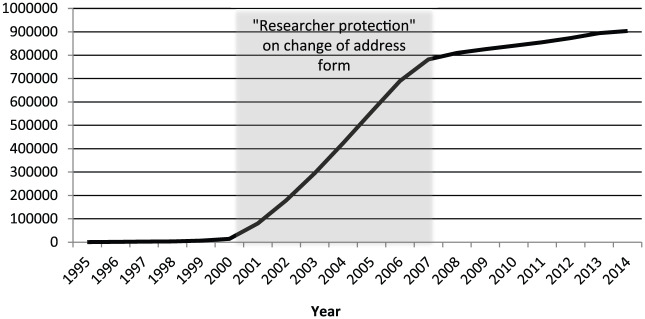
In Denmark, citizens participate in register-based research without the possibility of opting out. However, in 1995 it was made possible for Danish citizens to register an opt-out called 'researcher protection' [], which implied that researchers could not contact people to invite them to participate in research projects, such as clinical trials or questionnaries, based on their registrations in national registers. Data already registered could still be used for research. In 2014, this possibility of opt-out was revoked by law. The aims of this paper are to understand how the Danish researcher protection system came about, why it was terminated and what we can we learn from this example. We conducted a descriptive analysis of a copy of the former researcher protection register along with policies and media debate surrounding the rise and revocation of the researcher protection system. Our results show how both the inception and the abolishment of researcher protection appear to be ad hoc and without specified criteria of success. An examination of the recorded entries in the researcher protection registry could have led to changes in its administration as an alternative to its total abolition.
在丹麦,公民可以参与基于登记的研究,且不能选择退出。然而,在 1995 年,丹麦公民可以登记选择退出,称为“研究人员保护”[],这意味着研究人员不能根据他们在国家登记册中的登记来联系人们邀请他们参加研究项目,如临床试验或问卷调查。已经注册的数据仍然可以用于研究。2014 年,法律废除了这种选择退出的可能性。本文的目的是了解丹麦研究人员保护系统是如何产生的,为什么要终止它,以及我们可以从这个例子中学到什么。我们对前研究人员保护登记册的副本以及围绕研究人员保护系统的兴起和废除的政策和媒体辩论进行了描述性分析。我们的结果表明,研究人员保护的设立和废除似乎都是临时的,没有具体的成功标准。对研究人员保护登记册中记录的条目进行审查,可以作为其完全废除的替代方案,对其管理进行更改。