Beijing Key Laboratory of Farmland Soil Pollution Prevention and Remediation, College of Resources and Environmental Science, China Agricultural University, Beijing, 100193, China.
Institute of Plant Nutrition and Resources, Beijing Academy of Agriculture and Forestry Sciences, Beijing, 100097, China.
Sci Rep. 2017 Dec 5;7(1):17020. doi: 10.1038/s41598-017-17219-y.
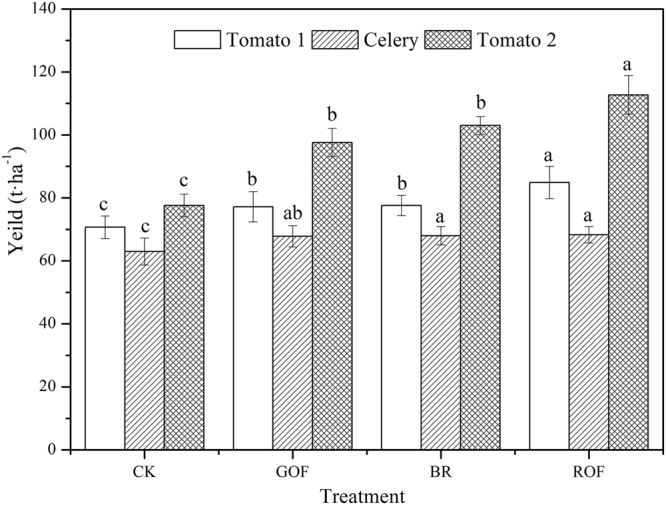
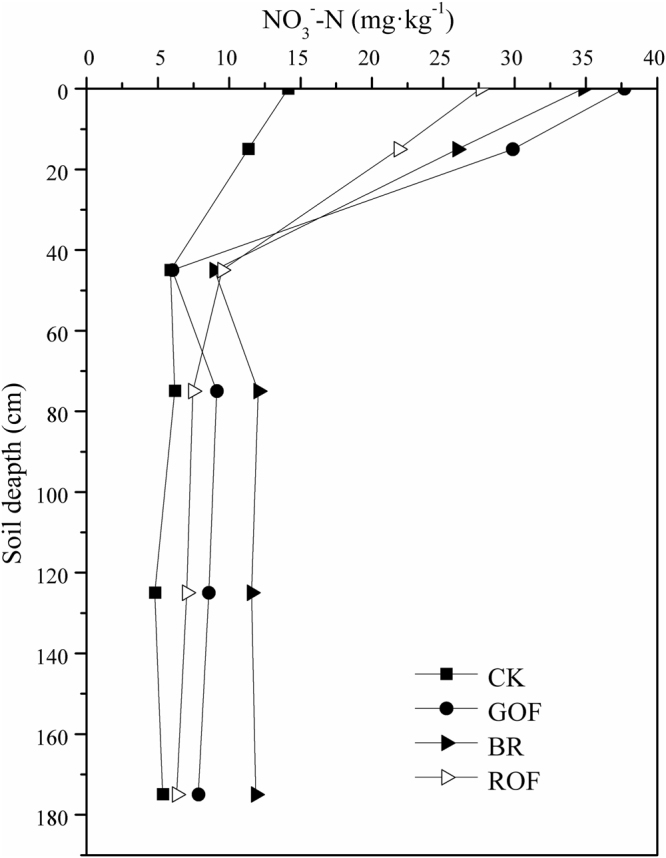
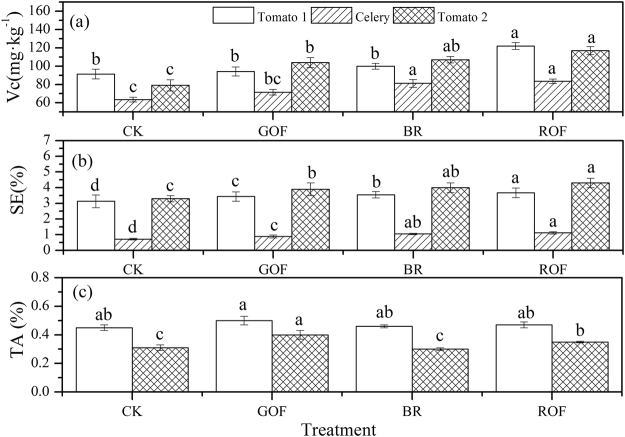
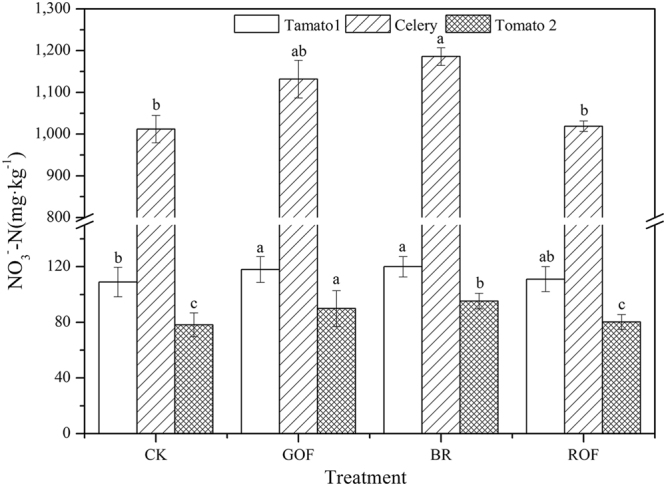
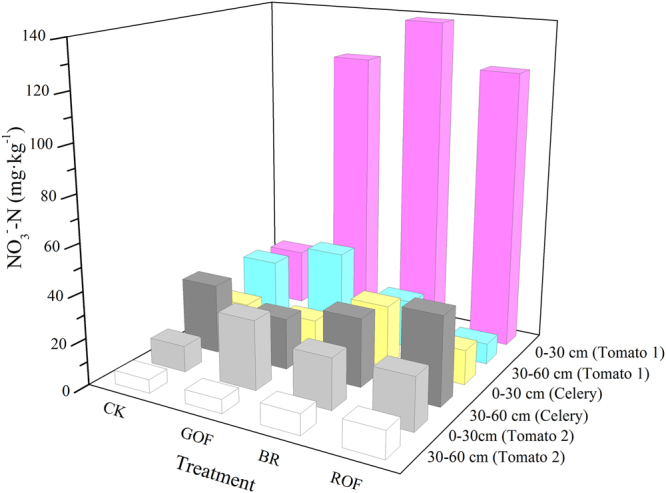
The effect of chicken manure after different disposal methods (water-logged composting, GOF; anaerobic digestion, BR; thermophilic composting, ROF) on vegetable growth and environmental risk was investigated under the tomato-celery-tomato field. Results showed that organic fertilizers significantly increased vegetable yield and quality, but with inappropriate application may cause serious environmental risk such as nitrate pollution. Maximum vegetable yield of 80.9, 68.3, 112.7 t·ha (first, second and third rotation crop, respectively) with best vegetable quality was obtained in ROF treatment. The highest N use efficiency with the least nitrate enrichment in soil was also found in ROF treatment. Moreover, under this fertilization way, nitrate concentration in soil leachate dropped to 6.4 mg·L, which satisfied the threshold (<10 mg·L) for drinking water set by the US Environmental Protection Agency. Thus, ROF was suggested to be the optimal fertilizer with the best yield, quality and the least environmental risk under the tomato-celery" rotation system.
研究了不同处理方法(淹水堆肥、GOF;厌氧消化、BR;高温堆肥、ROF)后的鸡粪对番茄-芹菜-番茄轮作系统中蔬菜生长和环境风险的影响。结果表明,有机肥显著提高了蔬菜的产量和品质,但施用不当可能会导致硝酸盐污染等严重的环境风险。在 ROF 处理中,蔬菜的最大产量分别为 80.9、68.3 和 112.7 t·ha(第一、第二和第三茬作物),蔬菜品质最佳。ROF 处理还发现了最高的氮素利用率和土壤中最少的硝酸盐积累。此外,在这种施肥方式下,土壤浸出液中的硝酸盐浓度下降到 6.4mg·L,满足了美国环境保护署规定的饮用水阈值(<10mg·L)。因此,ROF 被建议作为最佳肥料,在番茄-芹菜轮作系统中具有最佳的产量、质量和最小的环境风险。