Department of Microbiology and Immunology, Tokyo Women's Medical University, 8-1, Kawada-cho, Shinjuku-ku, Tokyo 162-8666, Japan.
Department of Life Science and Medical Bioscience, Waseda University, 2-2 Wakamatsu-cho, Shinjuku-ku, Tokyo 162-8480, Japan.
Nutrients. 2017 Dec 6;9(12):1329. doi: 10.3390/nu9121329.
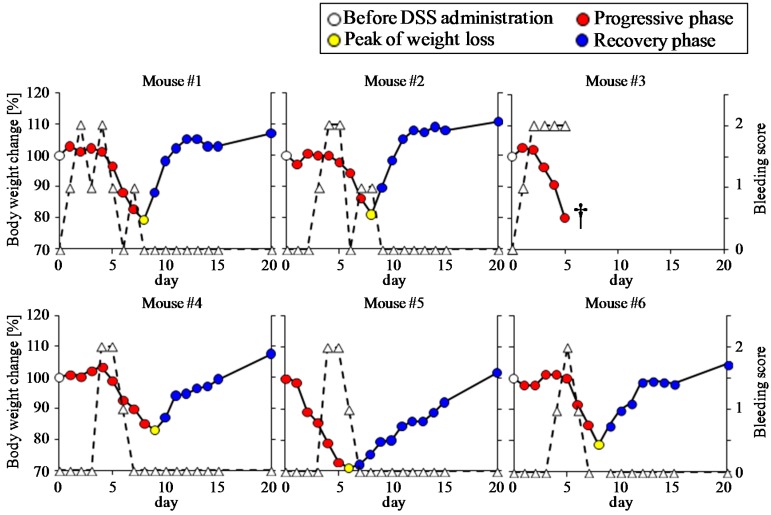
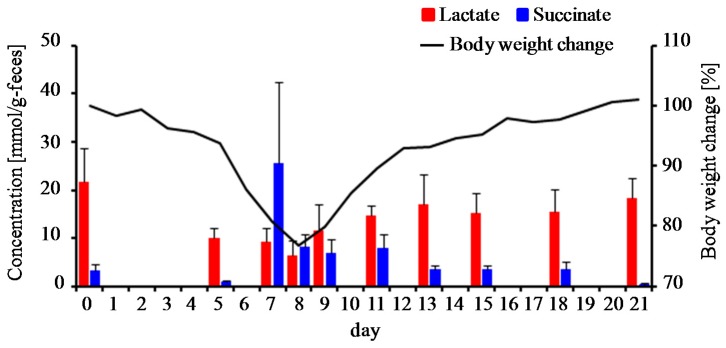
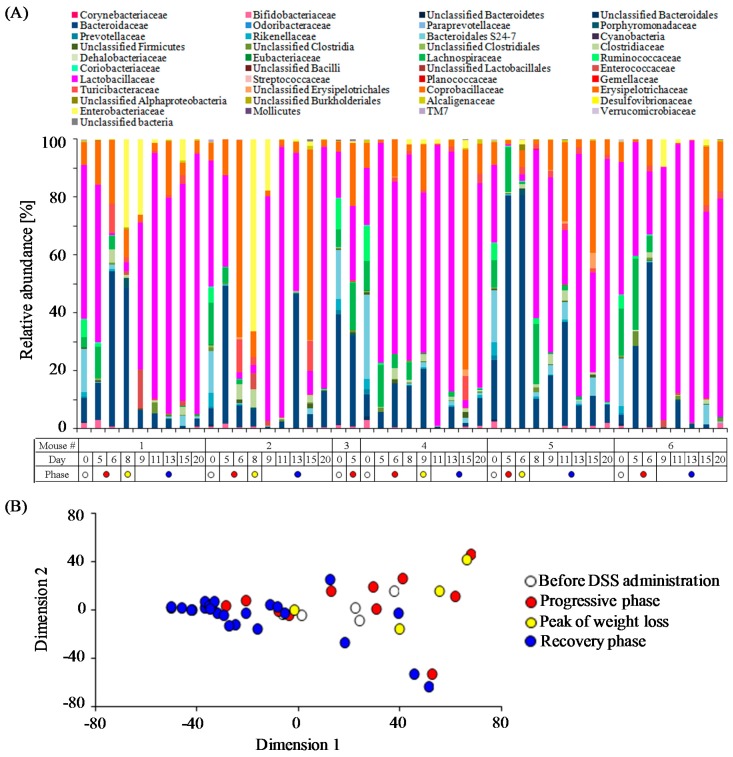
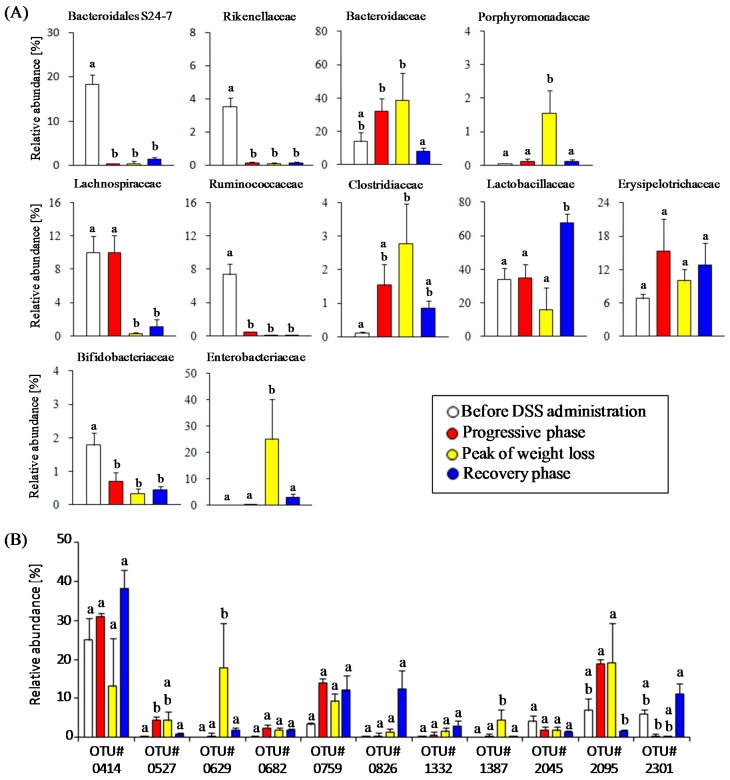
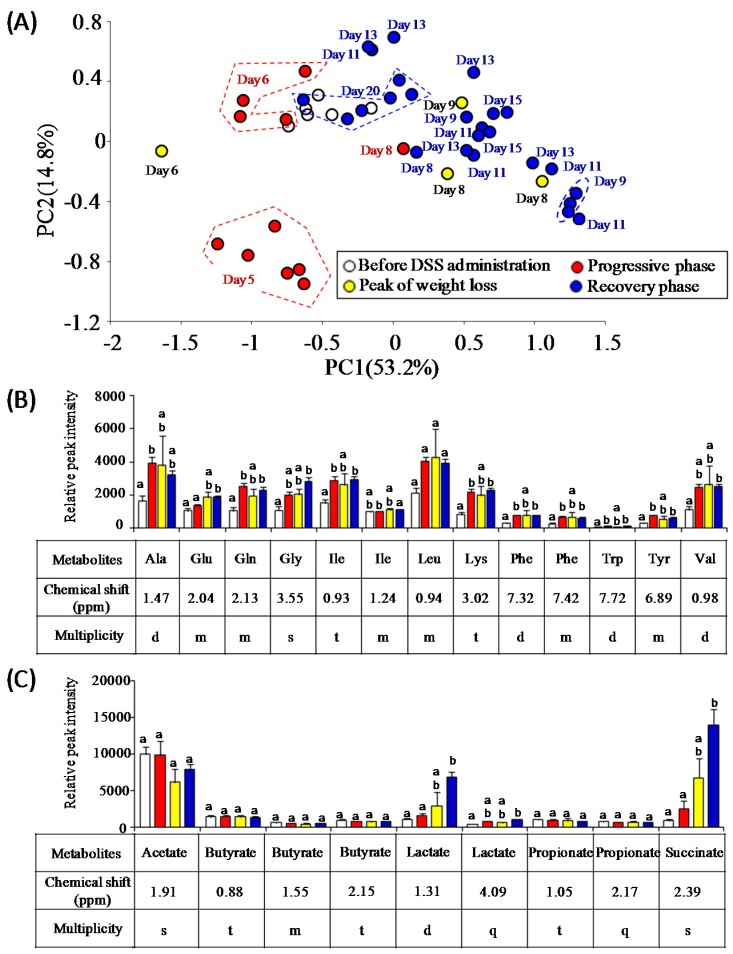
The imbalance of gut microbiota is known to be associated with inflammatory bowel disease, but it remains unknown whether dysbiosis is a cause or consequence of chronic gut inflammation. In order to investigate the effects of gut inflammation on microbiota and metabolome, the sequential changes in gut microbiota and metabolites from the onset of colitis to the recovery in dextran sulfate sodium-induced colitic mice were characterized by using meta 16S rRNA sequencing and proton nuclear magnetic resonance (¹H-NMR) analysis. Mice in the colitis progression phase showed the transient expansions of two bacterial families including Bacteroidaceae and Enterobacteriaceae and the depletion of major gut commensal bacteria belonging to the uncultured Bacteroidales family S24-7, Rikenellaceae, Lachnospiraceae, and Ruminococcaceae. After the initiation of the recovery, commensal members promptly predominated in gut while other normally abundant bacteria excluding the Erysipelotrichaceae remained diminished. Furthermore, ¹H-NMR analysis revealed characteristic fluctuations in fecal levels of organic acids (lactate and succinate) associated with the disease states. In conclusion, acute intestinal inflammation is a perturbation factor of gut microbiota but alters the intestinal environments suitable for members.
肠道微生物群落失衡与炎症性肠病有关,但微生物群落失调是慢性肠道炎症的原因还是结果仍不清楚。为了研究肠道炎症对微生物群和代谢组的影响,我们采用宏基因组 16S rRNA 测序和质子核磁共振(¹H-NMR)分析,描述了葡聚糖硫酸钠诱导的结肠炎小鼠从结肠炎发病到恢复过程中肠道微生物群和代谢物的顺序变化。在结肠炎进展阶段,小鼠中包括拟杆菌科和肠杆菌科在内的两个细菌家族出现短暂扩张,而属于未培养的拟杆菌目 S24-7 科、理研菌科、毛螺菌科和瘤胃球菌科的主要肠道共生菌则减少。在恢复开始后,共生菌成员迅速在肠道中占主导地位,而其他通常丰富的细菌(除了埃希氏菌科)仍然减少。此外,¹H-NMR 分析显示与疾病状态相关的粪便有机酸(乳酸和琥珀酸)水平的特征波动。总之,急性肠道炎症是肠道微生物群落的扰动因素,但会改变适合共生菌的肠道环境。