Department of Respiration, First Hospital of Tsinghua University, Beijing, 100016, China.
Division of Research and Education, First Hospital of Tsinghua University, Beijing, 100016, China.
BMC Pulm Med. 2017 Dec 6;17(1):174. doi: 10.1186/s12890-017-0513-4.
Idiopathic pulmonary fibrosis (IPF) is an irreversible interstitial pulmonary disease featured by high mortality, chronic and progressive course, and poor prognosis with unclear etiology. Currently, more studies have been focusing on identifying biomarkers to predict the progression of IPF, such as genes, proteins, and lipids. Lipids comprise diverse classes of molecules and play a critical role in cellular energy storage, structure, and signaling. The role of lipids in respiratory diseases, including cystic fibrosis, asthma and chronic obstructive pulmonary disease (COPD) has been investigated intensely in the recent years. The human serum lipid profiles in IPF patients however, have not been thoroughly understood and it will be very helpful if there are available molecular biomarkers, which can be used to monitor the disease progression or provide prognostic information for IPF disease.
In this study, we performed the ultraperformance liquid chromatography coupled with quadrupole time of flight mass spectrometry (UPLC-QTOF/MS) to detect the lipid variation and identify biomarker in plasma of IPF patients. The plasma were from 22 IPF patients before received treatment and 18 controls.
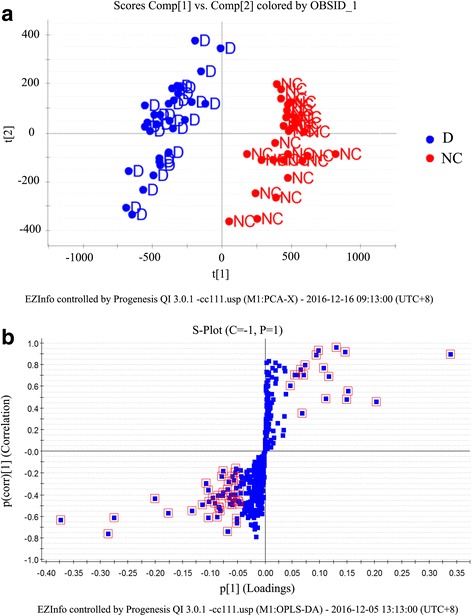
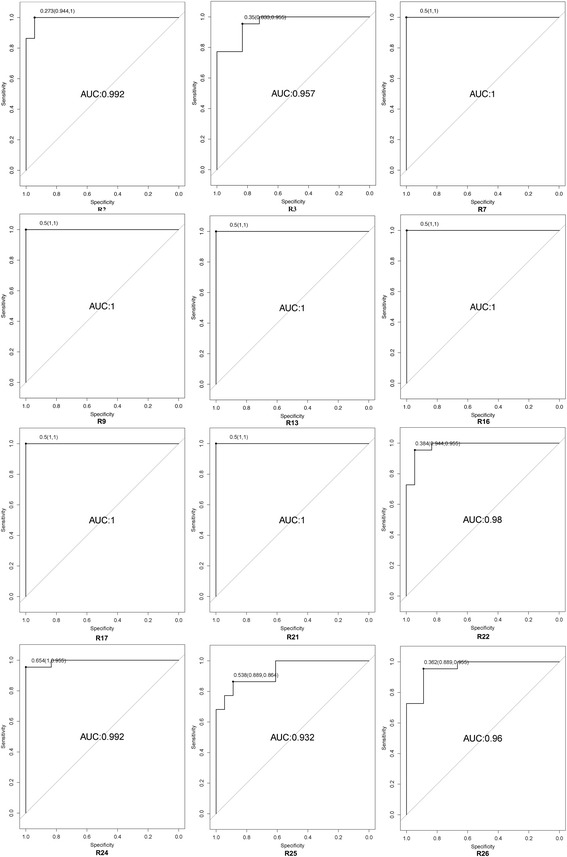
A total of 507 individual blood lipid species were determined with lipidomics from the 40 plasma samples including 20 types of fatty acid, 159 types of glycerolipids, 221 types of glycerophospholipids, 47 types of sphingolipids, 46 types of sterol lipids, 7 types of prenol lipids, 3 types of saccharolipids, and 4 types of polyketides. By comparing the variations in the lipid metabolite levels in IPF patients, a total of 62 unique lipids were identified by statistical analysis including 24 kinds of glycerophoslipids, 30 kinds of glycerolipids, 3 kinds of sterol lipids, 4 kinds of sphingolipids and 1 kind of fatty acids. Finally, 6 out of 62 discriminating lipids were selected as the potential biomarkers, which are able to differentiate between IPF disease and controls with ROC analysis.
Our results provided vital information regarding lipid metabolism in IPF patients and more importantly, a few potentially promising biomarkers were firstly identified which may have a predictive role in monitoring and diagnosing IPF disease.
特发性肺纤维化(IPF)是一种不可逆的间质性肺疾病,具有高死亡率、慢性和进行性病程以及预后不良的特点,病因不明。目前,越来越多的研究集中在识别预测 IPF 进展的生物标志物上,如基因、蛋白质和脂质。脂质由多种分子组成,在细胞能量储存、结构和信号转导中起着至关重要的作用。近年来,人们对脂质在囊性纤维化、哮喘和慢性阻塞性肺疾病(COPD)等呼吸疾病中的作用进行了深入研究。然而,IPF 患者的人血清脂质谱尚未得到充分了解,如果有可用的分子生物标志物,可用于监测疾病进展或为 IPF 疾病提供预后信息,将非常有帮助。
在这项研究中,我们使用超高效液相色谱与四级杆飞行时间质谱联用(UPLC-QTOF/MS)检测 IPF 患者血浆中的脂质变化并鉴定生物标志物。这些血浆来自 22 名接受治疗前的 IPF 患者和 18 名对照者。
通过脂质组学分析,从 40 个血浆样本中确定了 507 种个体血液脂质,包括 20 种脂肪酸、159 种甘油酯、221 种甘油磷脂、47 种鞘脂、46 种甾醇脂质、7 种prenol 脂质、3 种 saccharolipids 和 4 种 polyketides。通过比较 IPF 患者脂质代谢物水平的变化,通过统计分析共鉴定出 62 种独特的脂质,包括 24 种甘油磷脂、30 种甘油酯、3 种甾醇脂质、4 种鞘脂和 1 种脂肪酸。最后,62 种区分脂质中有 6 种被选为潜在的生物标志物,通过 ROC 分析能够区分 IPF 疾病和对照组。
我们的研究结果提供了有关 IPF 患者脂质代谢的重要信息,更重要的是,首次鉴定了一些有希望的潜在生物标志物,这些标志物可能在监测和诊断 IPF 疾病方面具有预测作用。