Yannarelli Gustavo, Pacienza Natalia, Montanari Sonia, Santa-Cruz Diego, Viswanathan Sowmya, Keating Armand
Cell Therapy Program, Princess Margaret Cancer Centre, University Health Network, Toronto, ON, Canada.
Laboratorio de Regulación Génica y Células Madre, Instituto de Medicina Traslacional, Trasplante y Bioingeniería (IMeTTyB), Universidad Favaloro/CONICET, Buenos Aires, Argentina.
PLoS One. 2017 Dec 7;12(12):e0189131. doi: 10.1371/journal.pone.0189131. eCollection 2017.
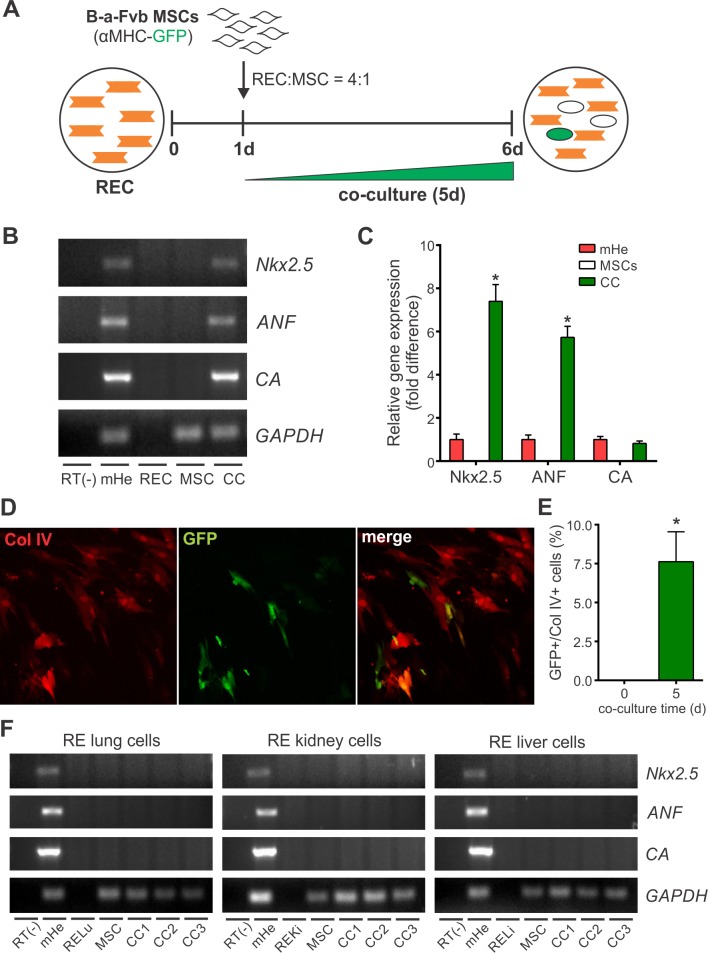
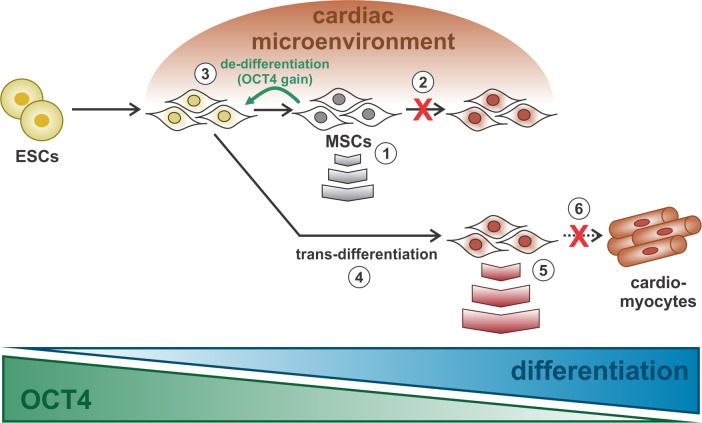
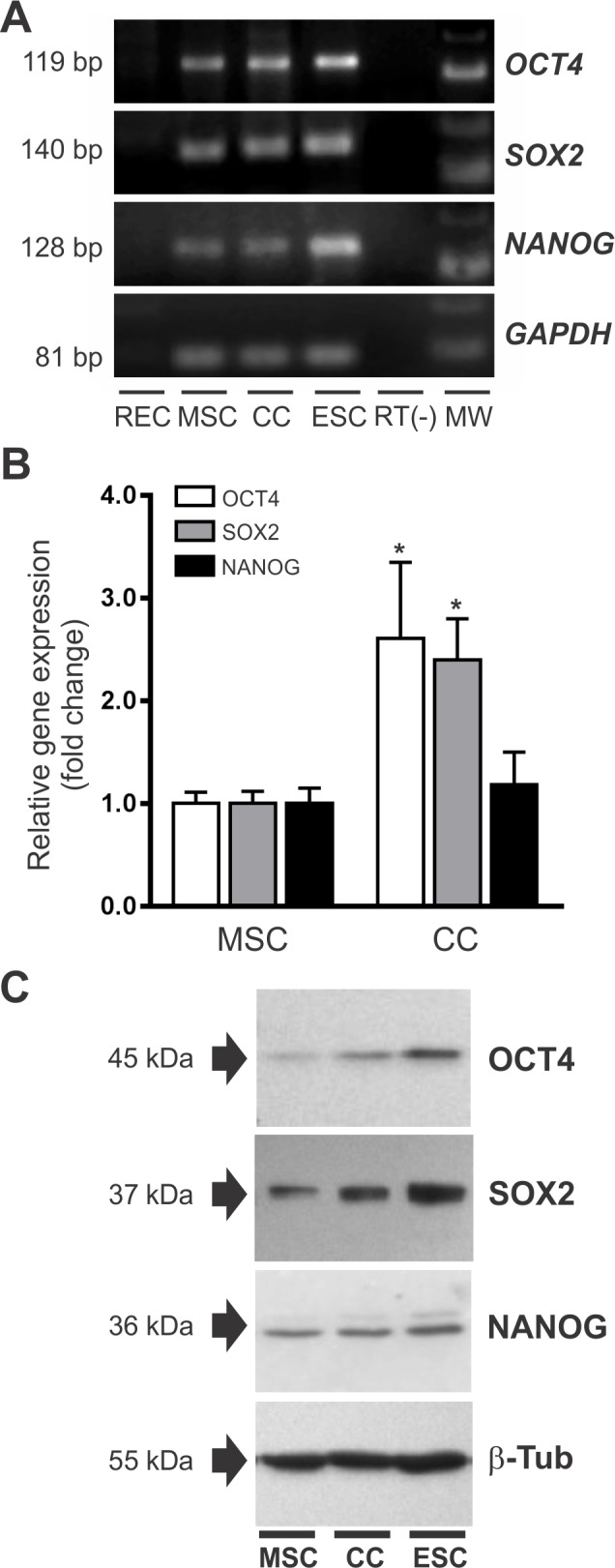
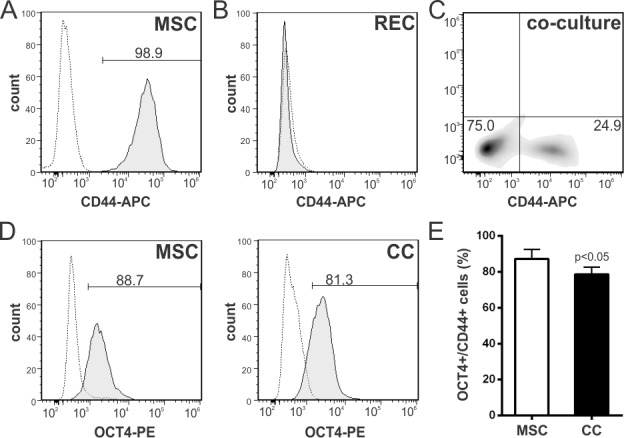
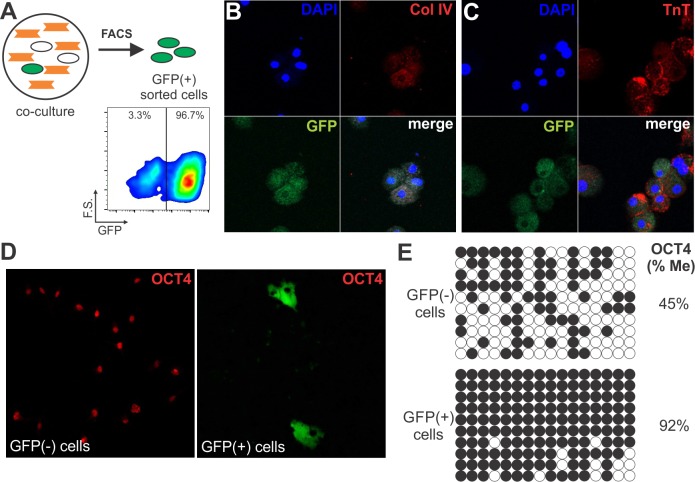
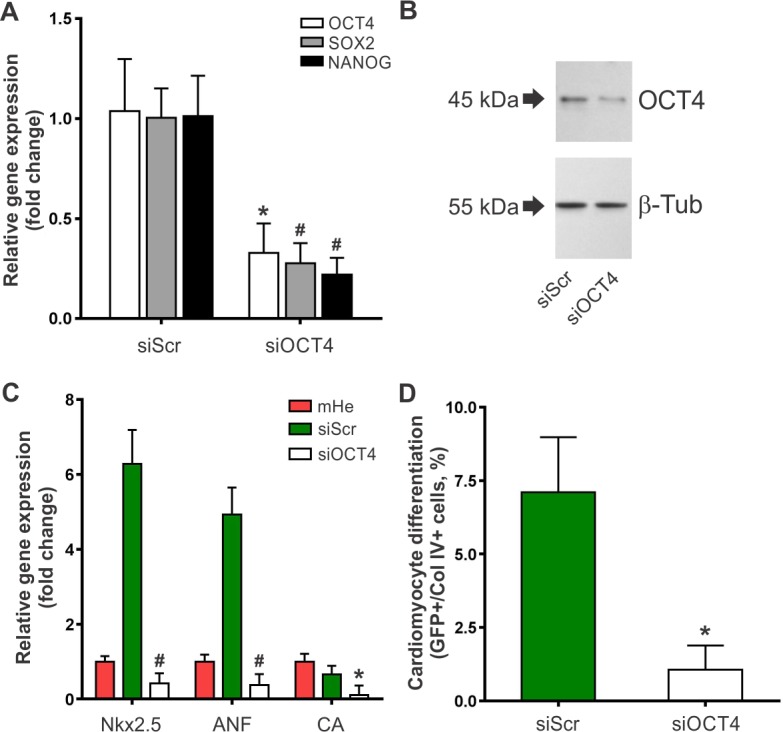
Mesenchymal stem/stromal cells (MSCs) are in numerous cell therapy clinical trials, including for injured myocardium. Acquisition of cardiomyocyte characteristics by MSCs may improve cardiac regeneration but the mechanisms regulating this process are unclear. Here, we investigated whether the pluripotency transcription factor OCT4 is involved in the activation of cardiac lineage genetic programs in MSCs. We employed our established co-culture model of MSCs with rat embryonic cardiomyocytes showing co-expression of cardiac markers on MSCs independent of cell fusion. Bone marrow-derived MSCs were isolated from transgenic mice expressing GFP under the control of the cardiac-specific α-myosin heavy chain promoter. After 5 days of co-culture, MSCs expressed cardiac specific genes, including Nkx2.5, atrial natriuretic factor and α-cardiac actin. The frequency of GFP+ cells was 7.6±1.9%, however, these cells retained the stromal cell phenotype, indicating, as expected, only partial differentiation. Global OCT4 expression increased 2.6±0.7-fold in co-cultured MSCs and of interest, 87±5% vs 79±4% of MSCs expressed OCT4 by flow cytometry in controls and after co-culture, respectively. Consistent with the latter observation, the GFP+ cells did not express nuclear OCT4 and showed a significant increase in OCT4 promoter methylation compared with undifferentiated MSCs (92% vs 45%), inferring that OCT4 is regulated by an epigenetic mechanism. We further showed that siRNA silencing of OCT4 in MSCs resulted in a reduced frequency of GFP+ cells in co-culture to less than 1%. Our data infer that OCT4 expression may have a direct effect on partial cardiomyocyte reprogramming of MSCs and suggest a new mechanism(s) associated with MSC multipotency and a requirement for crosstalk with the cardiac microenvironment.
间充质干/基质细胞(MSC)正在参与众多细胞治疗临床试验,包括用于受损心肌的治疗。MSC获得心肌细胞特性可能会改善心脏再生,但调节这一过程的机制尚不清楚。在此,我们研究了多能性转录因子OCT4是否参与了MSC中心脏谱系遗传程序的激活。我们采用了已建立的MSC与大鼠胚胎心肌细胞的共培养模型,该模型显示MSC上心脏标志物的共表达与细胞融合无关。从在心脏特异性α-肌球蛋白重链启动子控制下表达绿色荧光蛋白(GFP)的转基因小鼠中分离出骨髓来源的MSC。共培养5天后,MSC表达了心脏特异性基因,包括Nkx2.5、心房利钠因子和α-心脏肌动蛋白。GFP+细胞的频率为7.6±1.9%,然而,这些细胞保留了基质细胞表型,正如预期的那样,仅发生了部分分化。共培养的MSC中OCT4的整体表达增加了2.6±0.7倍,有趣的是,对照和共培养后通过流式细胞术检测分别有87±5%和79±4%的MSC表达OCT4。与后一观察结果一致,GFP+细胞不表达核OCT4,并且与未分化的MSC相比,OCT4启动子甲基化显著增加(92%对45%),这表明OCT4受表观遗传机制调控。我们进一步表明,在MSC中用小干扰RNA(siRNA)沉默OCT4会导致共培养中GFP+细胞的频率降低至1%以下。我们的数据表明,OCT4表达可能对MSC的部分心肌细胞重编程有直接影响,并提示了一种与MSC多能性相关的新机制以及与心脏微环境相互作用的必要性。