Department of Cardiac Surgery, Reference and Translation Center for Cardiac Stem Cell Therapy (RTC), Rostock University Medical Center, 18057 Rostock, Germany.
Faculty of Interdisciplinary Research, Department Life, Light & Matter, University Rostock, 18059 Rostock, Germany.
Cells. 2020 Feb 22;9(2):504. doi: 10.3390/cells9020504.
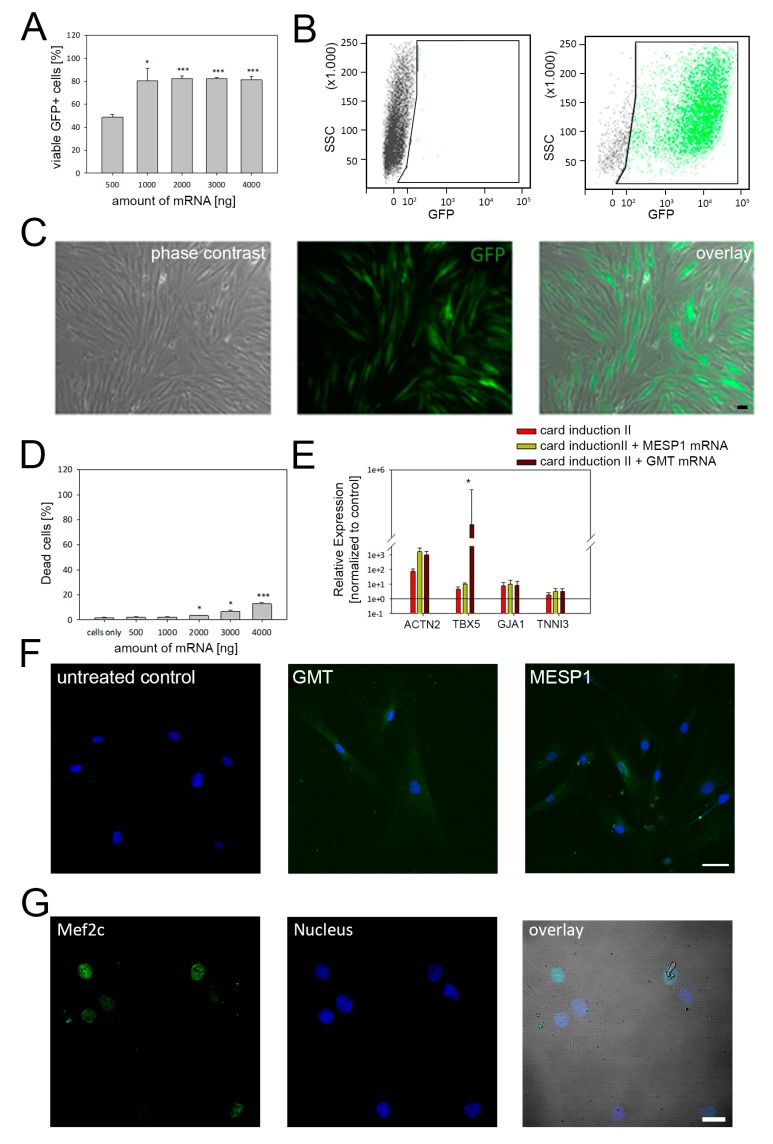
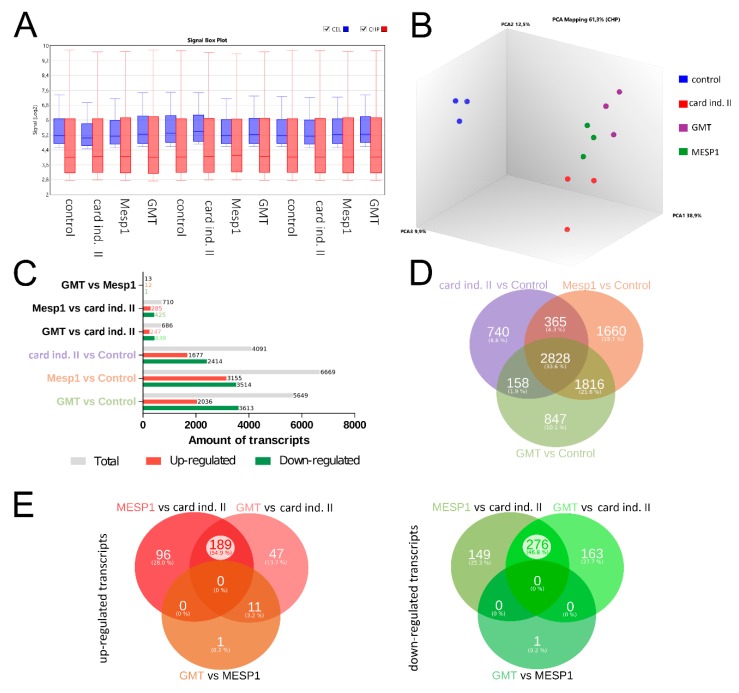
Multipotent adult mesenchymal stromal cells (MSCs) could represent an elegant source for the generation of patient-specific cardiomyocytes needed for regenerative medicine, cardiovascular research, and pharmacological studies. However, the differentiation of adult MSC into a cardiac lineage is challenging compared to embryonic stem cells or induced pluripotent stem cells. Here we used non-integrative methods, including microRNA and mRNA, for cardiac reprogramming of adult MSC derived from bone marrow, dental follicle, and adipose tissue. We found that MSC derived from adipose tissue can partly be reprogrammed into the cardiac lineage by transient overexpression of GATA4, TBX5, MEF2C, and MESP1, while cells isolated from bone marrow, and dental follicle exhibit only weak reprogramming efficiency. qRT-PCR and transcriptomic analysis revealed activation of a cardiac-specific gene program and up-regulation of genes known to promote cardiac development. Although we did not observe the formation of fully mature cardiomyocytes, our data suggests that adult MSC have the capability to acquire a cardiac-like phenotype when treated with mRNA coding for transcription factors that regulate heart development. Yet, further optimization of the reprogramming process is mandatory to increase the reprogramming efficiency.
多能成体间充质干细胞(MSCs)可能是生成用于再生医学、心血管研究和药物学研究的患者特异性心肌细胞的一种理想来源。然而,与胚胎干细胞或诱导多能干细胞相比,将成体 MSC 分化为心脏谱系是具有挑战性的。在这里,我们使用非整合方法,包括 microRNA 和 mRNA,对源自骨髓、齿槽骨和脂肪组织的成体 MSC 进行心脏重编程。我们发现,通过瞬时过表达 GATA4、TBX5、MEF2C 和 MESP1,脂肪组织来源的 MSC 可以部分重编程为心脏谱系,而骨髓和齿槽骨分离的细胞仅表现出较弱的重编程效率。qRT-PCR 和转录组分析显示心脏特异性基因程序的激活,以及已知促进心脏发育的基因的上调。尽管我们没有观察到完全成熟的心肌细胞的形成,但我们的数据表明,当用编码调节心脏发育的转录因子的 mRNA 处理时,成体 MSC 具有获得类似心肌细胞表型的能力。然而,为了提高重编程效率,有必要进一步优化重编程过程。