Smatti Maria K, Yassine Hadi M, AbuOdeh Raed, AlMarawani Asmaa, Taleb Sara A, Althani Asmaa A, Nasrallah Gheyath K
Biomedical Research Center, Qatar University, Doha, Qatar.
Department of Biomedical Science, College of Health Sciences, Qatar University, Doha, Qatar.
PLoS One. 2017 Dec 11;12(12):e0189033. doi: 10.1371/journal.pone.0189033. eCollection 2017.
The Epstein-Barr virus (EBV) is the causative agent of infectious mononucleosis. EBV is highly prevalent lymphotropic herpesvirus and has been linked to several malignancies. Transmission is generally by oral secretions, but can be through blood transfusions and organ transplantations. This study aimed to determine the seroprevalence, viremia rates, and circulating genotypes of EBV in healthy blood donors in Qatar.
Blood samples from 673 blood donors of different nationalities residing in Qatar (mainly Qatar, Egypt, Syria, Jordan, Pakistan, and India) were collected and tested for anti-EBV capsid (VCA; IgG & IgM), nuclear (EBNA; IgG), and early (EA-D; IgG) antigens. Avidity testing was determined when active infection was suspected. DNA was extracted from the buffy coat and subjected to EBV-DNA quantification using qRT-PCR. Genotyping was performed using nested-PCR targeting EBV-EBNA2 gene, and phylogeny by sequence analysis of the LMP-1 gene.
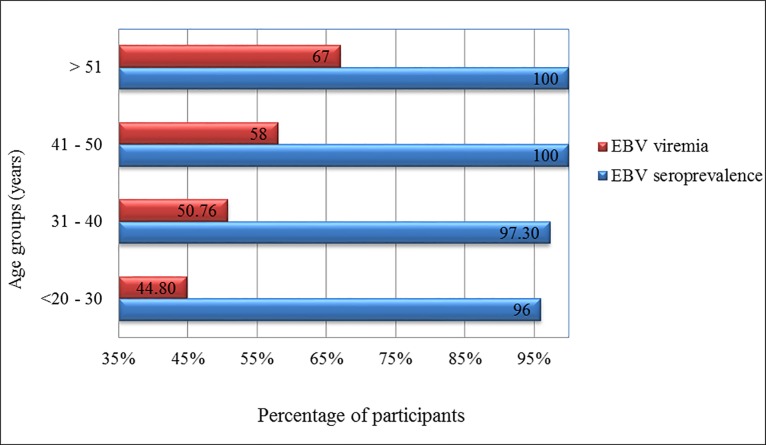
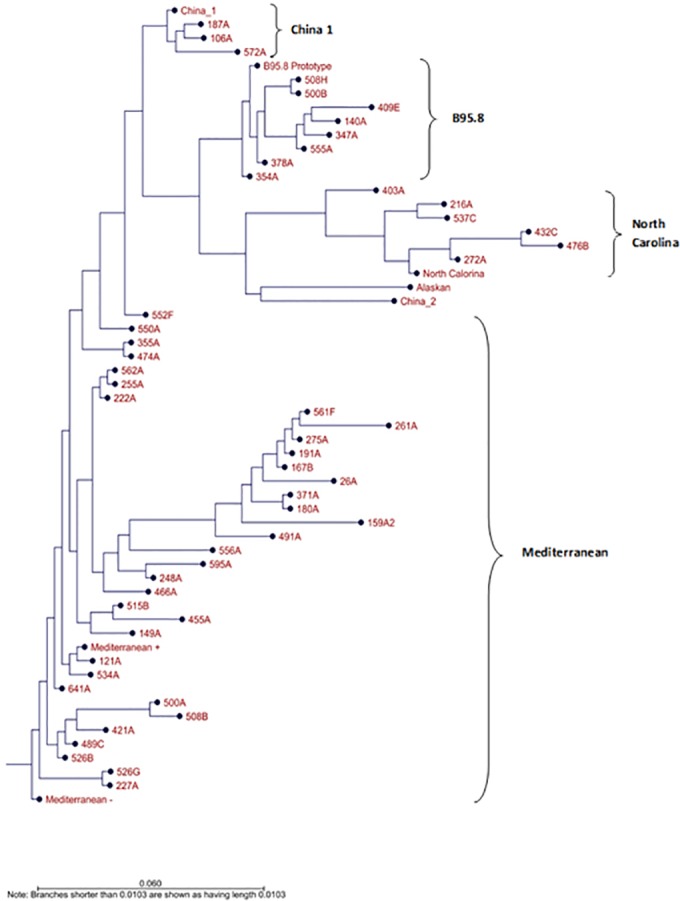
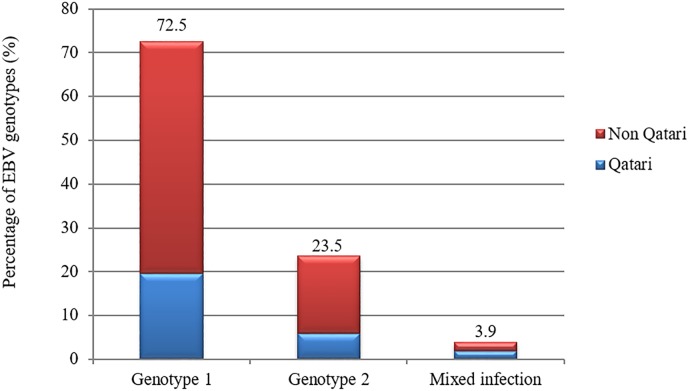
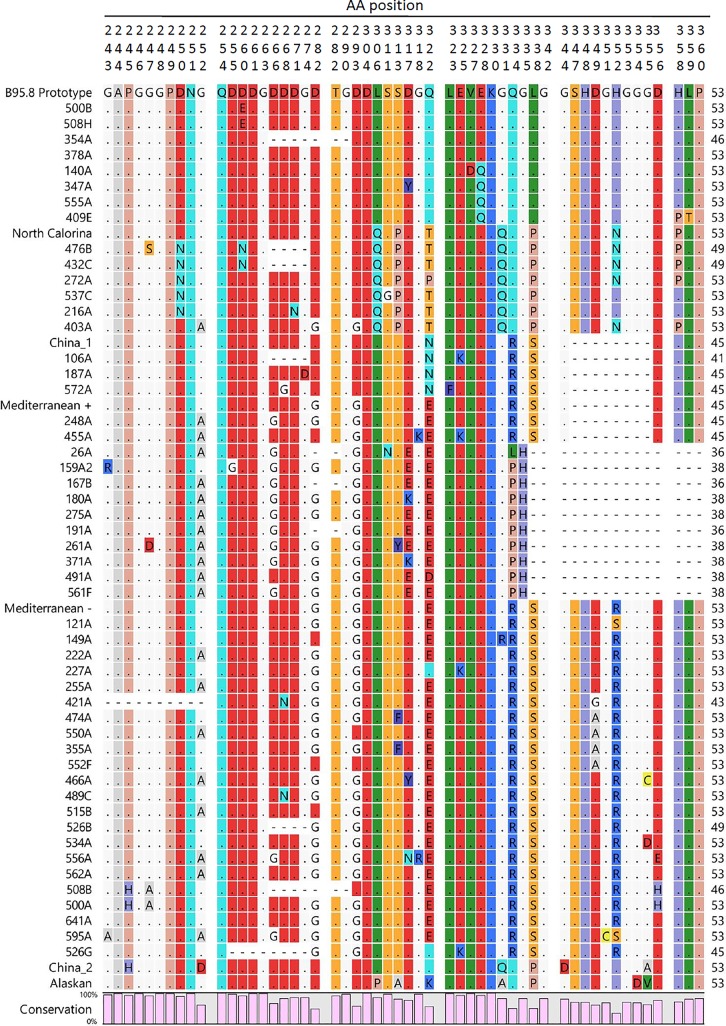
97.9% (673/659) of the samples were seropositive as indicated by the presence VCA-IgG, while 52.6% (354/673) had detectible EBV-DNA. EBV seroprevalence and viremia rates increased significantly with age. Genotyping of 51 randomly selected samples showed predominance of Genotype 1 (72.5%, 37/51) as compared to genotype 2 (3.5%), and mixed infections were detected in 4% of the samples. Sub-genotyping for these samples revealed that the Mediterranean strain was predominant (65.3%), followed by B95.8 prototype and North Carolina strains (12.2% each), and China1 strain (6%).
As a first study to evaluate EBV infection in highly diverse population in Qatar, where expatriates represent more than 85% of the population, our results indicated high seroprevalence and viremia rate of EBV in different nationalities, with genotype 1 and Mediterranean strain being predominant. Clinical significance of these finding have not been investigated and shall be evaluated in future studies.
爱泼斯坦-巴尔病毒(EBV)是传染性单核细胞增多症的病原体。EBV是一种高度流行的嗜淋巴细胞疱疹病毒,与多种恶性肿瘤有关。传播通常通过口腔分泌物,但也可通过输血和器官移植传播。本研究旨在确定卡塔尔健康献血者中EBV的血清流行率、病毒血症发生率和循环基因型。
收集了居住在卡塔尔的673名不同国籍献血者(主要来自卡塔尔、埃及、叙利亚、约旦、巴基斯坦和印度)的血样,检测抗EBV衣壳(VCA;IgG和IgM)、核(EBNA;IgG)和早期(EA-D;IgG)抗原。当怀疑有活动性感染时进行亲和力检测。从 Buffy 层中提取DNA,使用qRT-PCR进行EBV-DNA定量。使用靶向EBV-EBNA2基因的巢式PCR进行基因分型,并通过LMP-1基因的序列分析进行系统发育分析。
如VCA-IgG的存在所示,97.9%(673/659)的样本呈血清阳性,而52.6%(354/673)的样本可检测到EBV-DNA。EBV血清流行率和病毒血症发生率随年龄显著增加。对51个随机选择的样本进行基因分型显示,与基因型2(3.5%)相比,基因型1占主导地位(72.5%,37/51),4%的样本检测到混合感染。这些样本的亚基因分型显示,地中海株占主导地位(65.3%),其次是B95.8原型株和北卡罗来纳株(各占12.2%),以及中国1株(6%)。
作为评估卡塔尔高度多样化人群中EBV感染的第一项研究,在该国,外籍人士占人口的85%以上,我们的结果表明不同国籍人群中EBV的血清流行率和病毒血症发生率很高,基因型1和地中海株占主导地位。这些发现的临床意义尚未进行研究,应在未来的研究中进行评估。