Sandøe Peter, Forkman Björn, Hakansson Franziska, Andreasen Sine Norlander, Nøhr Rikke, Denwood Matt, Lund Thomas Bøker
Department of Veterinary and Animal Sciences, University of Copenhagen, 1870 Frederiksberg C, Denmark.
Department of Food and Resource Economics, University of Copenhagen, 1958 Frederiksberg C, Denmark.
Animals (Basel). 2017 Dec 11;7(12):96. doi: 10.3390/ani7120096.
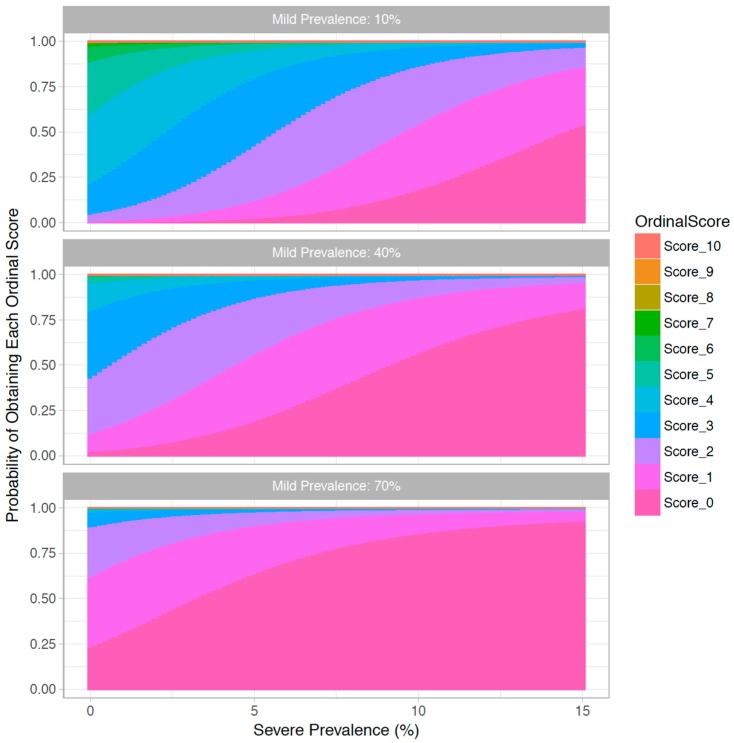
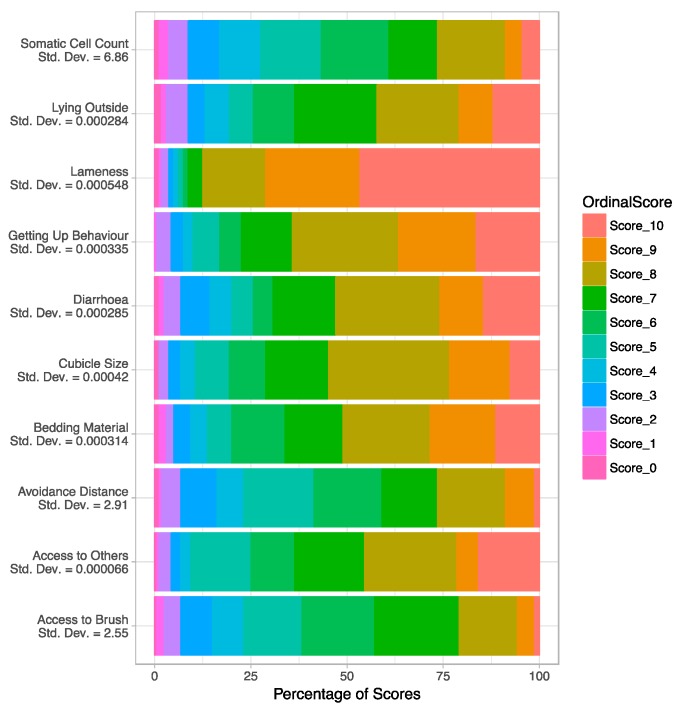
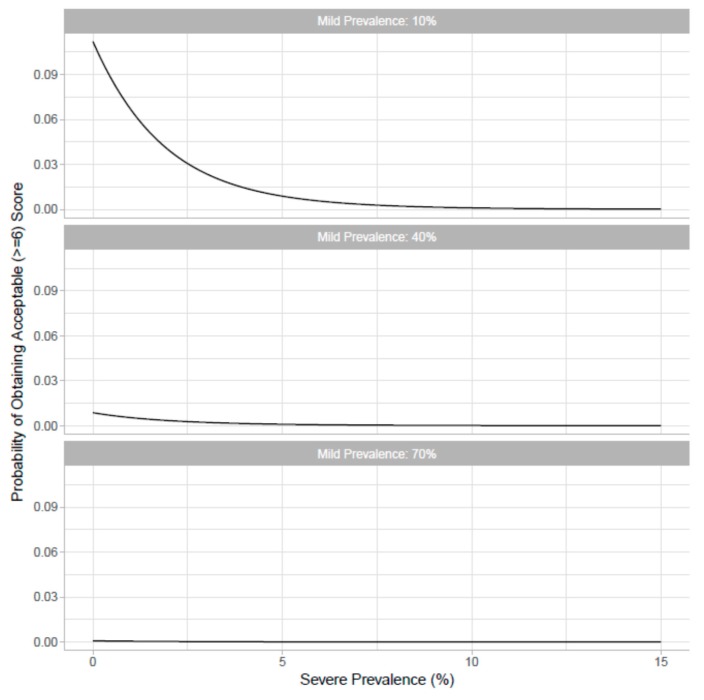
Welfare Quality proposes a system for aggregation according to which the total welfare score for a group of animals is a non-linear effect of the prevalence of welfare scores across the individuals within the group. Three assumptions serve to justify this: (1) experts do not follow a linear reasoning when they assess a welfare problem; (2) it serves to prevent compensation (severe welfare problems hidden by scoring well on other aspects of welfare); (3) experts agree on the weight of different welfare measures. We use two sources of data to examine these assumptions: animal welfare data from 44 Danish dairy farms with Danish Holstein Friesian cows, and data from a questionnaire study with a convenience sample of 307 experts in animal welfare, of which we received responses from over 50%. Our main results were: (1) the total group-level welfare score as assigned by experts is a non-linear function of the individual animal welfare states within the group; (2) the WQ system does not prevent what experts perceive as unacceptable compensation; (3) the level of agreement among experts appears to vary across measures. Our findings give rise to concerns about the proposed aggregation system offered by WQ.
“福利质量”提出了一种汇总系统,根据该系统,一组动物的总体福利得分是该组内个体福利得分患病率的非线性效应。有三个假设可为这一点提供依据:(1)专家在评估福利问题时不会遵循线性推理;(2)这有助于防止补偿(福利其他方面得分良好掩盖严重福利问题);(3)专家们对不同福利措施的权重达成一致。我们使用两种数据来源来检验这些假设:来自44个饲养丹麦荷斯坦弗里生奶牛的丹麦奶牛场的动物福利数据,以及对307名动物福利专家进行的问卷调查数据,我们收到了超过50%的回复。我们的主要结果是:(1)专家给出的总体群体层面福利得分是组内个体动物福利状况的非线性函数;(2)“福利质量”系统并不能防止专家认为不可接受的补偿情况;(3)专家之间的一致程度似乎因措施而异。我们的研究结果引发了对“福利质量”所提议的汇总系统的担忧。