Kaurivi Y Baby, Hickson Rebecca, Laven Richard, Parkinson Tim, Stafford Kevin
School of Veterinary Medicine, Massey University, Private Bag 11 222, Palmerston North 4442, New Zealand.
School of Agriculture and Environmental Management, Massey University, Private Bag 11 222, Palmerston North 4442, New Zealand.
Animals (Basel). 2020 Sep 7;10(9):1592. doi: 10.3390/ani10091592.
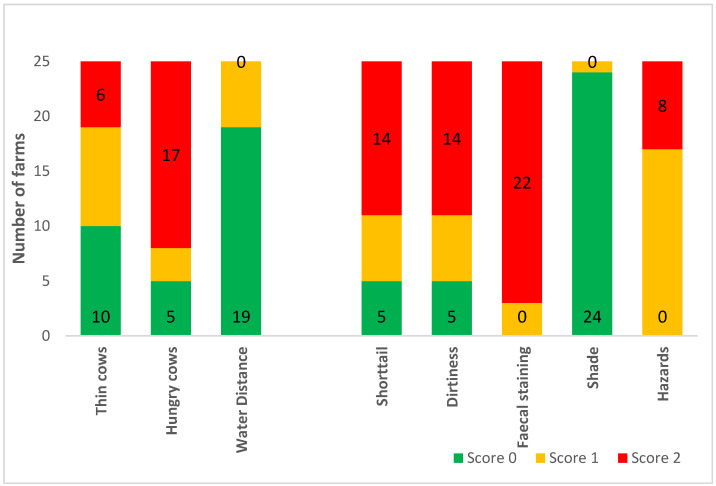
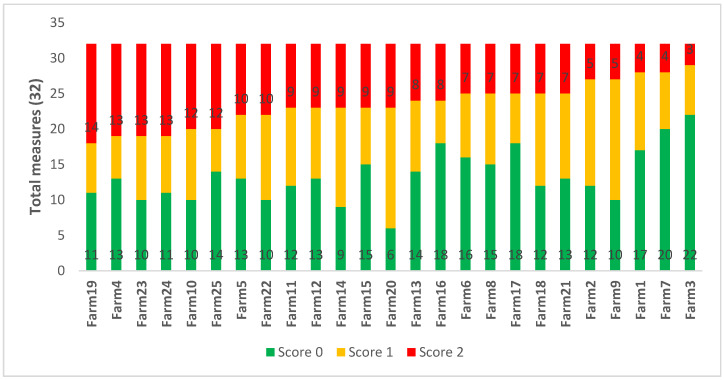
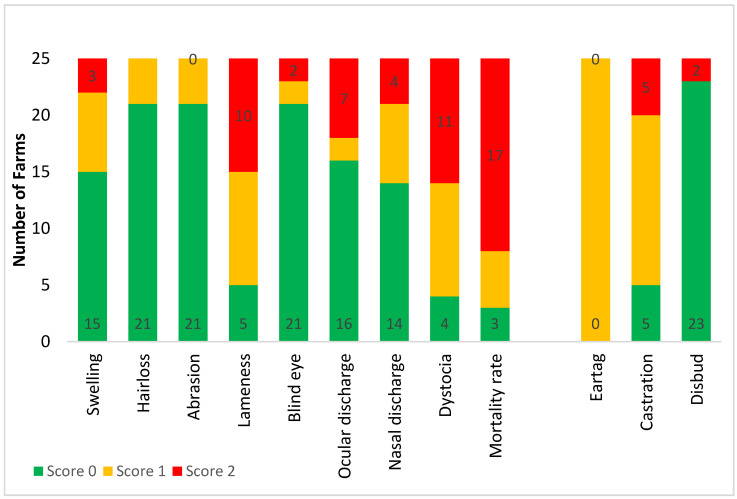
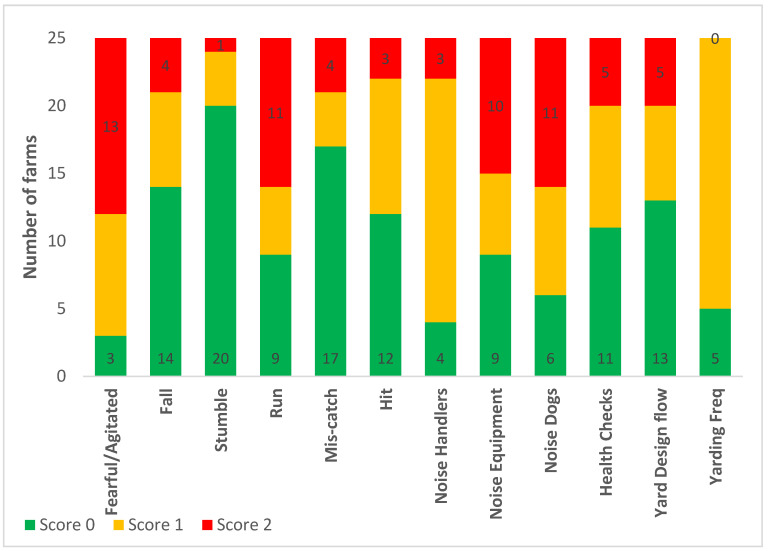
The intention of this study was to develop standards for a welfare assessment protocol by validating potential categorisation thresholds for the assessment of beef farms in New Zealand. Thirty-two measures, based on the Welfare Quality and the University of California (UC) Davis Cow-Calf protocols, plus some indicators specific to New Zealand, that were assessed during routine yardings of 3366 cattle on 25 cow-calf beef farms in the Waikato region were categorised on a three-point welfare score, where 0 denotes good welfare, 1 marginal welfare, and 2 poor/unacceptable welfare. Initial categorisation of welfare thresholds was based upon the authors' perception of acceptable welfare standards and the consensus of the literature, with subsequent derived thresholds being based upon the poorest 15% and best 50% of farms for each measure. Imposed thresholds for lameness, dystocia, and mortality rate were retained in view of the significance of these conditions for the welfare of affected cattle, while higher derived thresholds appeared more appropriate for dirtiness and faecal staining which were thought to have less significant welfare implications for cattle on pasture. Fearful/agitated and running behaviours were above expectations, probably due to the infrequent yarding of cows, and thus the derived thresholds were thought to be more appropriate. These thresholds provide indicators to farmers and farm advisors regarding the levels at which intervention and remediation is required for a range of welfare measures.
本研究的目的是通过验证新西兰肉牛养殖场评估的潜在分类阈值,制定福利评估方案的标准。基于“福利质量”和加利福尼亚大学戴维斯分校的母牛-犊牛方案,并加上一些新西兰特有的指标,对怀卡托地区25个母牛-犊牛养殖场的3366头牛在日常圈养期间所评估的32项指标,按照三分制福利评分进行分类,其中0表示良好福利,1表示边缘福利,2表示差/不可接受的福利。福利阈值的初步分类基于作者对可接受福利标准的认知以及文献共识,后续推导的阈值则基于每项指标中最差的15%和最好的50%的农场。鉴于跛足、难产和死亡率这些状况对受影响牛的福利的重要性,所设定的这些状况的阈值予以保留,而对于脏污和粪便污染,较高的推导阈值似乎更合适,因为这些被认为对牧场上的牛的福利影响较小。恐惧/躁动和奔跑行为高于预期,可能是由于母牛圈养不频繁,因此推导的阈值被认为更合适。这些阈值为农民和农场顾问提供了一系列福利措施所需干预和补救水平的指标。