Kristoffersen Agnete Egilsdatter, Stub Trine, Melhus Marita, Broderstad Ann Ragnhild
National Research Center in Complementary and Alternative Medicine (NAFKAM), Department of Community Medicine, Faculty of Health Science, UiT The Arctic University of Norway, Tromsø, Norway.
Centre for Sami Health Research, Department of Community Medicine, Faculty of Health Science, UiT The Arctic University of Norway, Tromsø, Norway.
BMC Complement Altern Med. 2017 Dec 12;17(1):530. doi: 10.1186/s12906-017-2037-0.
In Northern Norway, traditional medicine (TM) is shaped by both Christianity and traditional Sami nature worship. The healing rituals may include prayer and the use of tools such as moss, water, stones, wool and soil. Examples of TM modalities offered is cupping, blood-stemming, laying on of hands, healing prayers, and rituals. The purpose of this study was to investigate the prevalence of the use of TM in areas with predominantly Sami and Norwegian populations, and the influence of ethnicity, geography, gender, age, education, household income, religiosity and self-reported health on such use.
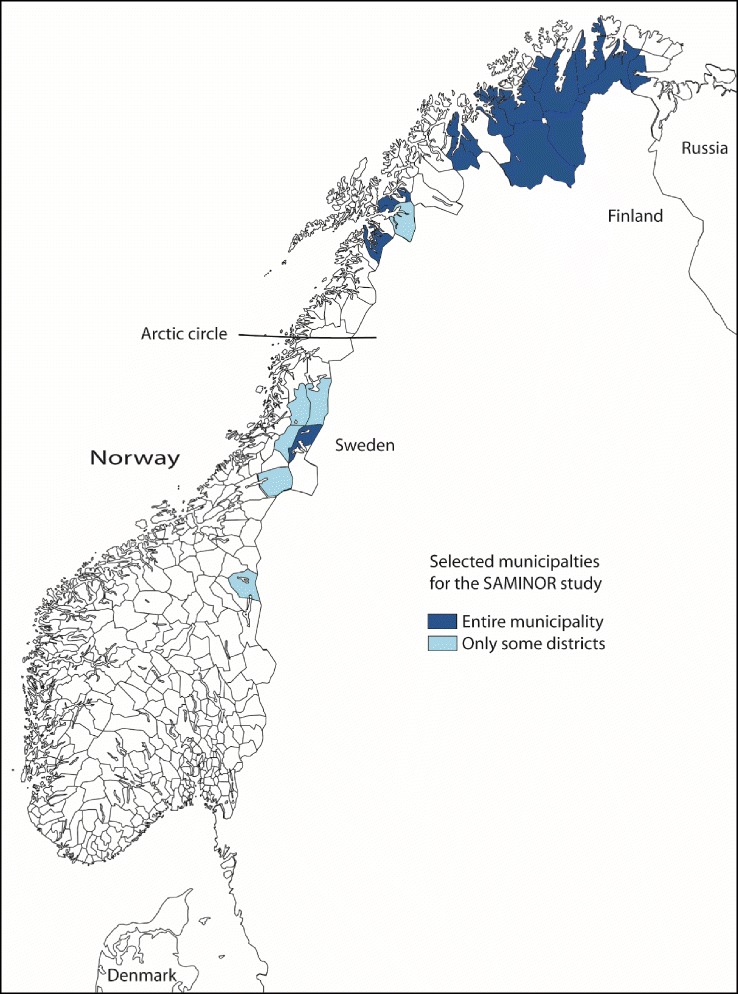
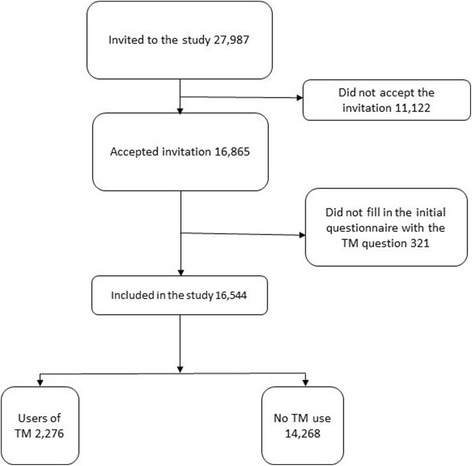
The study is based on data collected in the first SAMINOR Survey (SAMINOR 1) conducted in 2003/2004, including three self-administered questionnaires, clinical measures, and blood analyses. Data was collected in 24 municipalities in Norway known to have a substantial population of Sami. All residents aged 30 and 36-78/79 years in the predefined regions were invited regardless of ethnic background (N = 27,987). Of these, 16,865 (60.3%) accepted to participate and gave their consent to medical research.
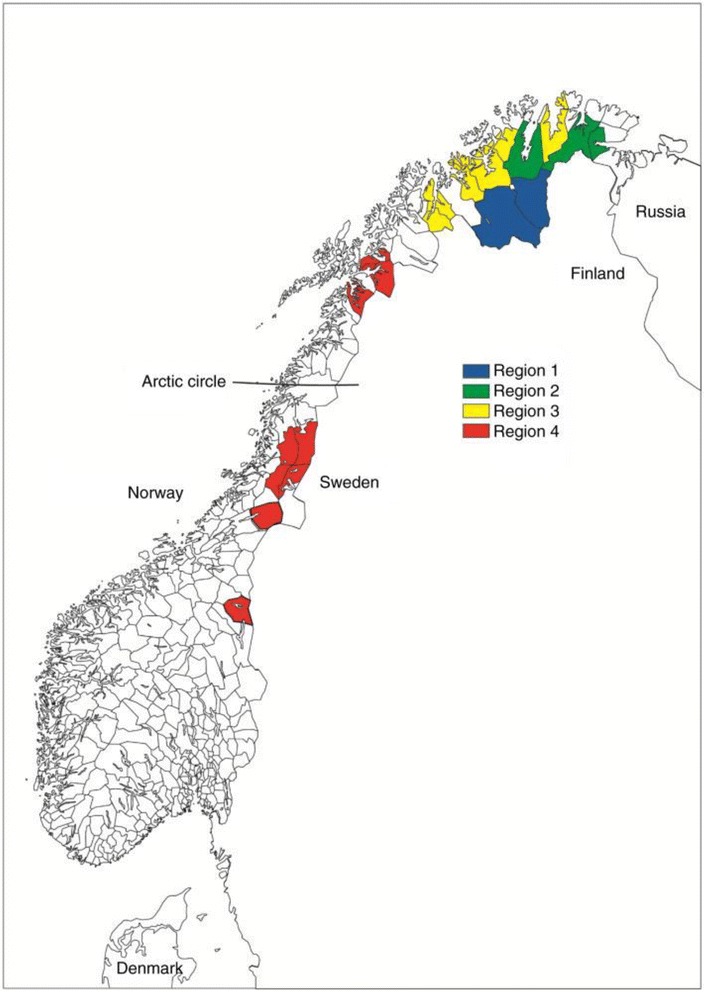
Of the 16,544 people responding to the question about TM use, 2276 (13.8%) reported to have used TM once or more during their lifetime. The most outstanding characteristic of the TM users was the affiliation to the Laestadian church, where 34.3% (n = 273) reported such use, followed by an inner Finnmark residence (31.1%, n = 481) and a Sami ethnicity (25.7%, n = 1014). Women were slightly more likely to use TM compared to men (15.9% and 11.5% accordingly, p < 0.001), and the TM users were slightly younger than the non-TM users (mean age 52.3 versus 54.3 years, p < 0.001). The TM users also had lower income (p < 0.001) than the non-TM users. We found no significant differences between the TM users and the non-TM users concerning years of education, and whether the participants were living with a spouse/partner or not.
Further studies are necessary to examine the development of TM use in Norway over time, and use in areas with mainly Norwegian inhabitants. There is also a lack of studies quantifying TM use among Sami people in Sweden, Finland and Russia.
在挪威北部,传统医学(TM)受到基督教和萨米人传统自然崇拜的双重影响。治疗仪式可能包括祈祷以及使用苔藓、水、石头、羊毛和土壤等工具。所提供的传统医学治疗方式包括拔罐、止血、按手、治疗性祈祷和仪式。本研究的目的是调查在以萨米人和挪威人为主的地区使用传统医学的 prevalence,以及种族、地理、性别、年龄、教育程度、家庭收入、宗教信仰和自我报告的健康状况对这种使用的影响。
该研究基于2003/2004年进行的第一次萨米人健康调查(SAMINOR 1)收集的数据,包括三份自填式问卷、临床测量和血液分析。数据收集于挪威24个已知有大量萨米人口的市镇。邀请了预定义地区所有30岁以及36 - 78/79岁的居民,无论其种族背景如何(N = 27,987)。其中,16,865人(60.3%)接受参与并同意进行医学研究。
在16,544名回答了关于使用传统医学问题的人中,2276人(13.8%)报告在其一生中曾使用过传统医学一次或多次。传统医学使用者最显著的特征是隶属于莱斯特迪派教会,其中34.3%(n = 273)报告有此类使用,其次是居住在内芬马克(31.1%,n = 481)和具有萨米族裔身份(25.7%,n = 1014)。女性使用传统医学的可能性略高于男性(分别为15.9%和11.5%,p < 0.001),并且传统医学使用者比非使用者略年轻(平均年龄52.3岁对54.3岁,p < 0.001)。传统医学使用者的收入也低于非使用者(p < 0.001)。我们发现传统医学使用者和非使用者在受教育年限以及参与者是否与配偶/伴侣同住方面没有显著差异。
有必要进行进一步研究,以考察挪威传统医学使用情况随时间的发展,以及在主要由挪威居民构成的地区的使用情况。此外,瑞典、芬兰和俄罗斯的萨米人使用传统医学的量化研究也较为缺乏。