de Jong Ingrid C, van Riel Johan, Bracke Marc B M, van den Brand Henry
Wageningen Livestock Research, Wageningen University and Research, Wageningen, The Netherlands.
Adaptation Physiology Group,Wageningen University and Research, Wageningen, The Netherlands.
PLoS One. 2017 Dec 13;12(12):e0189350. doi: 10.1371/journal.pone.0189350. eCollection 2017.
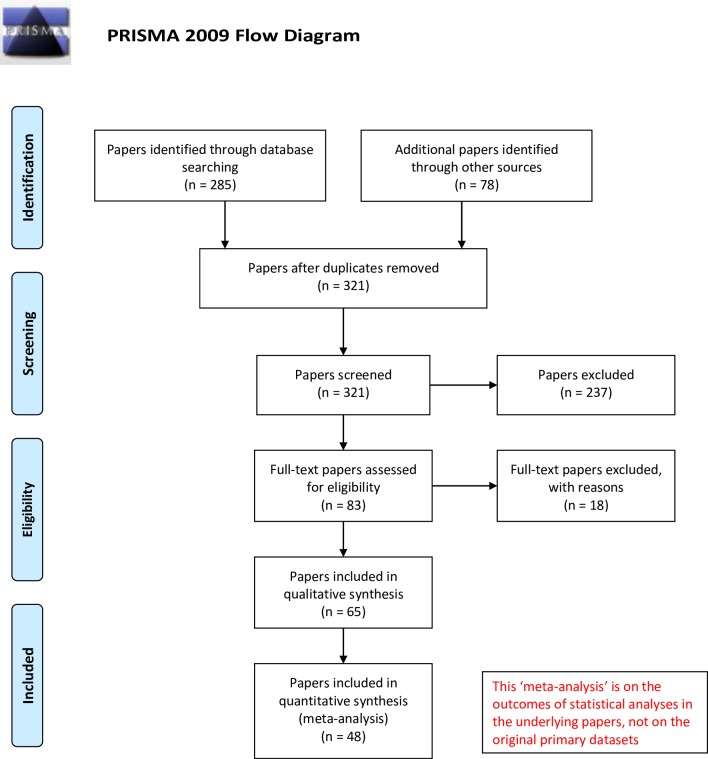
A 'meta-analysis' was performed to determine effects of post-hatch food and water deprivation (PHFWD) on chicken development, performance and welfare (including health). Two types of meta-analysis were performed on peer-reviewed scientific publications: a quantitative 'meta-analysis' (MA) and a qualitative analysis (QA). Previously reported effects of PHFWD were quantified in the MA, for variables related to performance, mortality and relative yolk sac weight. The QA counted the number of studies reporting (non-)significant effects when five or more records were available in the data set (i.e. relative heart, liver and pancreas weight; plasma T3, T4 and glucose concentrations; relative duodenum, jejunum and ileum weight; duodenum, jejunum and ileum length; and villus height and crypt depth in duodenum, jejunum and ileum). MA results indicated that 24 hours of PHFWD (i.e. ≥12-36 hours) or more resulted in significantly lower body weights compared to early-fed chickens up to six weeks of age. Body weights and food intake were more reduced as durations of PHFWD (24, 48, 72, ≥84 hours) increased. Feed conversion rate increased in chickens up to 21 and 42 days of age after ≥84 hours PHFWD in comparison with chickens fed earlier. Total mortality at day 42 was higher in chickens after 48 hours PHFWD compared to early fed chickens or chickens after 24 hours PHFWD. First week mortality was higher in chickens after ≥84 hours PHFWD than in early fed chickens. The MA for relative yolk sac weight was inconclusive for PHFWD. The QA for plasma T3, T4 and glucose concentrations indicated mainly short-term decreases in T3 and glucose in PHFWD chickens compared to early fed chickens, and no effects of PHFWD on T4 concentrations. Relative weights of liver, pancreas and heart were lower after PHFWD, but only in the first week of life. A retarded development of gut segments (duodenum, jejunum and ileum) was found in the first week of life, measured as shorter, lower relative weight, and lower villus height and crypt depth. It is concluded that 48 hours (≥36-60 hours) PHFWD leads to lower body weights and higher total mortality in chickens up to six weeks of age, the latter suggesting compromised chicken welfare, but effects of PHFWD on organ development and physiological status appear to be mainly short-term.
进行了一项“荟萃分析”,以确定孵化后禁食禁水(PHFWD)对鸡的发育、生产性能和福利(包括健康)的影响。对同行评审的科学出版物进行了两种类型的荟萃分析:定量“荟萃分析”(MA)和定性分析(QA)。在MA中,对先前报道的PHFWD的影响进行了量化,涉及与生产性能、死亡率和相对卵黄囊重量相关的变量。当数据集中有五条或更多记录时(即相对心脏、肝脏和胰腺重量;血浆T3、T4和葡萄糖浓度;相对十二指肠、空肠和回肠重量;十二指肠、空肠和回肠长度;以及十二指肠、空肠和回肠的绒毛高度和隐窝深度),QA统计了报告(非)显著影响的研究数量。MA结果表明,与早期喂食的鸡相比,长达六周龄的鸡在24小时(即≥12 - 36小时)或更长时间的PHFWD后体重显著降低。随着PHFWD持续时间(24、48、72、≥84小时)的增加,体重和采食量下降得更多。与早期喂食的鸡相比,在≥84小时的PHFWD后,21日龄和42日龄鸡的饲料转化率有所提高。与早期喂食的鸡或24小时PHFWD后的鸡相比,48小时PHFWD后的鸡在42日龄时的总死亡率更高。≥84小时PHFWD后的鸡在第一周的死亡率高于早期喂食的鸡。关于相对卵黄囊重量的MA对PHFWD的结论不明确。关于血浆T3、T4和葡萄糖浓度的QA表明,与早期喂食的鸡相比,PHFWD鸡的T3和葡萄糖主要在短期内下降,且PHFWD对T4浓度没有影响。PHFWD后肝脏、胰腺和心脏的相对重量较低,但仅在生命的第一周。在生命的第一周发现肠道段(十二指肠、空肠和回肠)发育迟缓,表现为长度较短、相对重量较低、绒毛高度和隐窝深度较低。结论是,48小时(≥36 - 60小时)的PHFWD会导致长达六周龄的鸡体重降低和总死亡率升高,后者表明鸡的福利受损,但PHFWD对器官发育和生理状态的影响似乎主要是短期的。