Centre for Diagnostics and Antimicrobial Resistance, Institute for Infection & Immunity, St George's University of London, London, UK.
Institute for Infection & Immunity, St George's University of London, London, UK.
J Antimicrob Chemother. 2018 Mar 1;73(3):581-595. doi: 10.1093/jac/dkx431.
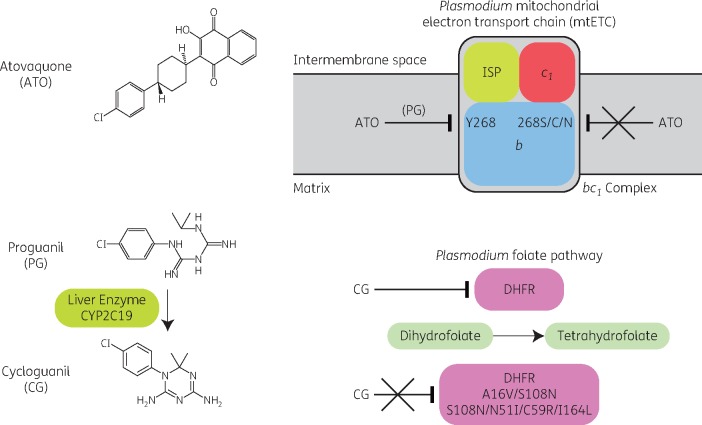
Atovaquone/proguanil, registered as Malarone®, is a fixed-dose combination recommended for first-line treatment of uncomplicated Plasmodium falciparum malaria in non-endemic countries and its prevention in travellers. Mutations in the cytochrome bc1 complex are causally associated with atovaquone resistance.
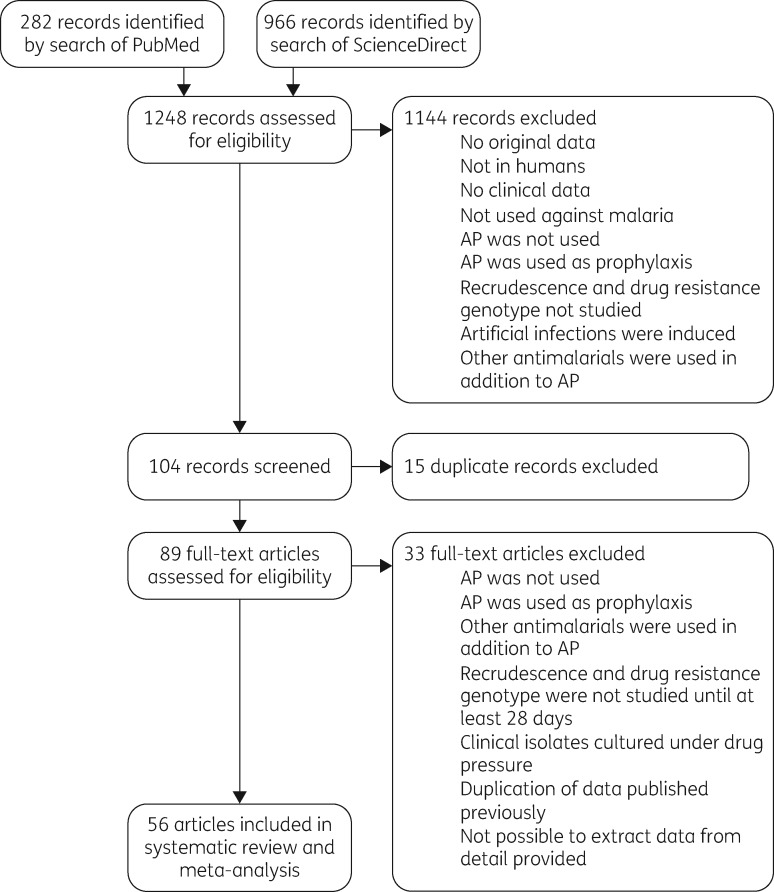
This systematic review assesses the clinical efficacy of atovaquone/proguanil treatment of uncomplicated malaria and examines the extent to which codon 268 mutation in cytochrome b influences treatment failure and recrudescence based on published information.
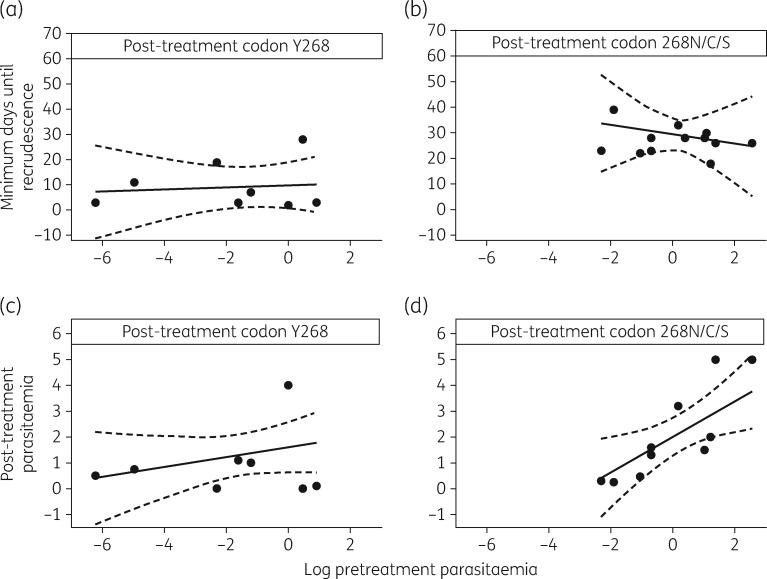
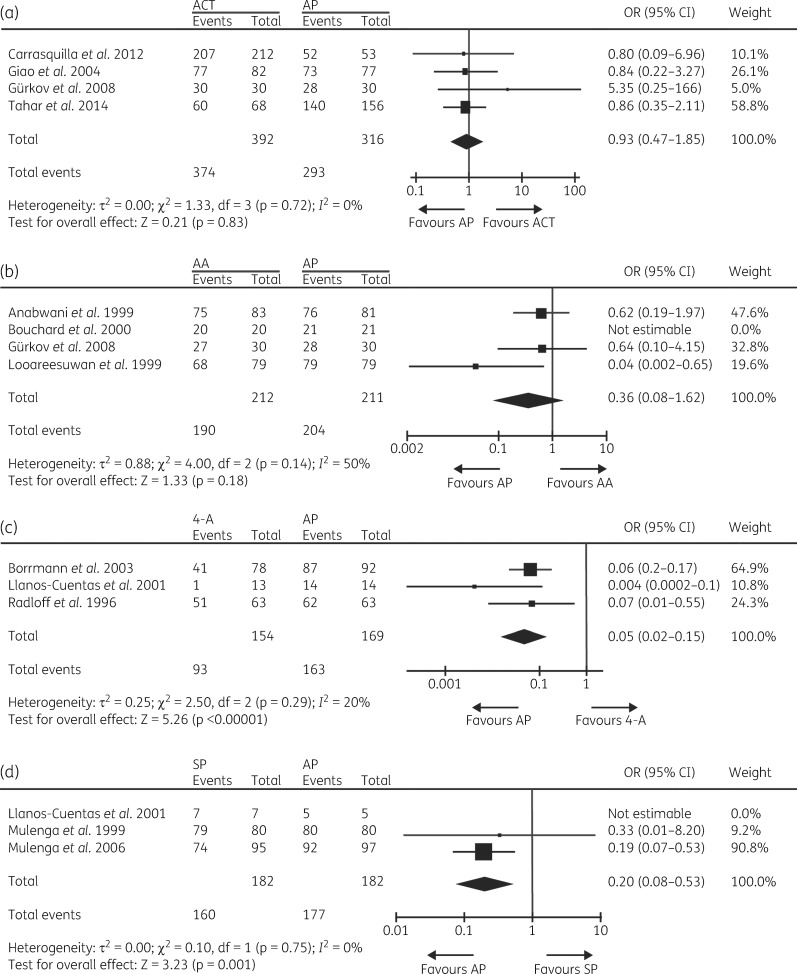
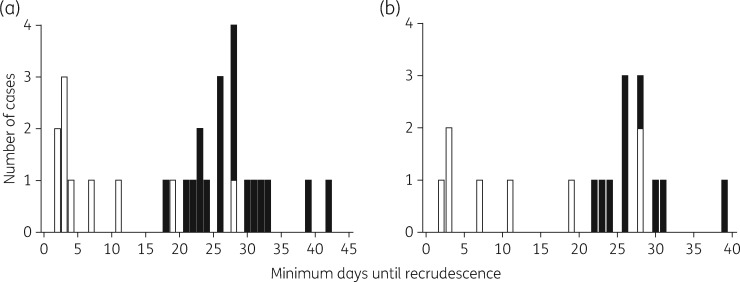
Data suggest that atovaquone/proguanil treatment efficacy is 89%-98% for P. falciparum malaria (from 27 studies including between 18 and 253 patients in each case) and 20%-26% for Plasmodium vivax malaria (from 1 study including 25 patients). The in vitro P. falciparum phenotype of atovaquone resistance is an IC50 value >28 nM. Case report analyses predict that recrudescence in a patient presenting with parasites carrying cytochrome b codon 268 mutation will occur on average at day 29 (95% CI: 22, 35), 19 (95% CI: 7, 30) days longer than if the mutation is absent.
Evidence suggests atovaquone/proguanil treatment for P. falciparum malaria is effective. Late treatment failure is likely to be associated with a codon 268 mutation in cytochrome b, though recent evidence from animal models suggests these mutations may not spread within the population. However, early treatment failure is likely to arise through alternative mechanisms, requiring further investigation.
阿托伐醌/磺胺多辛(商品名:科泰复)是一种固定剂量复方药物,被注册为用于治疗非流行地区无并发症恶性疟原虫感染的一线药物,并可用于旅行者疟疾预防。细胞色素 bc1 复合体的突变与阿托伐醌耐药性有关。
本系统评价评估了阿托伐醌/磺胺多辛治疗无并发症疟疾的临床疗效,并根据已发表的信息,检查细胞色素 b 密码子 268 突变对治疗失败和复发的影响程度。
数据表明,阿托伐醌/磺胺多辛治疗恶性疟原虫疟疾的疗效为 89%-98%(来自 27 项研究,每项研究包括 18-253 例患者),治疗间日疟原虫疟疾的疗效为 20%-26%(来自 1 项研究,包括 25 例患者)。体外阿托伐醌耐药的恶性疟原虫表型是 IC50 值>28nM。病例报告分析预测,携带细胞色素 b 密码子 268 突变的患者出现复发的时间平均会比突变不存在的情况下晚 29 天(95%CI:22,35),19 天(95%CI:7,30)。
证据表明,阿托伐醌/磺胺多辛治疗恶性疟原虫疟疾有效。迟发性治疗失败可能与细胞色素 b 密码子 268 突变有关,尽管来自动物模型的最新证据表明这些突变可能不会在人群中传播。然而,早期治疗失败可能通过其他机制引起,需要进一步研究。