Sam-Agudu Nadia A, Pharr Jennifer R, Bruno Tamara, Cross Chad L, Cornelius Llewellyn J, Okonkwo Prosper, Oyeledun Bolanle, Khamofu Hadiza, Olutola Ayodotun, Erekaha Salome, Menson William Nii Ayitey, Ezeanolue Echezona E
Pediatric and Adolescent HIV Unit, Clinical Services, and International Research Center of Excellence, Institute of Human Virology Nigeria, Abuja, Nigeria.
Division of Epidemiology and Prevention, Institute of Human Virology, University of Maryland School of Medicine, Baltimore, OH, USA.
Trials. 2017 Dec 14;18(1):595. doi: 10.1186/s13063-017-2347-z.
Adolescents living with HIV (ALHIV) have worse health outcomes than other populations of people living with HIV. Contributing factors include lack of standard and comprehensive procedures for ALHIV transitioning from pediatric to adult care. This has contributed to poor retention at, and following transition, which is problematic especially in high ALHIV-burden, resource-limited settings like Nigeria.
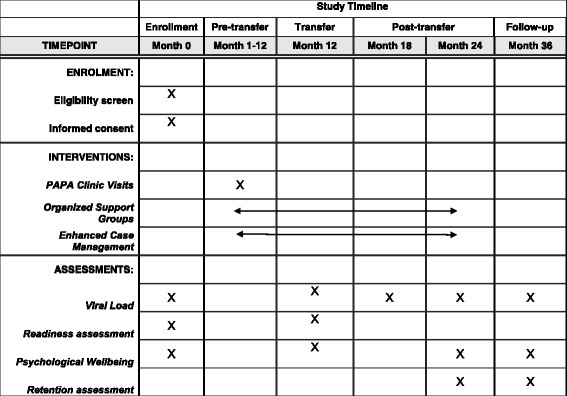
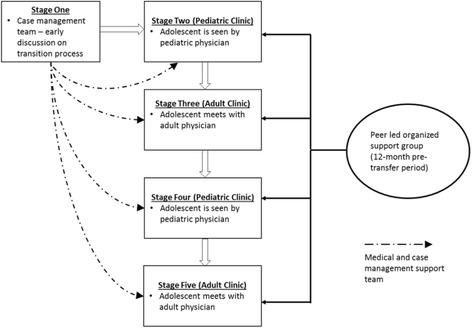
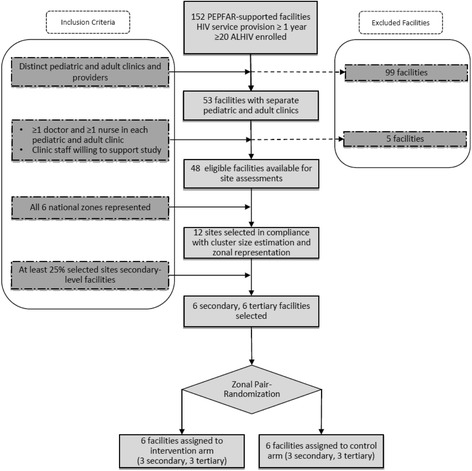
Using a two-arm cluster randomized control design, the Adolescent Coordinated Transition (ACT) trial will measure the comparative effectiveness of a graduated transition and organized support group intervention against the usual practice of abrupt transfer of Nigerian ALHIV from pediatric to adult care. This study will be conducted at 12 secondary and tertiary healthcare facilities (six intervention, six control) across all six of Nigeria's geopolitical zones. The study population is 13- to 17-year-old ALHIV (N = 216, n = 108 per study arm) on antiretroviral therapy. Study participants will be followed through a 12-month pre-transfer/transition period and for an additional 24 months post transfer/transition. The primary outcome measure is the proportion of ALHIV retained in care at 12 and 24 months post transfer. Secondary outcome measures are proportions of ALHIV achieving viral suppression and demonstrating increased psychosocial wellbeing and self-efficacy measured by psychometric tests including health locus of control, functional social support, perceived mental health, and sexual risk and behavior.
We hypothesize that the ACT intervention will significantly increase psychosocial wellbeing, retention in care and ultimately viral suppression among ALHIV. ACT's findings have the potential to facilitate the development of standard guidelines for transitioning ALHIV and improving health outcomes in this population. The engagement of a consortium of local implementing partners under the Nigeria Implementation Science Alliance allows for nationwide study implementation and expedient results dissemination to program managers and policy-makers. Ultimately, ACT may also provide evidence to inform transitioning guidelines not only for ALHIV but for adolescents living with other chronic diseases in resource-limited settings.
ClinicalTrials.gov, ID: NCT03152006 . Registered on May 12, 2017.
感染艾滋病毒的青少年(ALHIV)的健康状况比其他艾滋病毒感染者群体更差。促成因素包括缺乏针对ALHIV从儿科护理过渡到成人护理的标准和全面程序。这导致了在过渡时及过渡后留存率较低,这在像尼日利亚这样艾滋病毒负担高、资源有限的环境中尤其成问题。
采用双臂整群随机对照设计,青少年协调过渡(ACT)试验将衡量渐进式过渡和有组织的支持小组干预相对于尼日利亚ALHIV从儿科护理突然过渡到成人护理的常规做法的比较效果。本研究将在尼日利亚所有六个地缘政治区的12个二级和三级医疗保健机构(六个干预组,六个对照组)进行。研究人群为年龄在13至17岁、正在接受抗逆转录病毒治疗的ALHIV(N = 216,每个研究组n = 108)。研究参与者将在转移前/过渡的12个月期间以及转移/过渡后的另外24个月内接受随访。主要结局指标是转移后12个月和24个月时留存于护理中的ALHIV比例。次要结局指标是通过心理测量测试(包括健康控制点、功能性社会支持、感知心理健康以及性风险和行为)衡量的实现病毒抑制、显示心理社会幸福感增强和自我效能提高的ALHIV比例。
我们假设ACT干预将显著提高ALHIV的心理社会幸福感、护理留存率并最终实现病毒抑制。ACT的研究结果有可能促进制定ALHIV过渡的标准指南并改善该人群的健康结局。尼日利亚实施科学联盟下属的当地实施伙伴联盟的参与使得能够在全国范围内开展研究并将结果迅速传播给项目经理和政策制定者。最终,ACT还可能提供证据,不仅为ALHIV的过渡指南提供参考,也为资源有限环境中患有其他慢性病的青少年的过渡指南提供参考。
ClinicalTrials.gov,标识符:NCT03152006。于2017年5月12日注册。