Institute of Health and Care Sciences, University of Gothenburg, Gothenburg, Sweden.
Department of Paediatric Cardiology, Queen Silvia Children's Hospital, Gothenburg, Sweden.
BMC Health Serv Res. 2021 Dec 15;21(1):1343. doi: 10.1186/s12913-021-07335-x.
A substantial proportion of young people with Complex Chronic Conditions (CCCs) experience some degree of discontinuation of follow-up care, which is an umbrella term to describe a broken chain of follow-up. Discontinuation of follow-up care is not clearly defined, and the great plethora of terms used within this field cannot go unnoticed. Terms such as "lost to follow-up", "lapses in care" and "care gaps", are frequently used in published literature, but differences between terms are unclear. Lack of uniformity greatly affects comparability of study findings. The aims of the present study were to (i) provide a systematic overview of terms and definitions used in literature describing discontinuation of follow-up care in young people with CCC's; (ii) to clarify operational components of discontinuation of follow-up care (iii); to develop conceptual definitions and suggested terms to be used; and (iv) to perform an expert-based evaluation of terms and conceptual definitions.
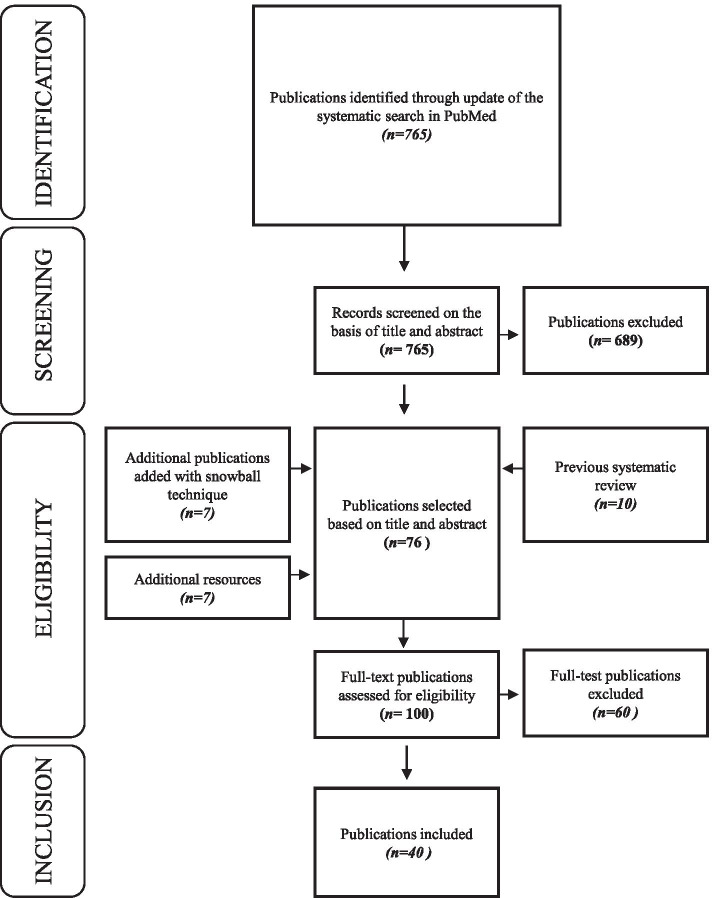
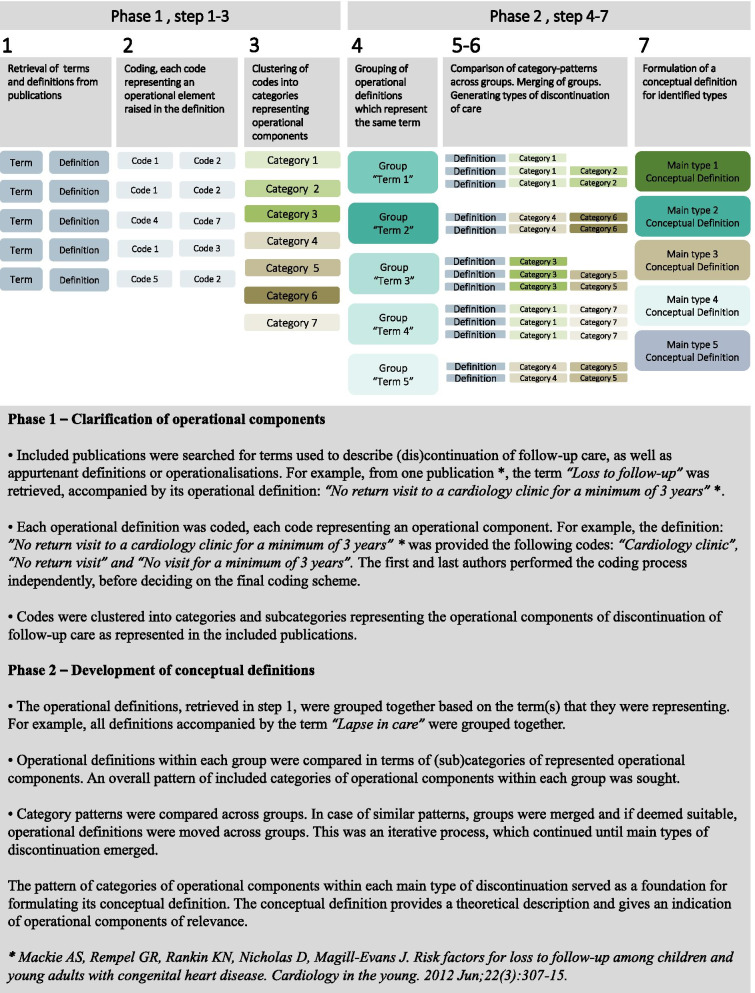
A systematic literature search performed in PubMed was used to provide an overview of current terms used in literature. Using a modified summative content analysis, operational components were analysed, and conceptual definitions were developed. These conceptual definitions were assessed by an expert panel using a survey.
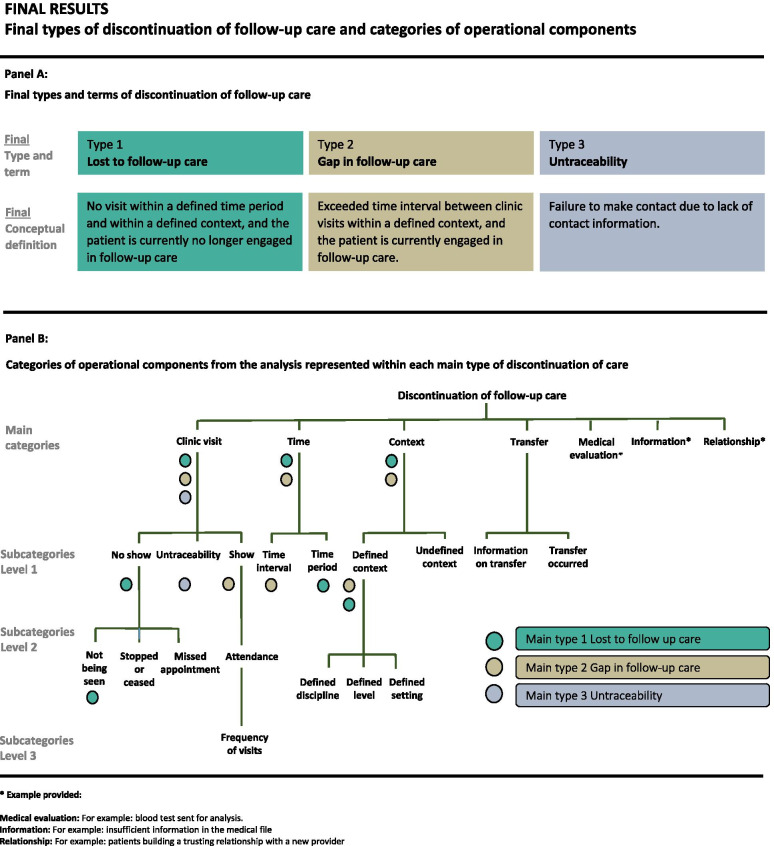
In total, 47 terms and definitions were retrieved, and a core set of operational components was identified. Three main types of discontinuation of follow-up care emerged from the analysis and expert evaluation, conceptually defined as follows: Lost to follow-up care: "No visit within a defined time period and within a defined context, and the patient is currently no longer engaged in follow-up care"; Gap in follow-up care: "Exceeded time interval between clinic visits within a defined context, and the patient is currently engaged in follow-up care"; and Untraceability: "Failure to make contact due to lack of contact information".
By creating a common vocabulary for discontinuation of follow-up care, the quality of future studies could improve. The conceptual definitions and operational components provide guidance to both researchers and healthcare professionals focusing on discontinuation of follow-up care for young people with CCCs.
相当一部分患有复杂慢性病(CCC)的年轻人会经历某种程度的随访护理中断,这是描述随访中断的一个总称。随访护理中断没有明确的定义,而且在该领域使用的大量术语不容忽视。在已发表的文献中,经常使用“失访”、“护理间断”和“护理差距”等术语,但术语之间的差异尚不清楚。缺乏统一性极大地影响了研究结果的可比性。本研究的目的是:(i)系统地概述描述患有 CCC 的年轻人随访护理中断的文献中使用的术语和定义;(ii)阐明随访护理中断的操作成分;(iii)制定概念定义并提出建议使用的术语;(iv)对术语和概念定义进行基于专家的评估。
对 PubMed 进行系统文献检索,以提供文献中当前使用的术语概述。使用改进的总结性内容分析,对操作成分进行分析,并制定概念定义。这些概念定义由一个专家小组使用问卷调查进行评估。
共检索到 47 个术语和定义,并确定了一组核心操作成分。从分析和专家评估中得出了三种主要类型的随访护理中断,从概念上定义为:失访:“在规定的时间内和规定的范围内没有就诊,并且患者目前不再接受随访护理”;随访护理中断:“在规定的就诊间隔内超过时间间隔,并且患者目前正在接受随访护理”;和无法追踪:“由于缺乏联系信息而无法联系”。
通过为随访护理中断创建通用词汇,可以提高未来研究的质量。概念定义和操作成分为研究人员和关注患有 CCC 的年轻人随访护理中断的医疗保健专业人员提供了指导。