Sier Joanna H, Thumser Alfred E, Plant Nick J
School of Food Science and Nutrition, Faculty of Mathematics and Physical Sciences, University of Leeds, Leeds, LS2 9JT, UK.
School of Biosciences and Medicine, Faculty of Health and Medical Sciences, University of Surrey, Guildford, GU2 7XH, UK.
BMC Syst Biol. 2017 Dec 15;11(1):141. doi: 10.1186/s12918-017-0520-3.
Estrogen is a vital hormone that regulates many biological functions within the body. These include roles in the development of the secondary sexual organs in both sexes, plus uterine angiogenesis and proliferation during the menstrual cycle and pregnancy in women. The varied biological roles of estrogens in human health also make them a therapeutic target for contraception, mitigation of the adverse effects of the menopause, and treatment of estrogen-responsive tumours. In addition, endogenous (e.g. genetic variation) and external (e.g. exposure to estrogen-like chemicals) factors are known to impact estrogen biology. To understand how these multiple factors interact to determine an individual's response to therapy is complex, and may be best approached through a systems approach.
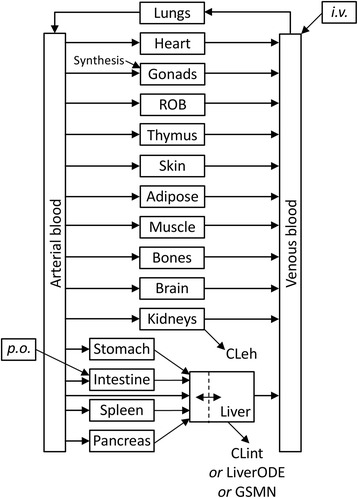
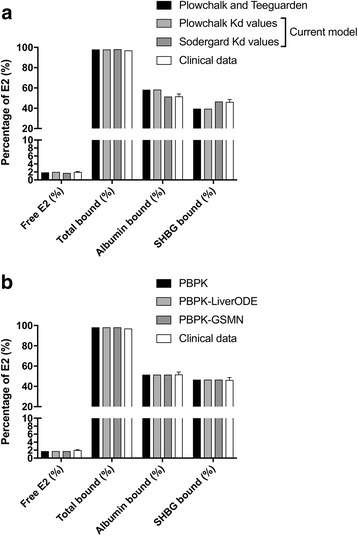
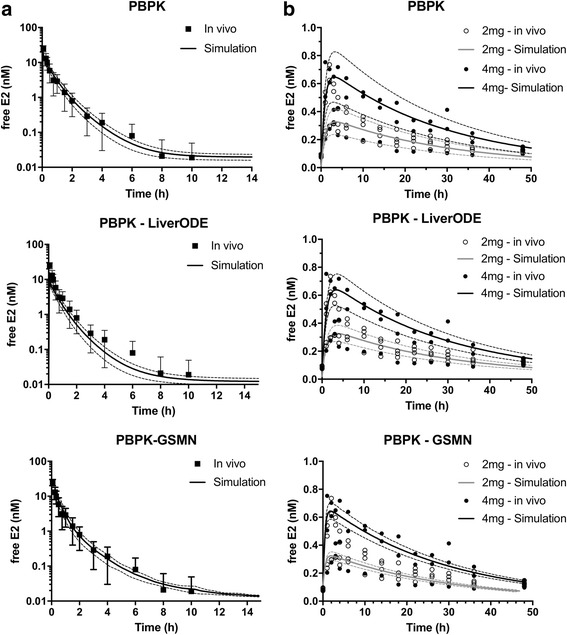
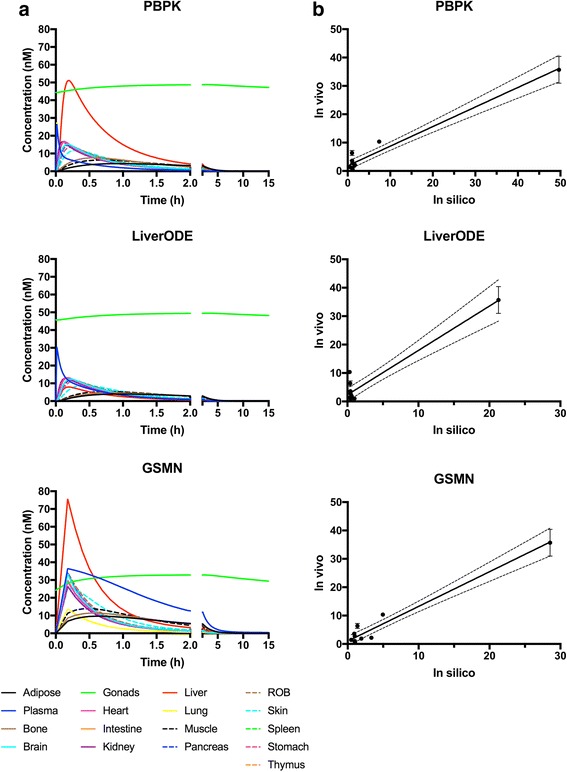
We present a physiologically-based pharmacokinetic model (PBPK) of estradiol, and validate it against plasma kinetics in humans following intravenous and oral exposure. We extend this model by replacing the intrinsic clearance term with: a detailed kinetic model of estrogen metabolism in the liver; or, a genome-scale model of liver metabolism. Both models were validated by their ability to reproduce clinical data on estradiol exposure. We hypothesise that the enhanced mechanistic information contained within these models will lead to more robust predictions of the biological phenotype that emerges from the complex interactions between estrogens and the body.
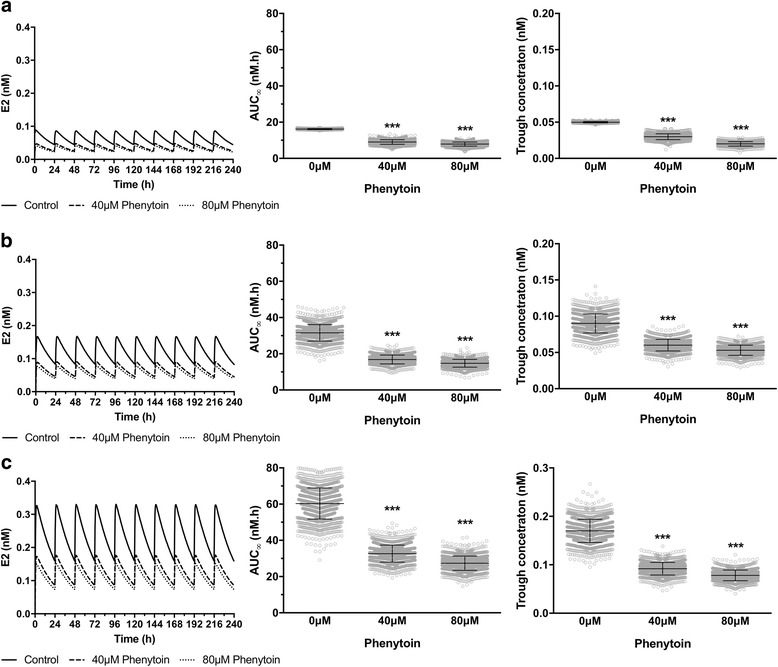
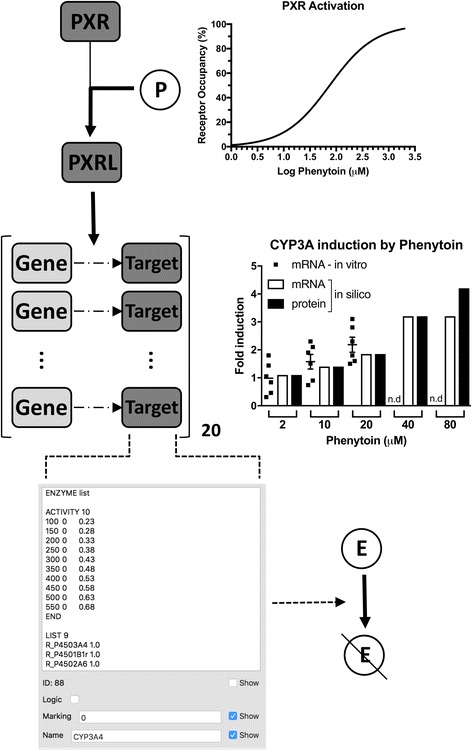
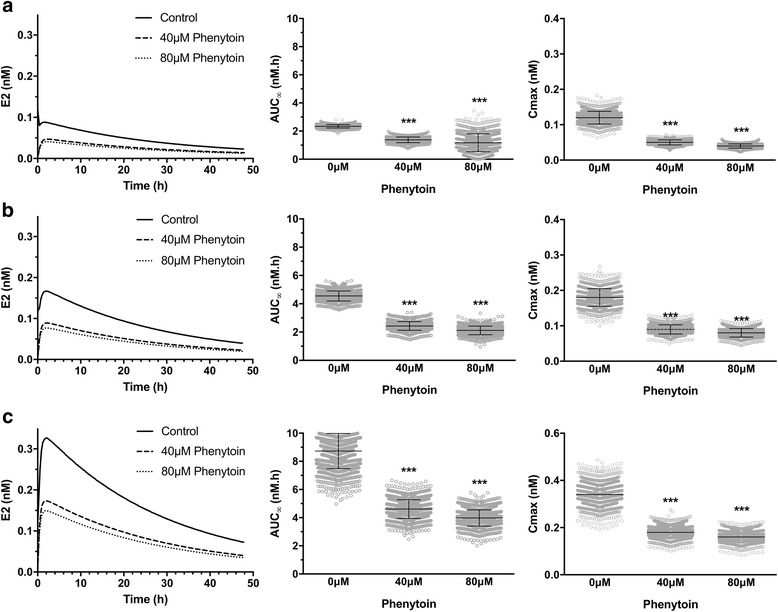
To demonstrate the utility of these models we examine the known drug-drug interactions between phenytoin and oral estradiol. We are able to reproduce the approximate 50% reduction in area under the concentration-time curve for estradiol associated with this interaction. Importantly, the inclusion of a genome-scale metabolic model allows the prediction of this interaction without directly specifying it within the model. In addition, we predict that PXR activation by drugs results in an enhanced ability of the liver to excrete glucose. This has important implications for the relationship between drug treatment and metabolic syndrome.
We demonstrate how the novel coupling of PBPK models with genome-scale metabolic networks has the potential to aid prediction of drug action, including both drug-drug interactions and changes to the metabolic landscape that may predispose an individual to disease development.
雌激素是一种重要的激素,可调节体内多种生物学功能。这些功能包括在两性第二性器官发育中的作用,以及女性月经周期和怀孕期间子宫的血管生成和增殖。雌激素在人类健康中的多种生物学作用也使其成为避孕、减轻更年期不良反应以及治疗雌激素反应性肿瘤的治疗靶点。此外,已知内源性因素(如基因变异)和外源性因素(如接触雌激素样化学物质)会影响雌激素生物学。了解这些多种因素如何相互作用以确定个体对治疗的反应是复杂的,可能最好通过系统方法来解决。
我们提出了一种基于生理学的雌二醇药代动力学模型(PBPK),并根据静脉内和口服暴露后人体的血浆动力学对其进行了验证。我们通过用以下模型替换内在清除率项来扩展该模型:肝脏中雌激素代谢的详细动力学模型;或肝脏代谢的基因组规模模型。这两个模型均通过其再现雌二醇暴露临床数据的能力进行了验证。我们假设这些模型中包含的增强的机制信息将导致对雌激素与身体之间复杂相互作用产生的生物学表型进行更可靠的预测。
为了证明这些模型的实用性,我们研究了苯妥英钠与口服雌二醇之间已知的药物相互作用。我们能够再现与这种相互作用相关的雌二醇浓度-时间曲线下面积约50%的降低。重要的是,纳入基因组规模的代谢模型可以在不直接在模型中指定的情况下预测这种相互作用。此外,我们预测药物对孕烷X受体(PXR)的激活会导致肝脏排泄葡萄糖的能力增强。这对药物治疗与代谢综合征之间的关系具有重要意义。
我们展示了PBPK模型与基因组规模代谢网络的新型耦合如何有潜力帮助预测药物作用,包括药物相互作用以及可能使个体易患疾病发展的代谢格局变化。