University/British Heart Foundation Centre for Cardiovascular Science, Queen's Medical Research Institute, University of Edinburgh, 47 Little France Crescent, Edinburgh EH16 4TJ, UK.
University/British Heart Foundation Centre for Cardiovascular Science, Queen's Medical Research Institute, University of Edinburgh, 47 Little France Crescent, Edinburgh EH16 4TJ, UK; Centre for Integrative Physiology, University of Edinburgh, Hugh Robson Building, 15 George Square, Edinburgh EH8 9XD, UK.
Biochem Pharmacol. 2018 Feb;148:88-99. doi: 10.1016/j.bcp.2017.12.013. Epub 2017 Dec 15.
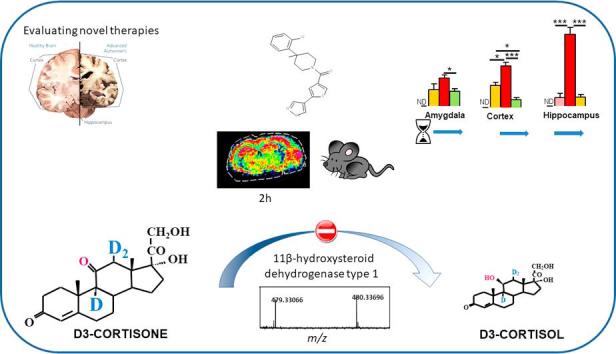
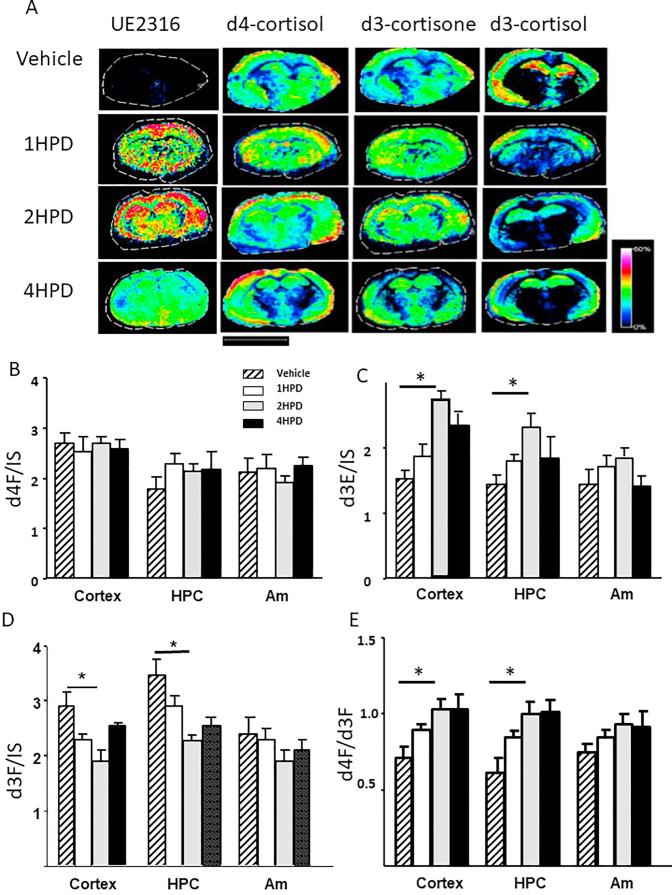
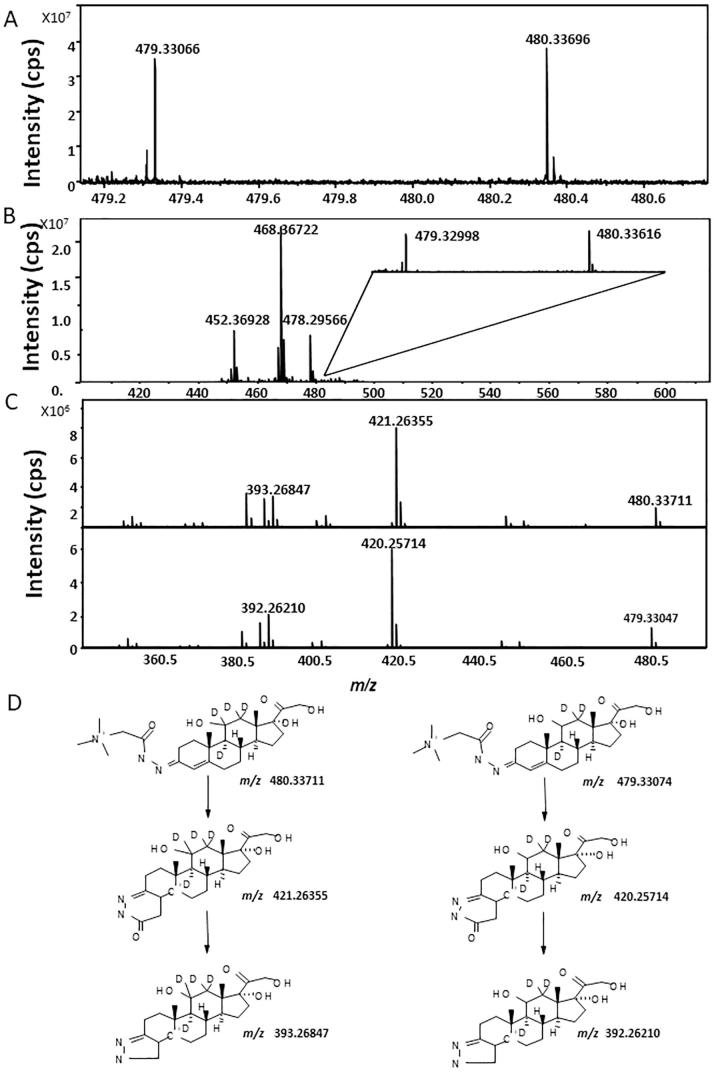
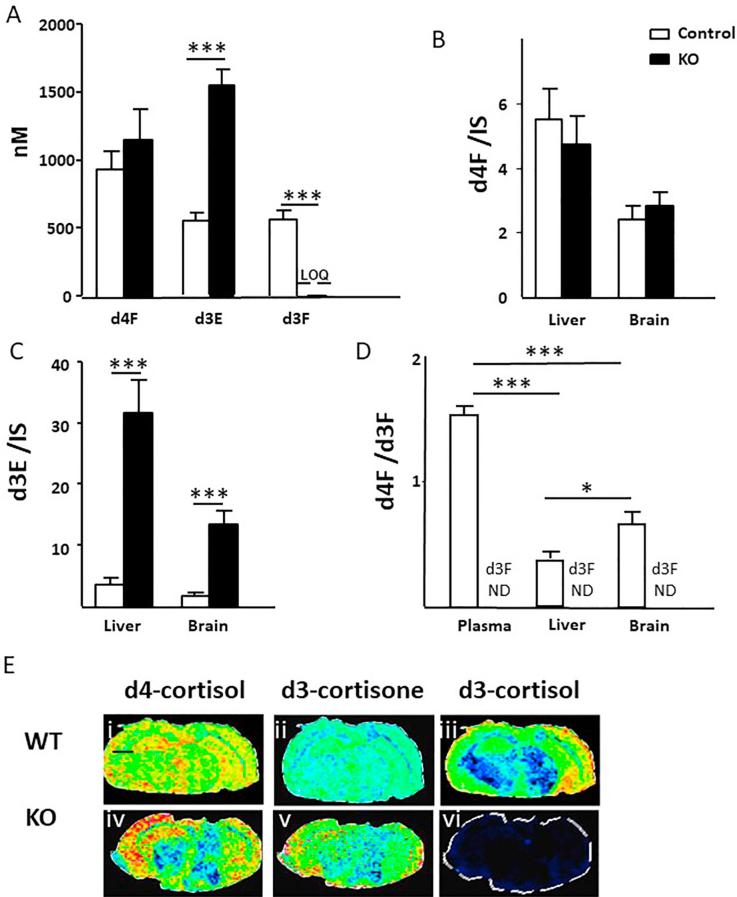
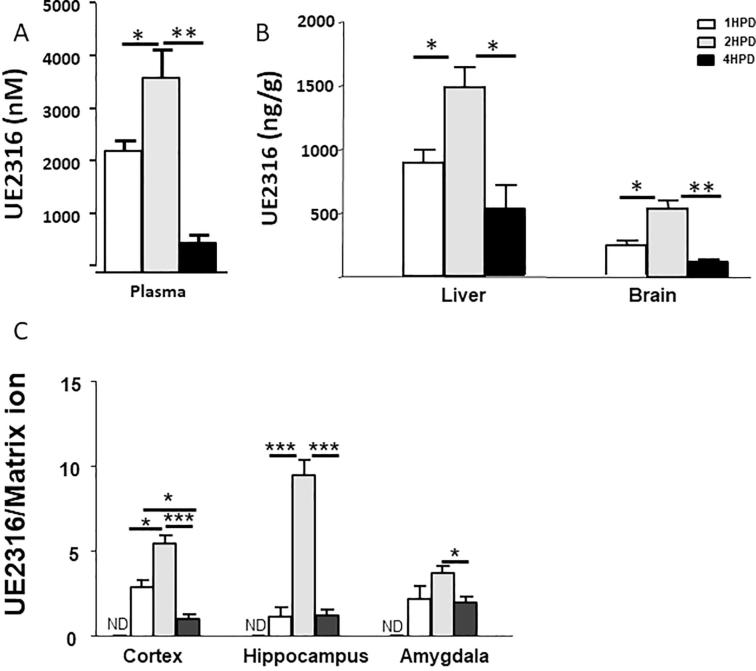
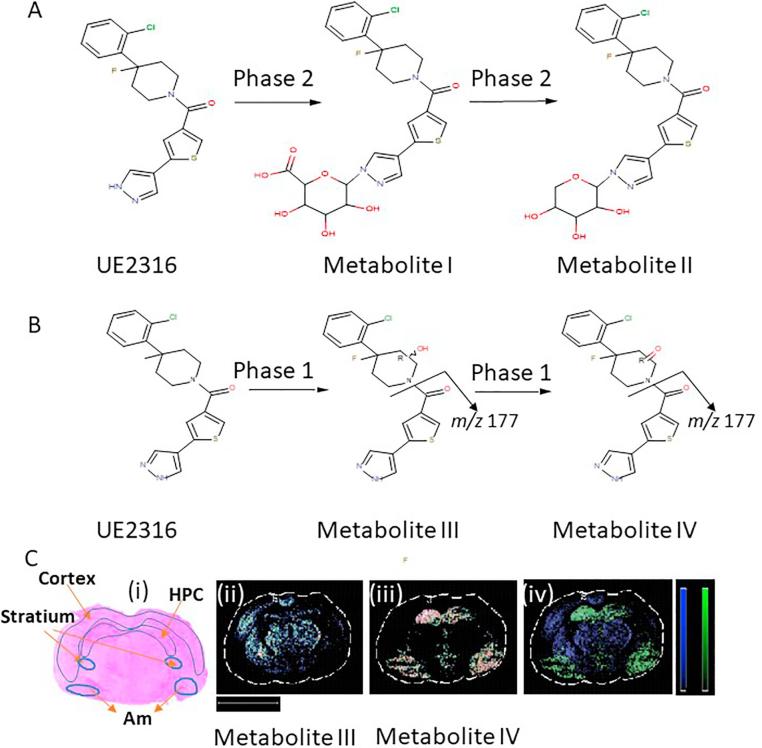
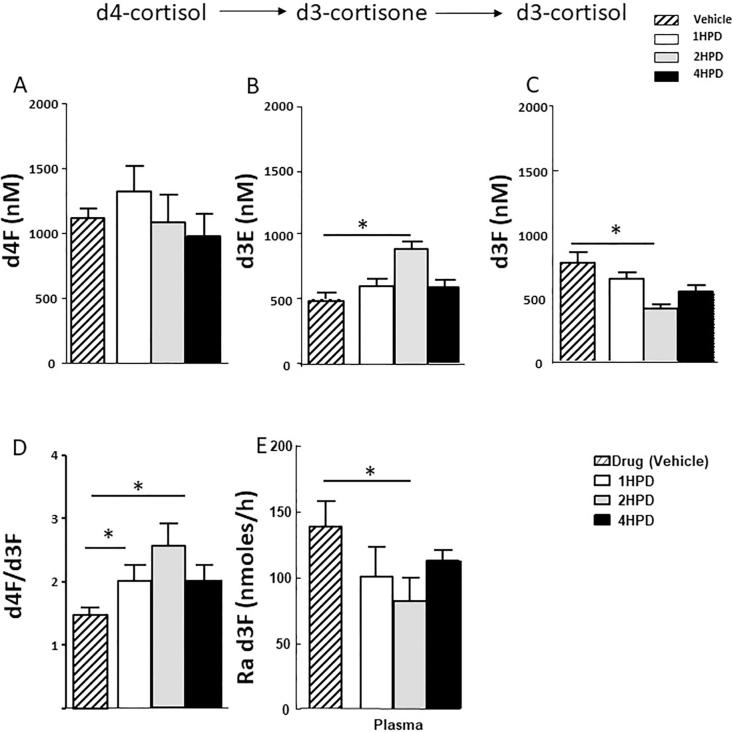
11β-Hydroxysteroid dehydrogenase 1 (11β-HSD1; EC 1.1.1.146) generates active glucocorticoid hormones. Small molecule inhibitors have been developed to target 11β-HSD1 for the treatment of dementia; these must enter brain subregions, such as the hippocampus, to be effective. We previously reported mass spectrometry imaging measurement of murine tissue steroids, and deuterated steroid tracer infusion quantification of 11β-HSD1 turnover in humans. Here, these tools are combined to assess tissue pharmacokinetics and pharmacodynamics of an 11β-HSD1 inhibitor that accesses the brain. [9,11,12,12-H]-Cortisol was infused (1.75 mg/day) by minipump for 2 days into C57Bl6 mice (male, age 12 weeks, n = 3/group) after which an 11β-HSD1 inhibitor (UE2316) was administered (25 mg/kg oral gavage) and animals culled immediately or 1, 2 and 4 h post-dosing. Mice with global genetic disruption of Hsd11B1 were studied similarly. Turnover of d4-cortisol to d3-cortisone (by loss of the 11-deuterium) and regeneration of d3-cortisol (by 11β-HSD1-mediated reduction) were assessed in plasma, liver and brain using matrix assisted laser desorption ionization coupled to Fourier transform cyclotron resonance mass spectrometry. The tracer d4-cortisol was detected in liver and brain following a two day infusion. Turnover to d3-cortisone and on to d3-cortisol was slower in brain than liver. In contrast, d3-cortisol was not detected in mice lacking 11β-HSD1. UE2316 impaired d3-cortisol generation measured in whole body (assessed in plasma; 53.1% suppression in rate of appearance in d3-cortisol), liver and brain. Differential inhibition in brain regions was observed; active glucocorticoids were suppressed to a greater in extent hippocampus or cortex than in amygdala. These data confirm that the contribution of 11β-HSD1 to the tissue glucocorticoid pool, and the consequences of enzyme inhibition on active glucocorticoid concentrations, are substantial, including in the brain. They further demonstrate the value of mass spectrometry imaging in pharmacokinetic and pharmacodynamic studies.
11β-羟甾类脱氢酶 1(11β-HSD1;EC 1.1.1.146)可生成有活性的糖皮质激素。已经开发出小分子抑制剂来靶向 11β-HSD1 以治疗痴呆症;这些抑制剂必须进入大脑的某些区域,如海马体,才能发挥作用。我们之前曾报道过使用质谱成像测量鼠组织类固醇,并使用氘代类固醇示踪剂定量测量人类 11β-HSD1 的周转率。在这里,我们将这些工具结合起来,评估一种可进入大脑的 11β-HSD1 抑制剂的组织药代动力学和药效动力学。[9,11,12,12-H]-皮质醇通过微量泵输注(每天 1.75mg),持续 2 天,然后给予 11β-HSD1 抑制剂(UE2316,口服 25mg/kg),并在给药后立即或 1、2 和 4 小时处死动物。具有 Hsd11B1 基因整体缺失的小鼠也进行了类似的研究。使用基质辅助激光解吸电离与傅里叶变换回旋共振质谱联用,在血浆、肝脏和大脑中评估 d4-皮质醇转化为 d3-皮质酮(通过丢失 11 个氘)和 d3-皮质醇再生(通过 11β-HSD1 介导的还原)。在两天输注后,在肝脏和大脑中检测到示踪剂 d4-皮质醇。d3-皮质酮的转化和 d3-皮质醇的再生在大脑中比在肝脏中更慢。相比之下,在缺乏 11β-HSD1 的小鼠中未检测到 d3-皮质醇。UE2316 抑制了全身(血浆中评估;d3-皮质醇生成率降低 53.1%)、肝脏和大脑中 d3-皮质醇的生成。在脑区观察到差异抑制;与杏仁核相比,海马体或皮质中的活性糖皮质激素受到更大程度的抑制。这些数据证实了 11β-HSD1 对组织糖皮质激素库的贡献,以及酶抑制对活性糖皮质激素浓度的影响,包括在大脑中。它们进一步证明了质谱成像在药代动力学和药效动力学研究中的价值。