Biomolecular Mass Spectrometry and Proteomics, Bijvoet Center for Biomolecular Research and Utrecht Institute of Pharmaceutical Sciences, Utrecht University , Utrecht 3584 CH, The Netherlands.
Netherlands Proteomics Center , Utrecht 3584 CH, The Netherlands.
J Proteome Res. 2018 Feb 2;17(2):926-933. doi: 10.1021/acs.jproteome.7b00622. Epub 2017 Dec 28.
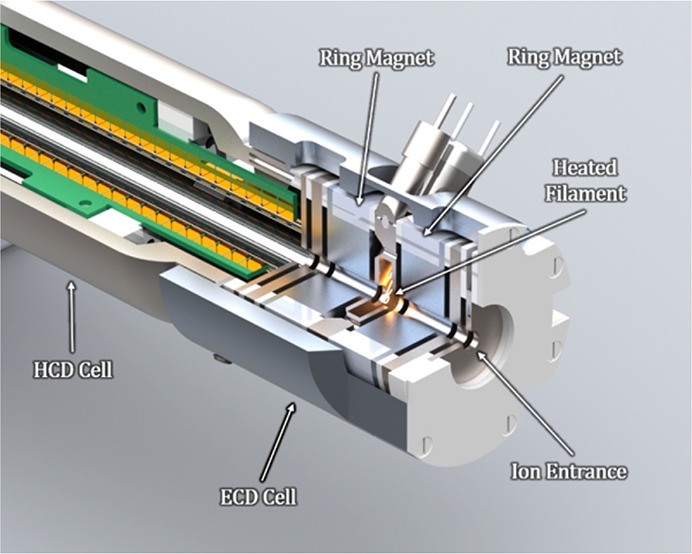
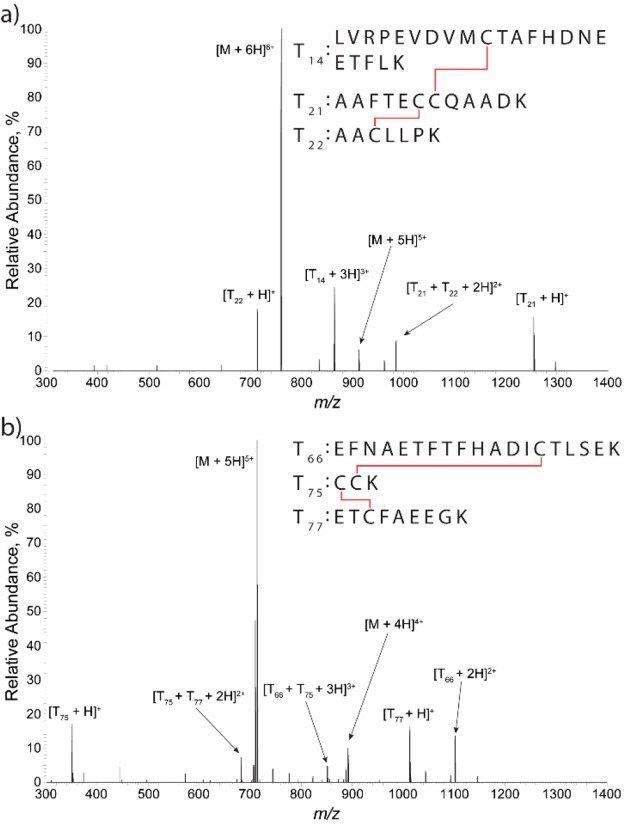
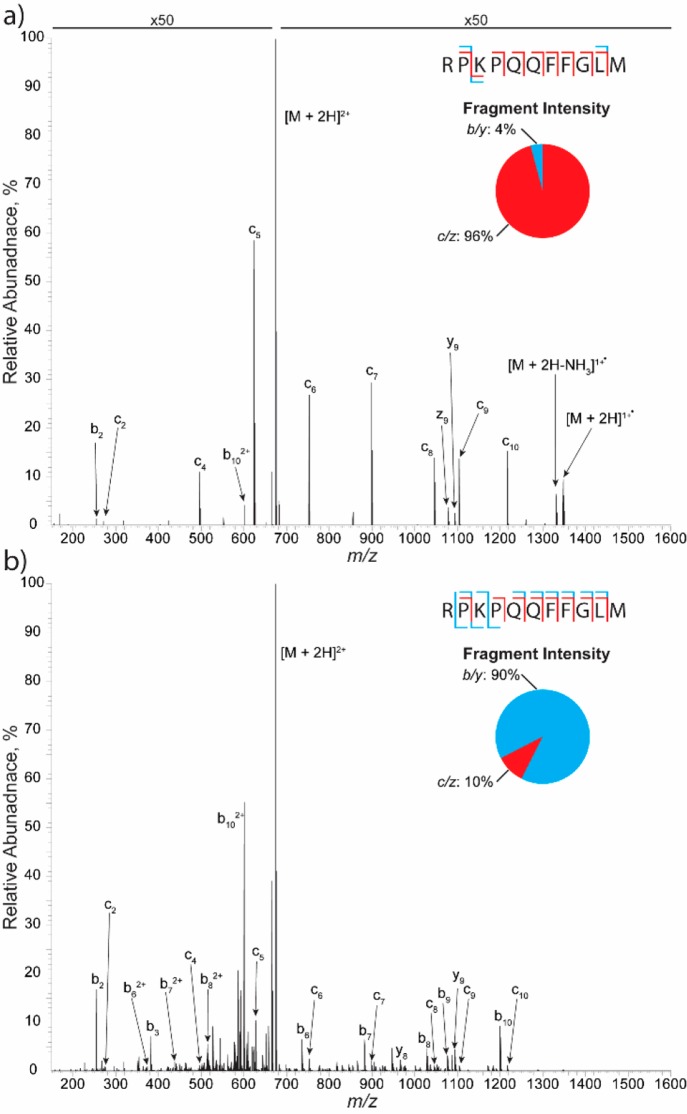
As the application of mass spectrometry intensifies in scope and diversity, the need for advanced instrumentation addressing a wide variety of analytical needs also increases. To this end, many modern, top-end mass spectrometers are designed or modified to include a wider range of fragmentation technologies, for example, ECD, ETD, EThcD, and UVPD. Still, the majority of instrument platforms are limited to more conventional methods, such as CID and HCD. While these latter methods have performed well, the less conventional fragmentation methods have been shown to lead to increased information in many applications including middle-down proteomics, top-down proteomics, glycoproteomics, and disulfide bond mapping. We describe the modification of the popular Q Exactive Orbitrap mass spectrometer to extend its fragmentation capabilities to include ECD. We show that this modification allows ≥85% matched ion intensity to originate from ECD fragment ion types as well as provides high sequence coverage (≥60%) of intact proteins and high fragment identification rates with ∼70% of ion signals matched. Finally, the ECD implementation promotes selective disulfide bond dissociation, facilitating the identification of disulfide-linked peptide conjugates. Collectively, this modification extends the capabilities of the Q Exactive Orbitrap mass spectrometer to a range of new applications.
随着质谱在应用范围和多样性方面的不断扩大,对能够满足各种分析需求的先进仪器的需求也在增加。为此,许多现代的高端质谱仪被设计或改装为包括更广泛的碎片化技术,例如 ECD、ETD、EThcD 和 UVPD。尽管如此,大多数仪器平台仍然局限于更传统的方法,例如 CID 和 HCD。尽管这些传统方法表现良好,但非传统的碎片化方法已被证明在许多应用中能够提供更多的信息,包括中间向下蛋白质组学、自上而下蛋白质组学、糖蛋白质组学和二硫键映射。我们描述了对流行的 Q Exactive Orbitrap 质谱仪的改装,以扩展其碎片化能力,包括 ECD。我们表明,这种改装允许 ≥85%的匹配离子强度来自于 ECD 片段离子类型,并且提供了高的完整蛋白质序列覆盖率(≥60%)和高的片段识别率,约 70%的离子信号被匹配。最后,ECD 的实现促进了二硫键的选择性解离,有利于鉴定二硫键连接的肽缀合物。总的来说,这种改装扩展了 Q Exactive Orbitrap 质谱仪的一系列新应用的能力。