Apolloni Savina, Fabbrizio Paola, Amadio Susanna, Napoli Giulia, Verdile Veronica, Morello Giovanna, Iemmolo Rosario, Aronica Eleonora, Cavallaro Sebastiano, Volonté Cinzia
Experimental Neuroscience, Santa Lucia Foundation, Rome, Italy.
National Research Council, Institute of Cell Biology and Neurobiology, Rome, Italy.
Front Immunol. 2017 Nov 30;8:1689. doi: 10.3389/fimmu.2017.01689. eCollection 2017.
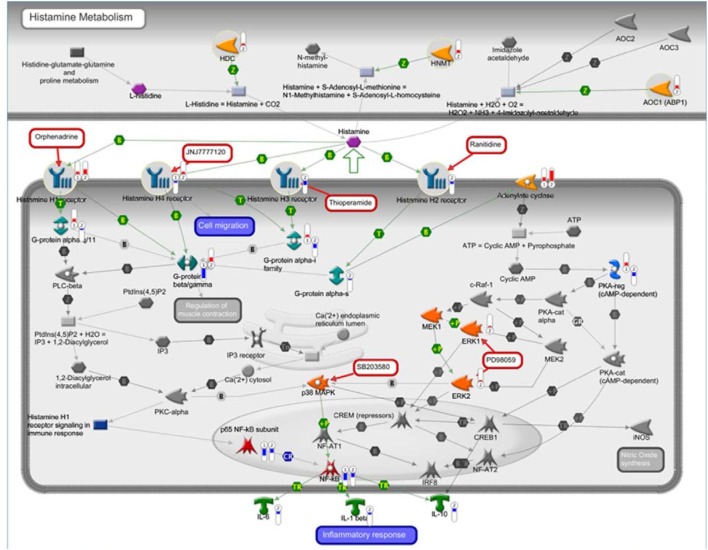
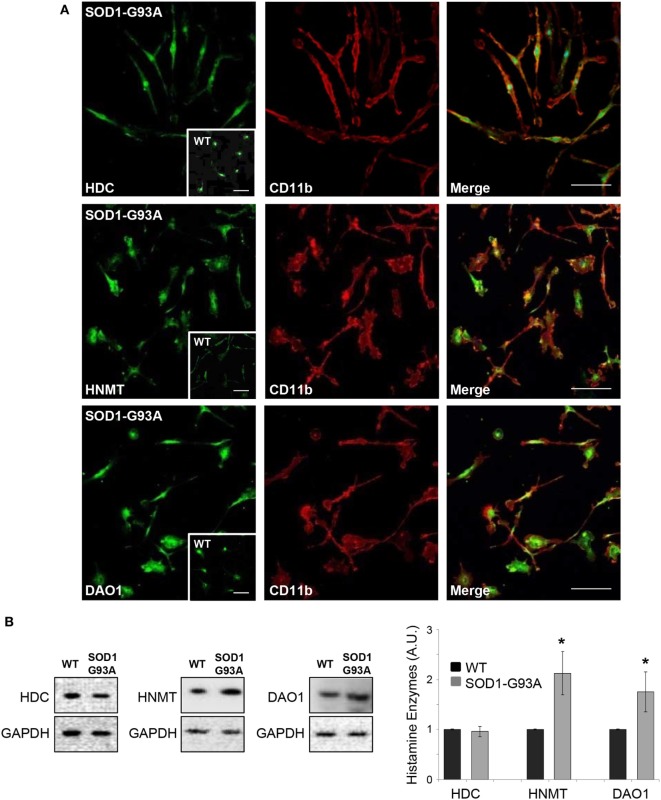
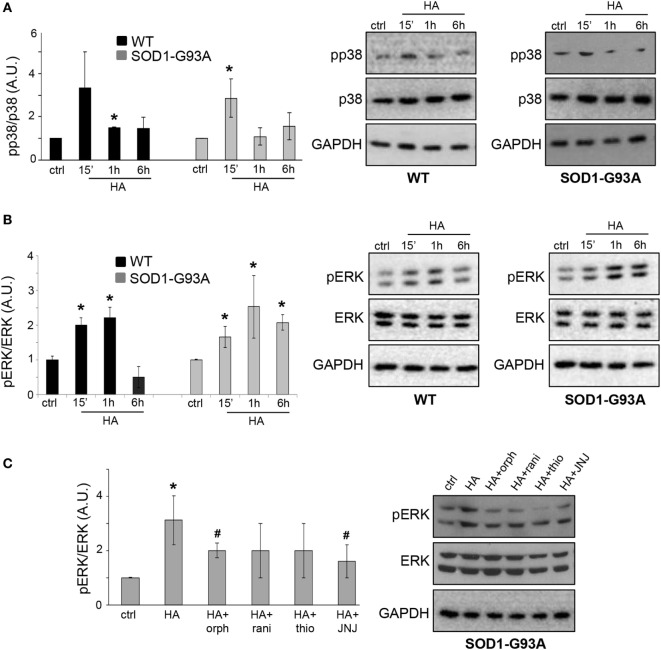
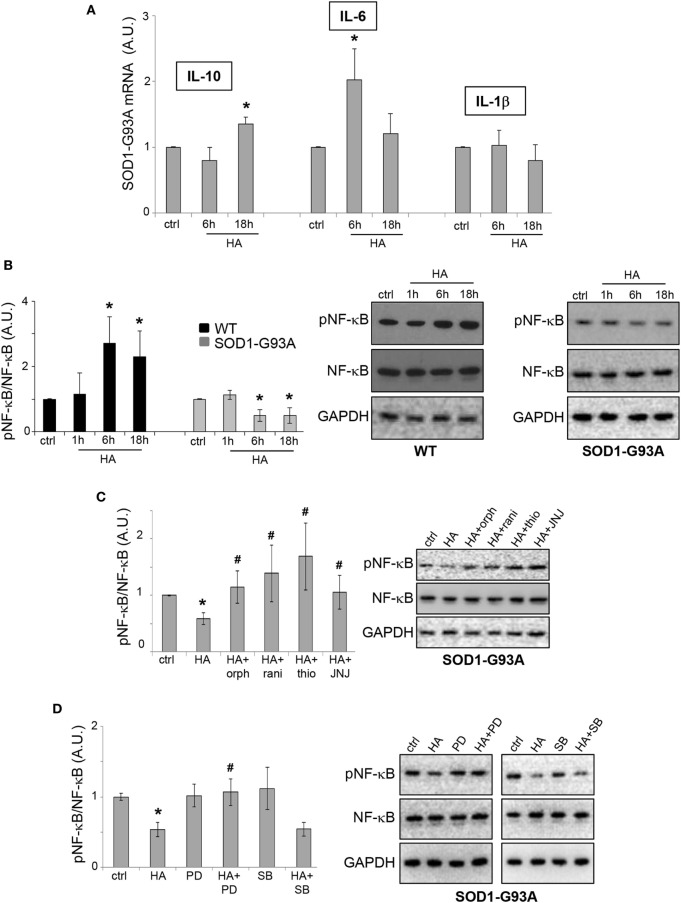
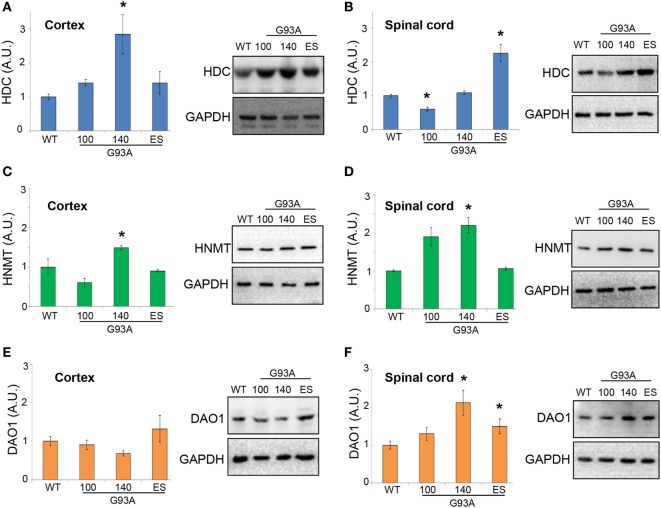
Amyotrophic lateral sclerosis (ALS) is a late-onset motor neuron disease where activated glia release pro-inflammatory cytokines that trigger a vicious cycle of neurodegeneration in the absence of resolution of inflammation. Given the well-established role of histamine as a neuron-to-glia alarm signal implicated in brain disorders, the aim of this study was to investigate the expression and regulation of the histaminergic pathway in microglial activation in ALS mouse model and in humans. By examining the contribution of the histaminergic system to ALS, we found that particularly H1 and H4 receptors, histamine promoted an anti-inflammatory profile in microglia from SOD1-G93A mice by modulating their activation state. A decrease in NF-κB and NADPH oxidase 2 with an increase in arginase 1 and P2Y12 receptor was induced by histamine only in the ALS inflammatory environment, but not in the healthy microglia, together with an increase in IL-6, IL-10, CD163, and CD206 phenotypic markers in SOD1-G93A cells. Moreover, histaminergic H1, H2, H3, and H4 receptors, and histamine metabolizing enzymes histidine decarboxylase, histamine -methyltransferase, and diamine oxidase were found deregulated in spinal cord, cortex, and hypothalamus of SOD1-G93A mice during disease progression. Finally, by performing a meta-analysis study, we found a modulated expression of histamine-related genes in cortex and spinal cord from sporadic ALS patients. Our findings disclose that histamine acts as anti-inflammatory agent in ALS microglia and suggest a dysregulation of the histaminergic signaling in ALS.
肌萎缩侧索硬化症(ALS)是一种迟发性运动神经元疾病,在炎症未消退的情况下,活化的神经胶质细胞会释放促炎细胞因子,从而引发神经退行性变的恶性循环。鉴于组胺作为一种与脑部疾病相关的神经元-神经胶质细胞警报信号已得到充分证实,本研究的目的是调查ALS小鼠模型和人类中,小胶质细胞激活过程中组胺能通路的表达和调控情况。通过研究组胺能系统对ALS的作用,我们发现,尤其是H1和H4受体,组胺通过调节SOD1-G93A小鼠小胶质细胞的激活状态,促进了其抗炎特性。仅在ALS炎症环境中,组胺诱导了核因子κB和NADPH氧化酶2的减少,同时精氨酸酶1和P2Y12受体增加,而在健康小胶质细胞中则未出现这种情况,同时SOD1-G93A细胞中的白细胞介素-6、白细胞介素-10、CD163和CD206表型标志物也增加。此外,在疾病进展过程中,SOD1-G93A小鼠的脊髓、皮质和下丘脑中,组胺能H1、H2、H3和H4受体以及组胺代谢酶组氨酸脱羧酶、组胺甲基转移酶和二胺氧化酶均出现失调。最后,通过进行一项荟萃分析研究,我们发现散发性ALS患者的皮质和脊髓中,组胺相关基因的表达受到调节。我们的研究结果表明,组胺在ALS小胶质细胞中起抗炎作用,并提示ALS中组胺能信号传导失调。