Wesseling Anne-Maria, Demetrowitsch Tobias J, Schwarz Karin, Ober Dietrich
Biochemical Ecology and Molecular Evolution, Botanical Institute and Botanic Gardens, University of Kiel, Kiel, Germany.
Department of Food Technology, Institute of Human Nutrition and Food Science, University of Kiel, Kiel, Germany.
Front Plant Sci. 2017 Nov 30;8:2046. doi: 10.3389/fpls.2017.02046. eCollection 2017.
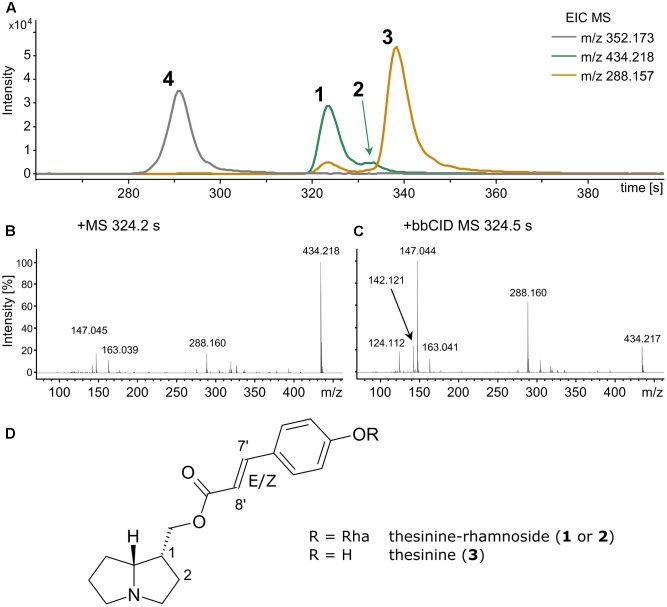
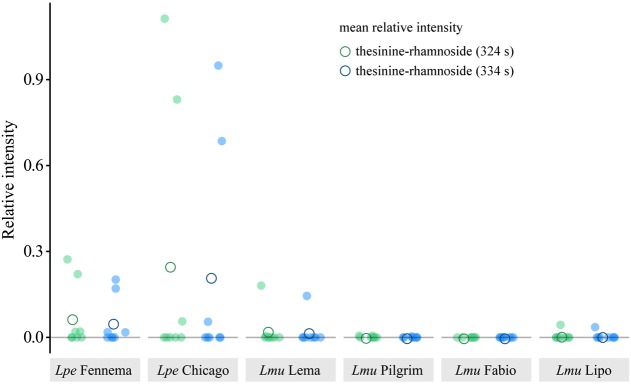
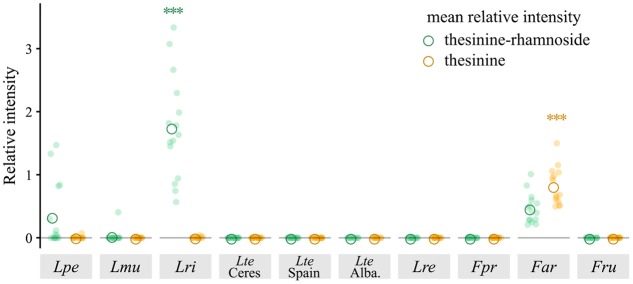
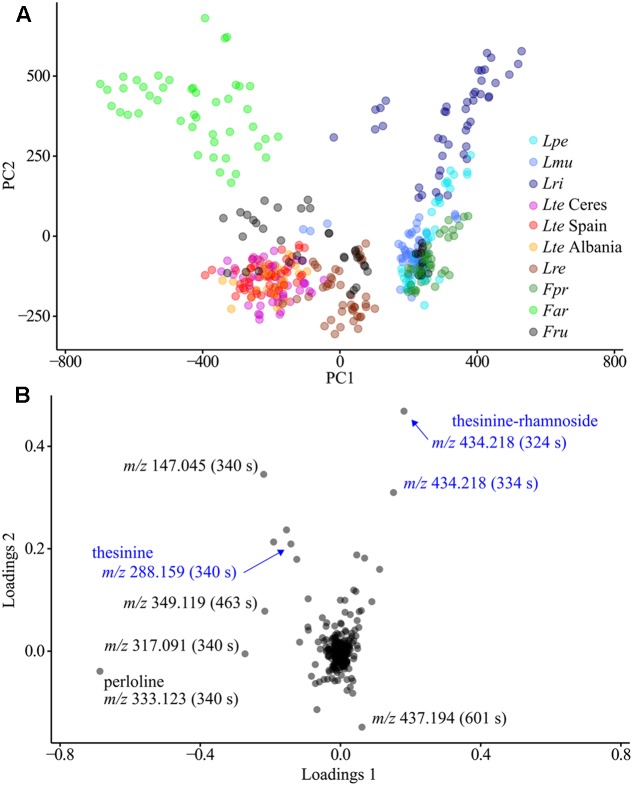
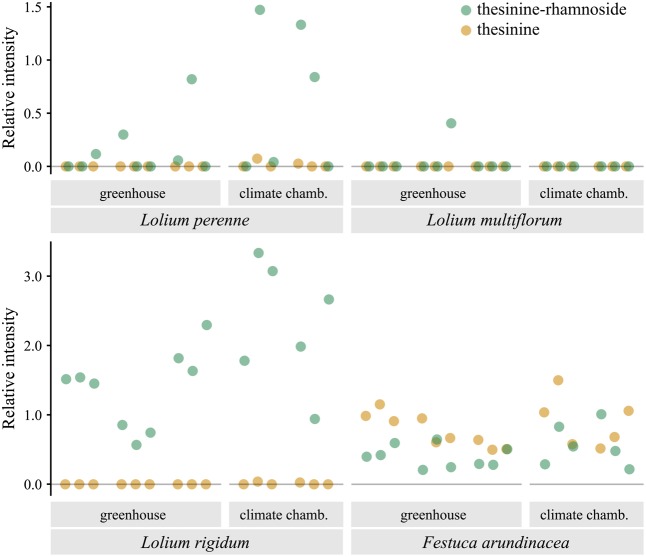
Pyrrolizidine alkaloids (PAs) are a class of secondary metabolites found in various unrelated angiosperm lineages including cool-season grasses (Poaceae, subfamily Pooideae). Thesinine conjugates, saturated forms of PA that are regarded as non-toxic, have been described to occur in the two grass species and (Poaceae, subfamily Pooideae). In a wider screen, we tested various species of the Pooideae lineage, grown under controlled conditions, for their ability to produce thesinine conjugates or related structures. Using an LC-MS based targeted metabolomics approach we were able to show that PA biosynthesis in grasses is limited to a group of very closely related Pooideae species that produce a limited diversity of PA structures. High variability in PA levels was observed even between individuals of the same species. These individual accumulation patterns are discussed with respect to a possible function and evolution of this type of alkaloid.
吡咯里西啶生物碱(PAs)是一类次生代谢产物,存在于各种无亲缘关系的被子植物谱系中,包括冷季型禾本科植物(禾本科,早熟禾亚科)。被认为无毒的PA饱和形式——色胺酸共轭物,已被描述存在于两种禾本科植物(禾本科,早熟禾亚科)中。在更广泛的筛选中,我们测试了在可控条件下生长的早熟禾亚科谱系的各种物种产生色胺酸共轭物或相关结构的能力。使用基于液相色谱 - 质谱联用的靶向代谢组学方法,我们能够表明禾本科植物中PA的生物合成仅限于一组亲缘关系非常密切的早熟禾亚科物种,这些物种产生的PA结构多样性有限。即使在同一物种的个体之间,也观察到PA水平的高度变异性。针对这类生物碱可能的功能和进化,对这些个体积累模式进行了讨论。