Cong Lin, Fu Shuhao, Zhang Jinling, Zhao Jin, Zhang Yuyan
Department of Ophthalmology, Huashan Hospital, Fudan University, Shanghai 200040, P.R. China.
Exp Ther Med. 2018 Jan;15(1):210-216. doi: 10.3892/etm.2017.5353. Epub 2017 Oct 23.
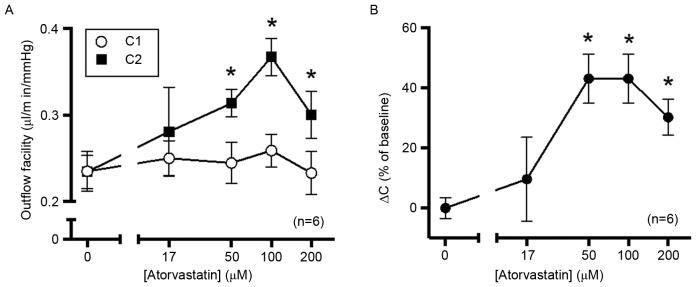
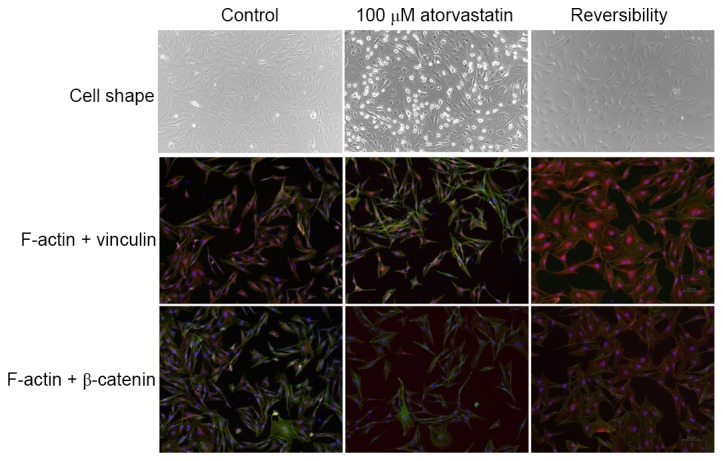
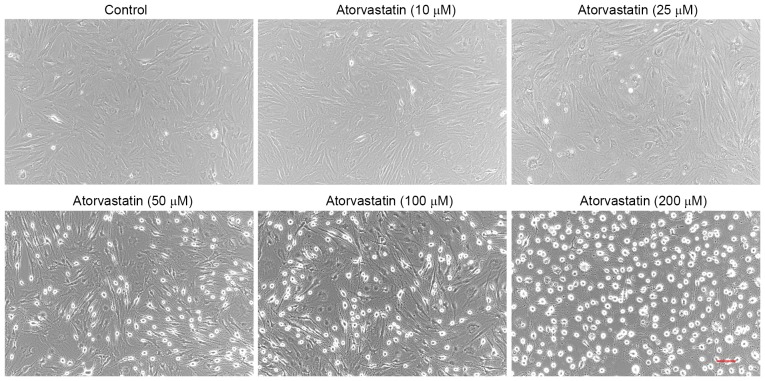
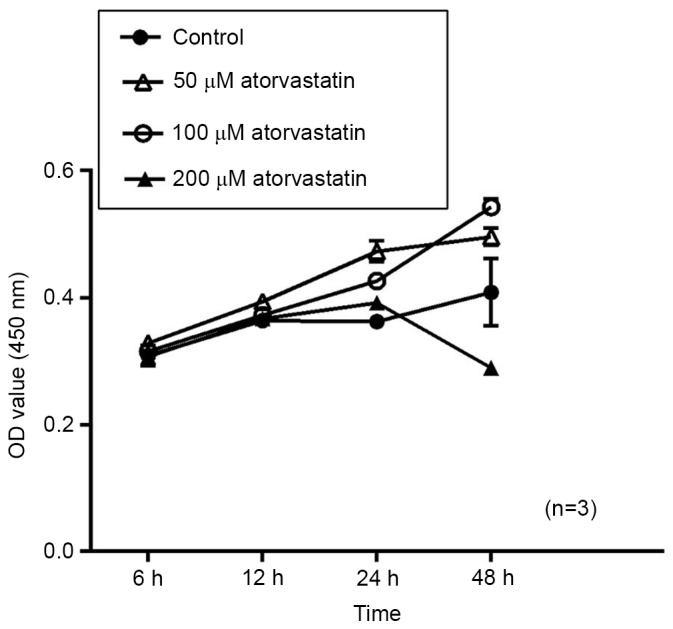
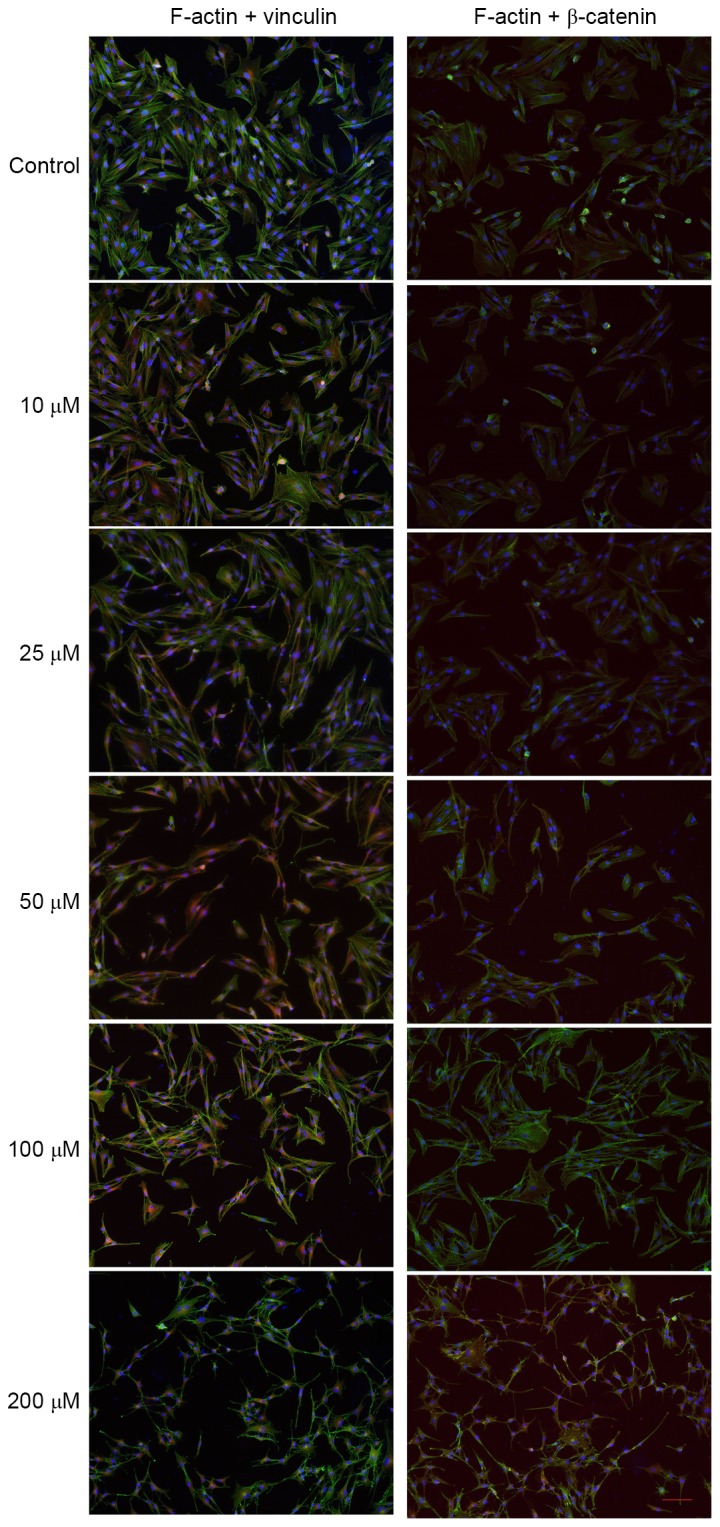
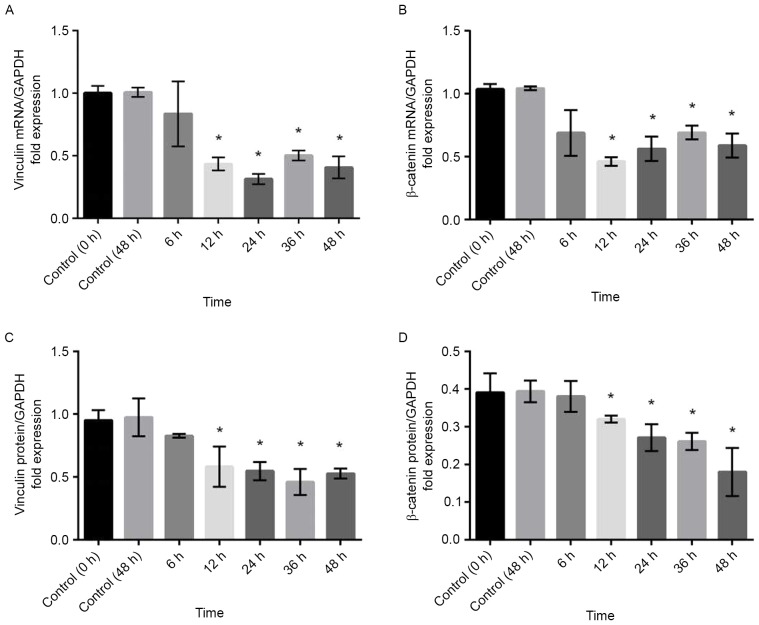
Primary open-angle glaucoma (POAG) with complex pathogenesis is one of the many major causes of blindness. It is widely accepted that the major cause of POAG is the dysregulation of the trabecular meshwork (TM), which regulates the resistance to aqueous humour outflow. Intraocular pressure is elevated with increasing outflow resistance in the conventional pathway, which consists of the TM and Schlemm's canal. The TM is a filter made up of extracellular matrix (e.g., collagens), most of which is organized into a network of beams covered by endothelial-like trabecular cells. Currently, lack of effective anti-glaucoma drugs acting on TM to normalize trabecular outflow represents a bottleneck for POAG therapy. Atorvastatin, a lipid-lowering drug, has been proven to be of benefit for POAG. The present study aimed to investigate the possible mechanisms of action of atorvastatin on the TM by using a porcine aqueous humour outflow model and TM cells . Perfusion of enucleated porcine eyes with atorvastatin (50-200 µM) for 2 h increased aqueous humour outflow (P<0.05, n=6), possibly via regulating the morphology of TM cells and the distribution of the cytoskeleton. Atorvastatin decreased adhesion molecules at the mRNA and protein level. No cytotoxicity of atorvastatin on TM cells was observed at concentrations of <100 µM. The atorvastatin-induced effects mentioned above were reversible after removal of the compound only if the atorvastatin concentration was <100 µM. The present study demonstrated that atorvastatin efficaciously elevated aqueous humour outflow, possibly due to affecting TM-cell morphology, cytoskeleton and cell junctions. Statins may be potential therapeutic agents for lowering intraocular pressure in POAG.
原发性开角型青光眼(POAG)发病机制复杂,是导致失明的主要原因之一。普遍认为,POAG的主要病因是小梁网(TM)调节房水流出阻力的功能失调。在由TM和施莱姆管组成的传统途径中,随着流出阻力增加,眼压升高。TM是一种由细胞外基质(如胶原蛋白)构成的滤器,其中大部分组织成由内皮样小梁细胞覆盖的梁状网络。目前,缺乏作用于TM以恢复小梁网房水流出正常的有效抗青光眼药物是POAG治疗的一个瓶颈。阿托伐他汀是一种降脂药物,已被证明对POAG有益。本研究旨在通过使用猪房水流出模型和TM细胞来研究阿托伐他汀对TM的可能作用机制。用阿托伐他汀(50 - 200 μM)灌注摘除的猪眼2小时可增加房水流出(P<0.05,n = 6),可能是通过调节TM细胞的形态和细胞骨架的分布。阿托伐他汀在mRNA和蛋白质水平降低黏附分子。在浓度<100 μM时未观察到阿托伐他汀对TM细胞的细胞毒性。仅当阿托伐他汀浓度<100 μM时,去除该化合物后上述阿托伐他汀诱导的作用是可逆的。本研究表明,阿托伐他汀有效提高房水流出,可能是由于影响TM细胞形态、细胞骨架和细胞连接。他汀类药物可能是降低POAG眼压的潜在治疗药物。