Department of Neurobiology, University of Alabama at Birmingham, Birmingham, AL 35294, USA.
Department of Ophthalmology and Vision Sciences, University of Alabama at Birmingham, Birmingham, AL 35294, USA.
Int J Mol Sci. 2022 Jul 22;23(15):8068. doi: 10.3390/ijms23158068.
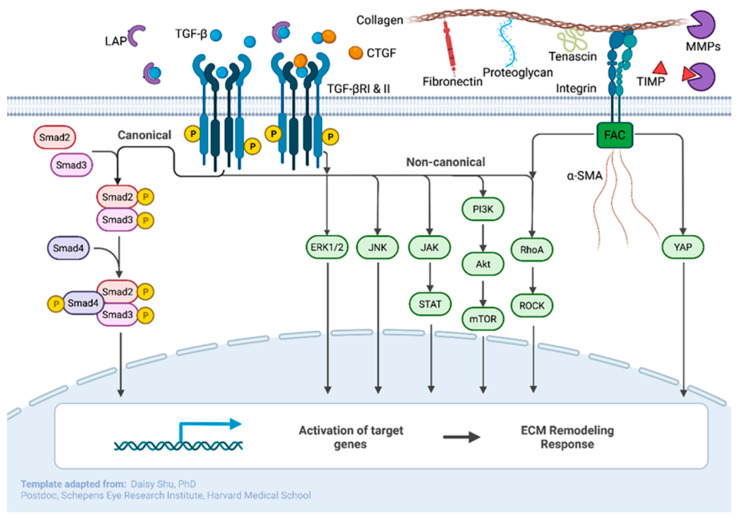
Glaucomatous optic neuropathy is the leading cause of irreversible blindness in the world. The chronic disease is characterized by optic nerve degeneration and vision field loss. The reduction of intraocular pressure remains the only proven glaucoma treatment, but it does not prevent further neurodegeneration. There are three major classes of cells in the human optic nerve head (ONH): lamina cribrosa (LC) cells, glial cells, and scleral fibroblasts. These cells provide support for the LC which is essential to maintain healthy retinal ganglion cell (RGC) axons. All these cells demonstrate responses to glaucomatous conditions through extracellular matrix remodeling. Therefore, investigations into alternative therapies that alter the characteristic remodeling response of the ONH to enhance the survival of RGC axons are prevalent. Understanding major remodeling pathways in the ONH may be key to developing targeted therapies that reduce deleterious remodeling.
青光眼性视神经病变是世界范围内导致不可逆失明的主要原因。这种慢性疾病的特征是视神经退行性变和视野丧失。降低眼内压仍然是唯一被证实的青光眼治疗方法,但它并不能阻止进一步的神经退行性变。人类视神经头(ONH)中有三种主要的细胞:层状筛板(LC)细胞、神经胶质细胞和巩膜成纤维细胞。这些细胞为 LC 提供支持,这对维持健康的视网膜神经节细胞(RGC)轴突至关重要。所有这些细胞都通过细胞外基质重塑对青光眼状态做出反应。因此,研究改变 ONH 特征性重塑反应的替代疗法以增强 RGC 轴突存活的研究非常普遍。了解 ONH 中的主要重塑途径可能是开发靶向治疗的关键,这些治疗可以减少有害的重塑。