Institute of Epigenetics and Stem Cells (IES), Helmholtz Zentrum München, Munich, Germany.
Institut de Génétique et de Biologie Moléculaire et Cellulaire, CNRS-INSERM, U964, Strasbourg, France.
Nat Genet. 2018 Jan;50(1):106-119. doi: 10.1038/s41588-017-0016-5. Epub 2017 Dec 18.
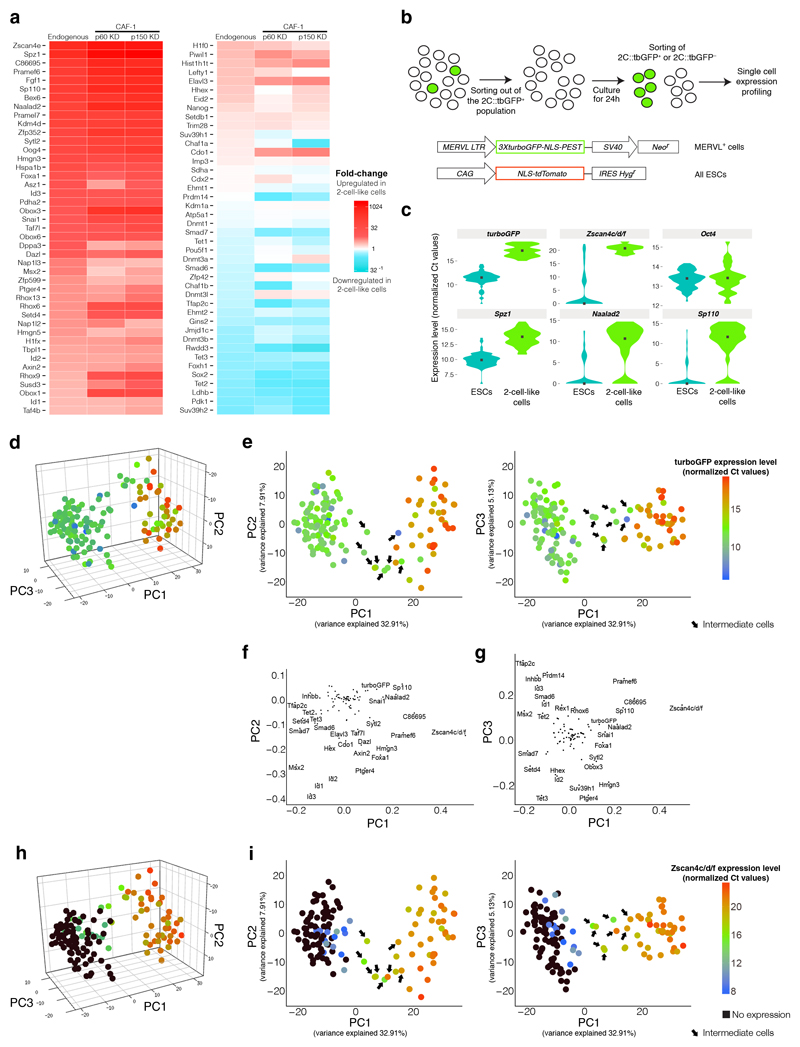
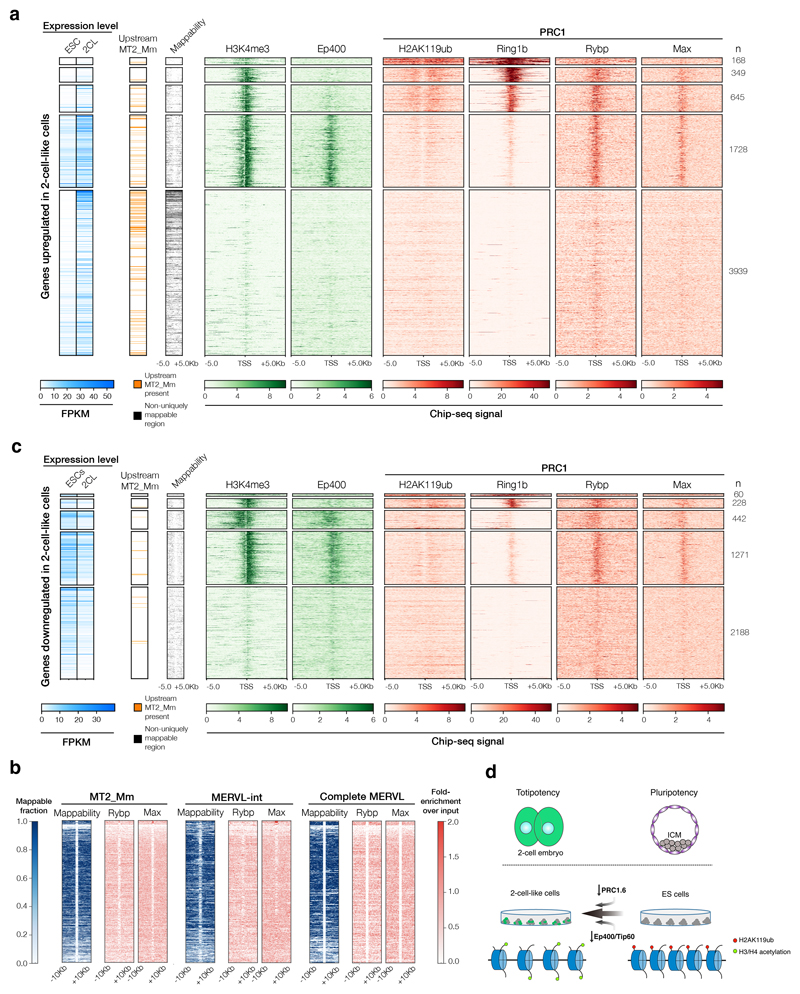
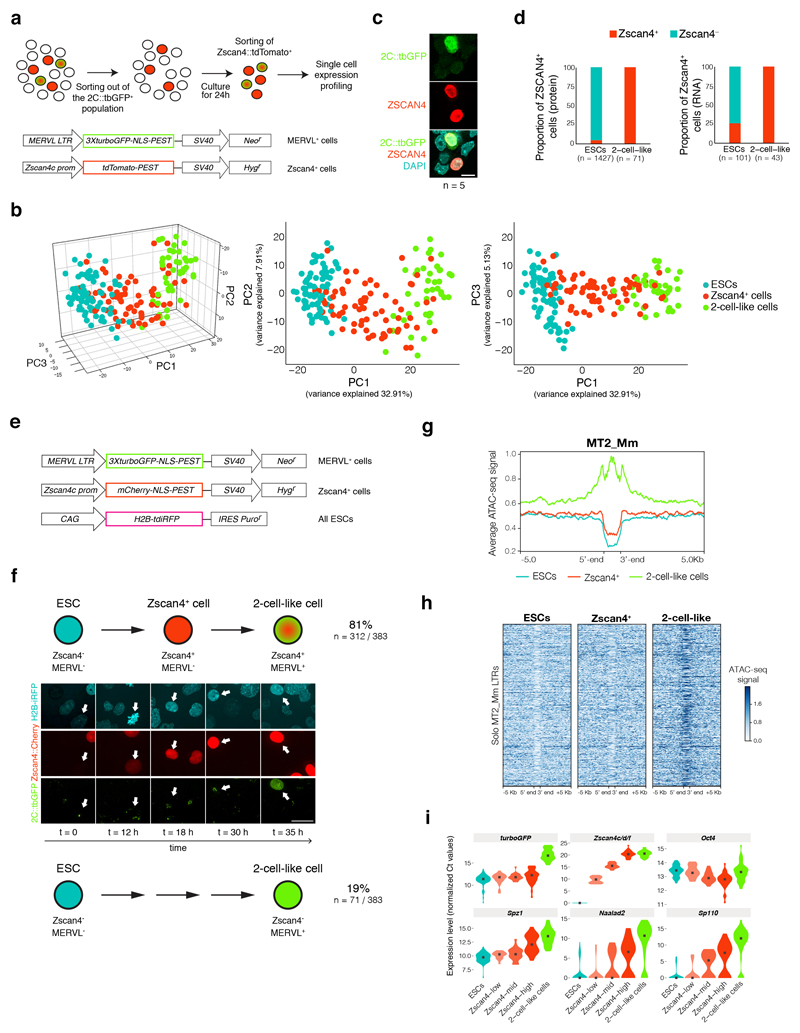
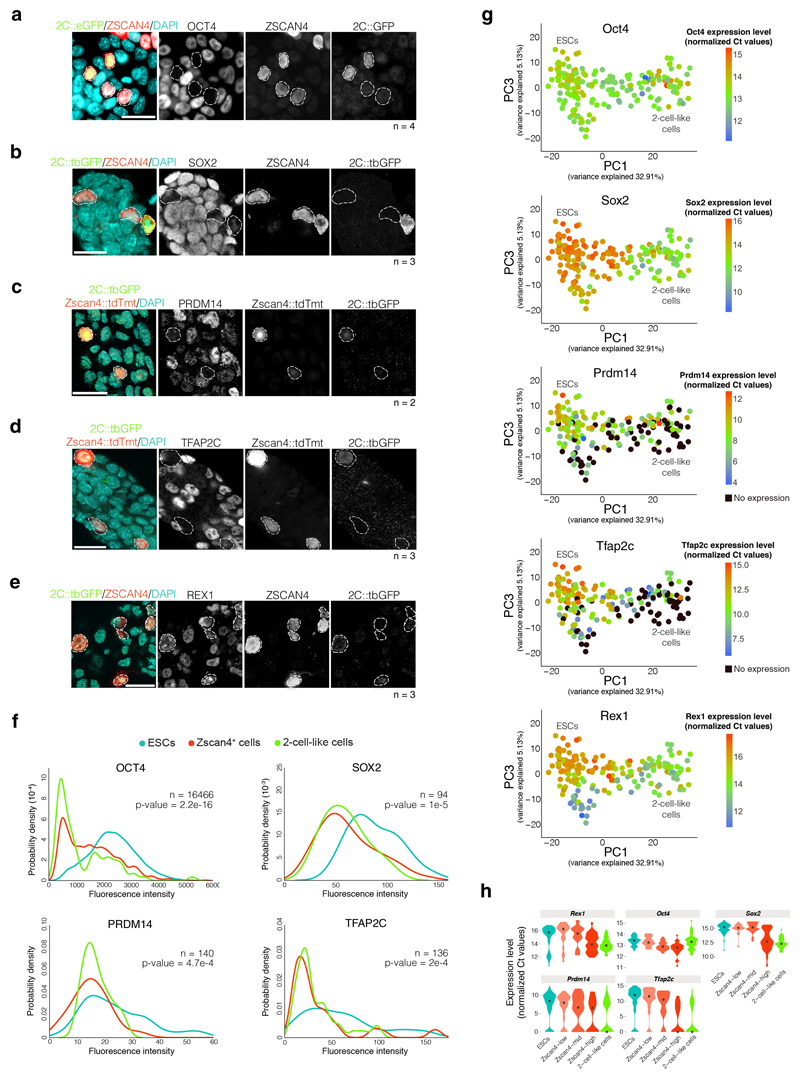
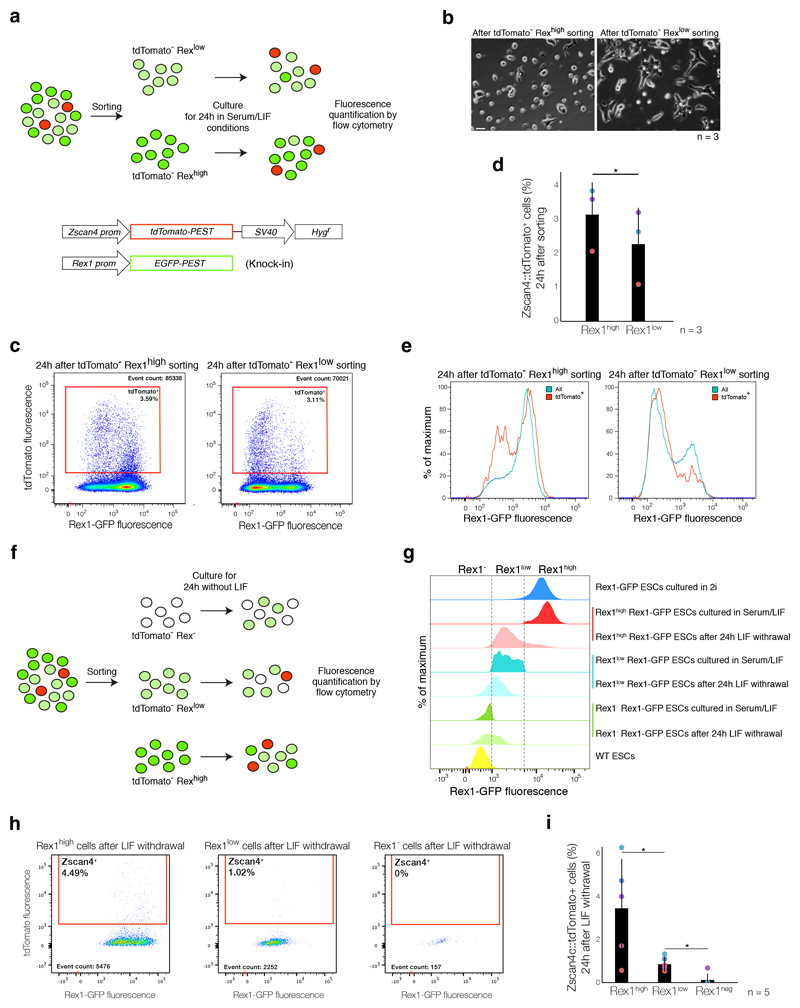
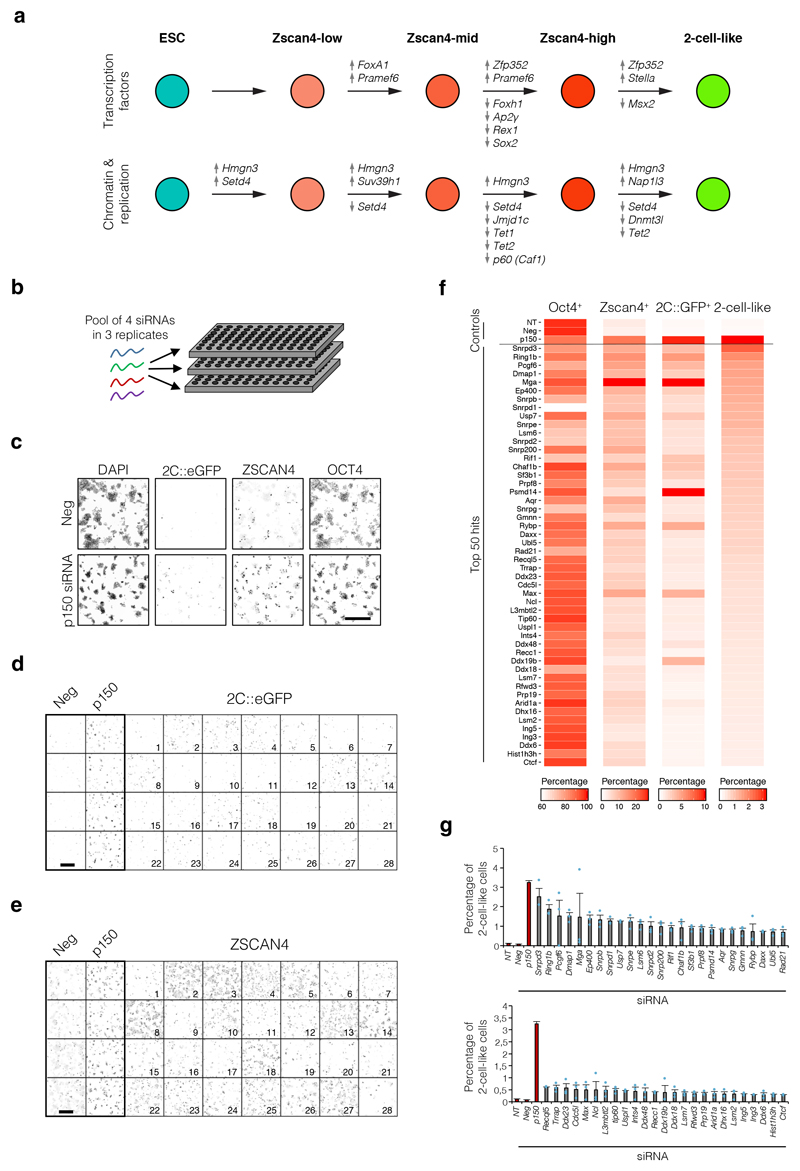
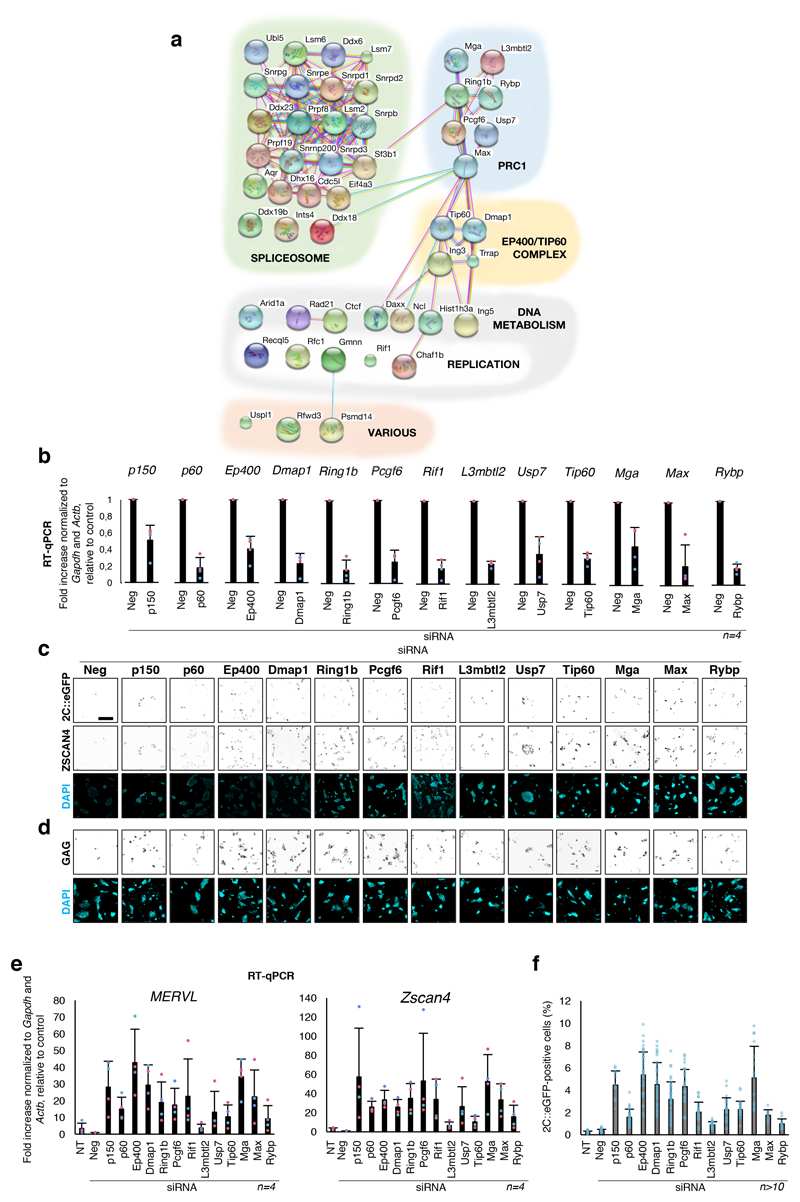
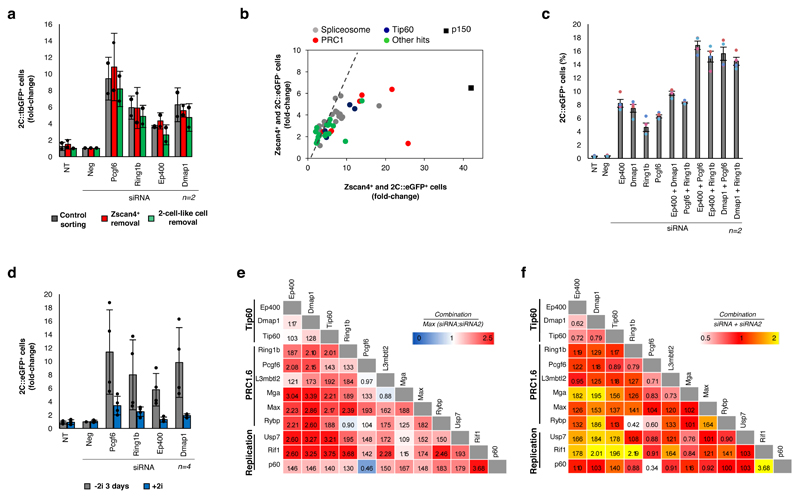
Unlike pluripotent cells, which generate only embryonic tissues, totipotent cells can generate a full organism, including extra-embryonic tissues. A rare population of cells resembling 2-cell-stage embryos arises in pluripotent embryonic stem (ES) cell cultures. These 2-cell-like cells display molecular features of totipotency and broader developmental plasticity. However, their specific nature and the process through which they arise remain outstanding questions. Here we identified intermediate cellular states and molecular determinants during the emergence of 2-cell-like cells. By deploying a quantitative single-cell expression approach, we identified an intermediate population characterized by expression of the transcription factor ZSCAN4 as a precursor of 2-cell-like cells. By using a small interfering RNA (siRNA) screen, we identified epigenetic regulators of 2-cell-like cell emergence, including the non-canonical PRC1 complex PRC1.6 and the EP400-TIP60 complex. Our data shed light on the mechanisms that underlie exit from the ES cell state toward the formation of early-embryonic-like cells in culture and identify key epigenetic pathways that promote this transition.
与只能产生胚胎组织的多能细胞不同,全能细胞可以生成一个完整的生物体,包括胚胎外组织。在多能胚胎干细胞(ES 细胞)培养物中,会出现一种类似于 2 细胞期胚胎的罕见细胞群。这些 2 细胞样细胞表现出全能性的分子特征和更广泛的发育可塑性。然而,它们的具体性质和产生它们的过程仍然是悬而未决的问题。在这里,我们在 2 细胞样细胞出现过程中鉴定出中间细胞状态和分子决定因素。通过部署一种定量的单细胞表达方法,我们鉴定出一种以转录因子 ZSCAN4 表达为特征的中间细胞群体,作为 2 细胞样细胞的前体。通过使用小干扰 RNA(siRNA)筛选,我们鉴定出 2 细胞样细胞出现的表观遗传调控因子,包括非典型 PRC1 复合物 PRC1.6 和 EP400-TIP60 复合物。我们的数据阐明了细胞状态从 ES 细胞退出并向培养中的早期胚胎样细胞形成的机制,并确定了促进这种转变的关键表观遗传途径。