Randall Centre of Cell and Molecular Biophysics, New Hunt's House, King's College London, Guy's Campus, London, SE1 1UL, UK.
Department of Computer Science, University College London, London, WC1E 6BT, UK.
Nat Commun. 2017 Dec 18;8(1):2152. doi: 10.1038/s41467-017-01200-4.
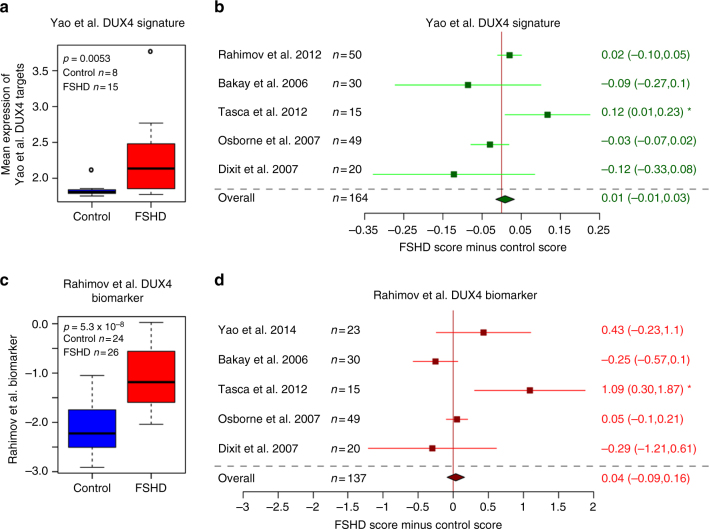
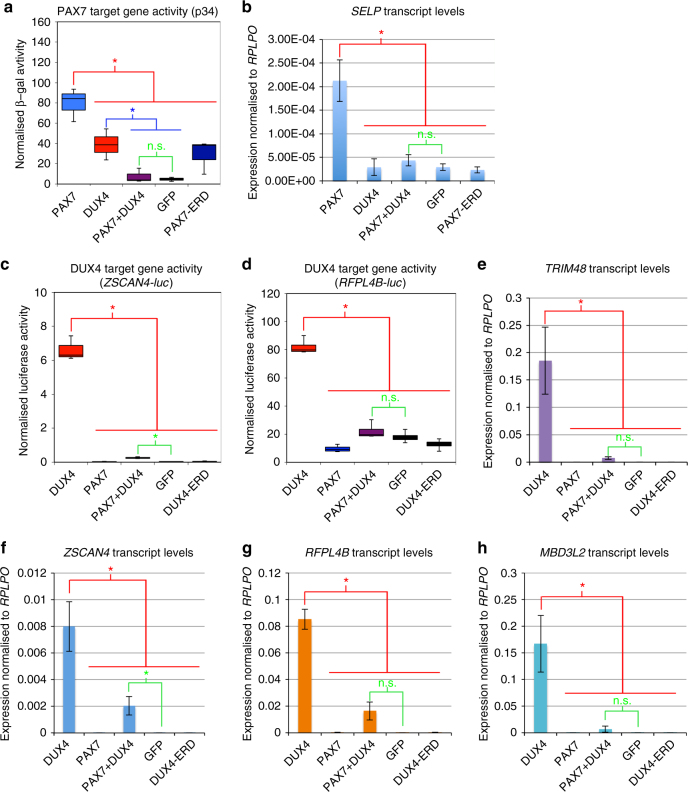
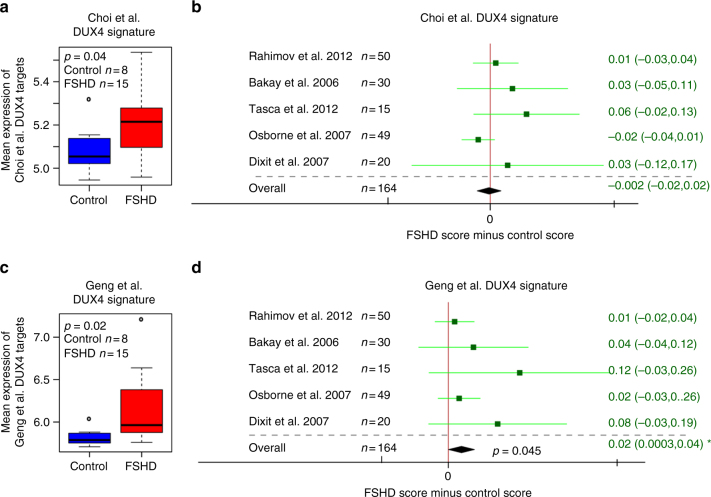
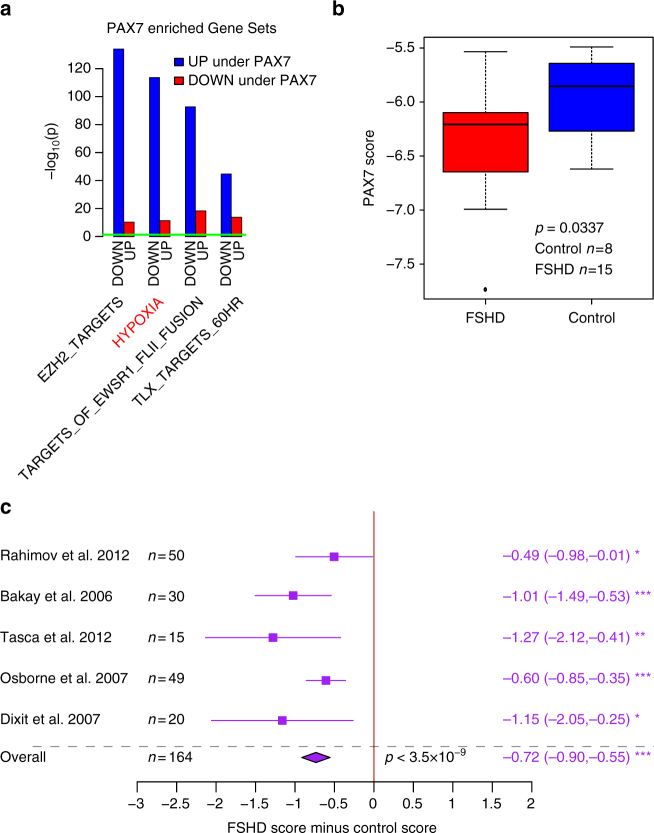
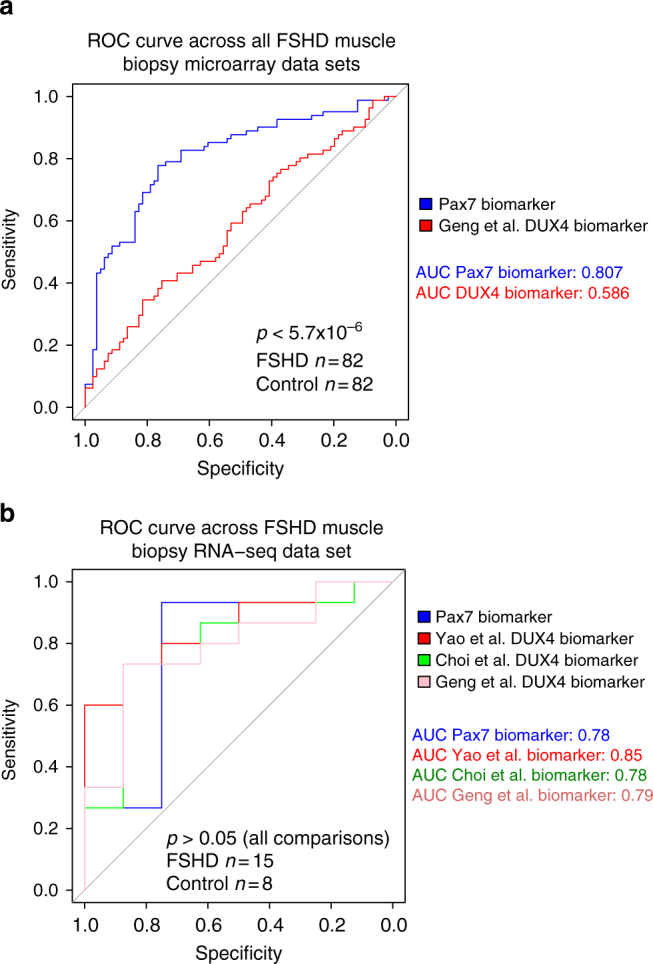
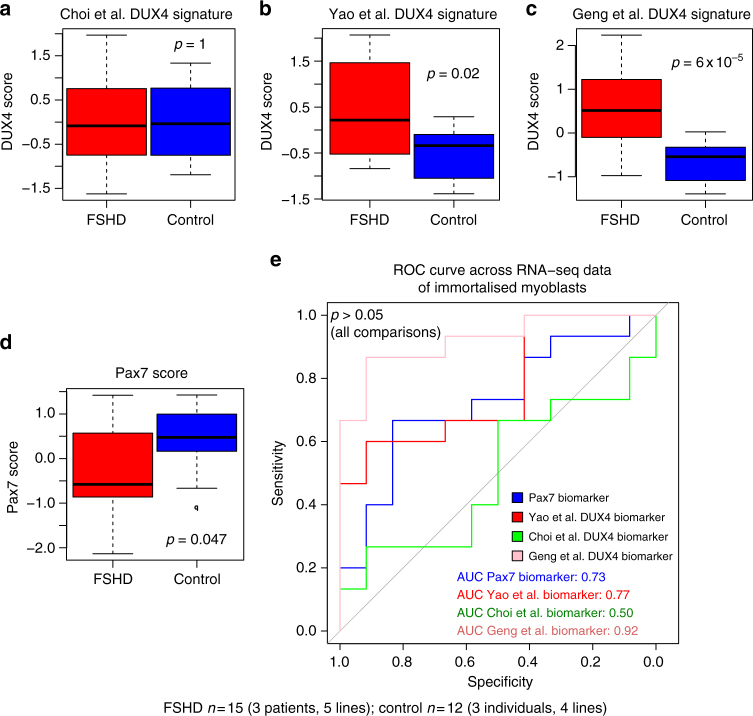
Facioscapulohumeral muscular dystrophy (FSHD) is a prevalent, incurable myopathy, linked to hypomethylation of D4Z4 repeats on chromosome 4q causing expression of the DUX4 transcription factor. However, DUX4 is difficult to detect in FSHD muscle biopsies and it is debatable how robust changes in DUX4 target gene expression are as an FSHD biomarker. PAX7 is a master regulator of myogenesis that rescues DUX4-mediated apoptosis. Here, we show that suppression of PAX7 target genes is a hallmark of FSHD, and that it is as major a signature of FSHD muscle as DUX4 target gene expression. This is shown using meta-analysis of over six FSHD muscle biopsy gene expression studies, and validated by RNA-sequencing on FSHD patient-derived myoblasts. DUX4 also inhibits PAX7 from activating its transcriptional target genes and vice versa. Furthermore, PAX7 target gene repression can explain oxidative stress sensitivity and epigenetic changes in FSHD. Thus, PAX7 target gene repression is a hallmark of FSHD that should be considered in the investigation of FSHD pathology and therapy.
面肩肱型肌营养不良症(FSHD)是一种常见的、无法治愈的肌病,与 4q 染色体上 D4Z4 重复序列的低甲基化有关,导致 DUX4 转录因子的表达。然而,在 FSHD 肌肉活检中很难检测到 DUX4,并且 DUX4 靶基因表达的变化作为 FSHD 生物标志物的稳健性存在争议。PAX7 是肌发生的主要调节因子,可挽救 DUX4 介导的细胞凋亡。在这里,我们表明 PAX7 靶基因的抑制是 FSHD 的一个标志,并且它与 DUX4 靶基因表达一样是 FSHD 肌肉的主要特征。这是通过对六个以上 FSHD 肌肉活检基因表达研究的荟萃分析显示的,并通过对 FSHD 患者来源的成肌细胞的 RNA 测序进行验证。DUX4 还抑制 PAX7 激活其转录靶基因,反之亦然。此外,PAX7 靶基因抑制可以解释 FSHD 中的氧化应激敏感性和表观遗传变化。因此,PAX7 靶基因抑制是 FSHD 的一个标志,在研究 FSHD 病理和治疗时应予以考虑。