INSERM UMR1163, Laboratory of Neurogenetics and Neuroinflammation, Paris, 75015, France.
Department of Medicine, Surgery, and Health Sciences, University of Trieste, Trieste, 34149, Italy.
Nat Commun. 2017 Dec 19;8(1):2176. doi: 10.1038/s41467-017-01932-3.
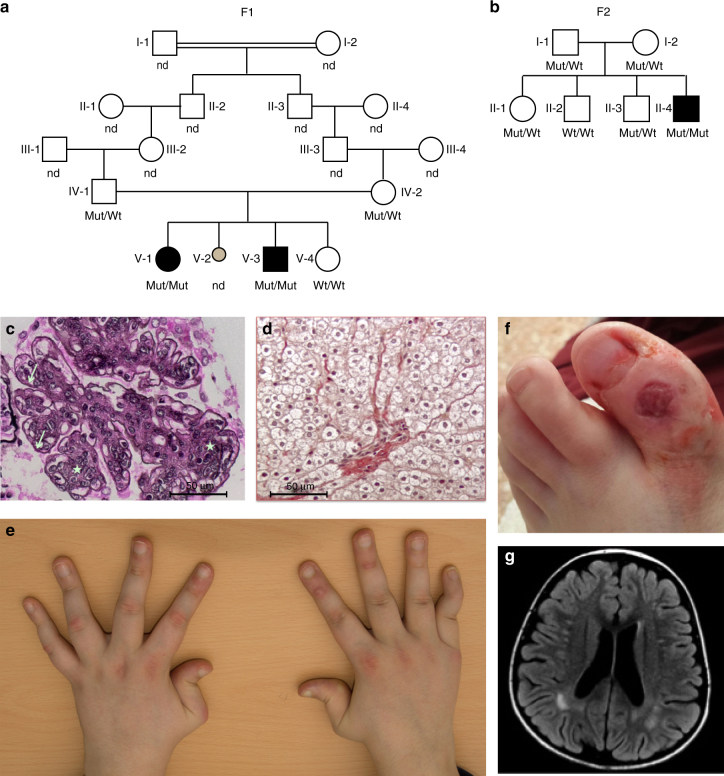
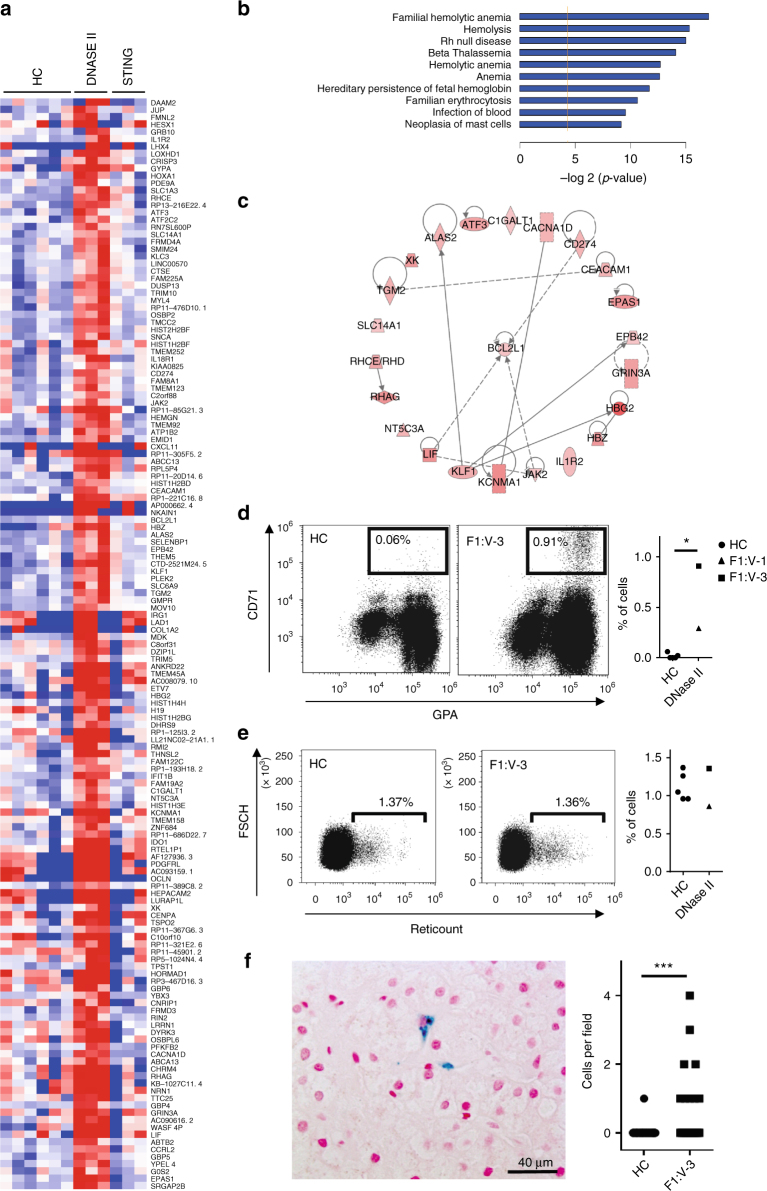
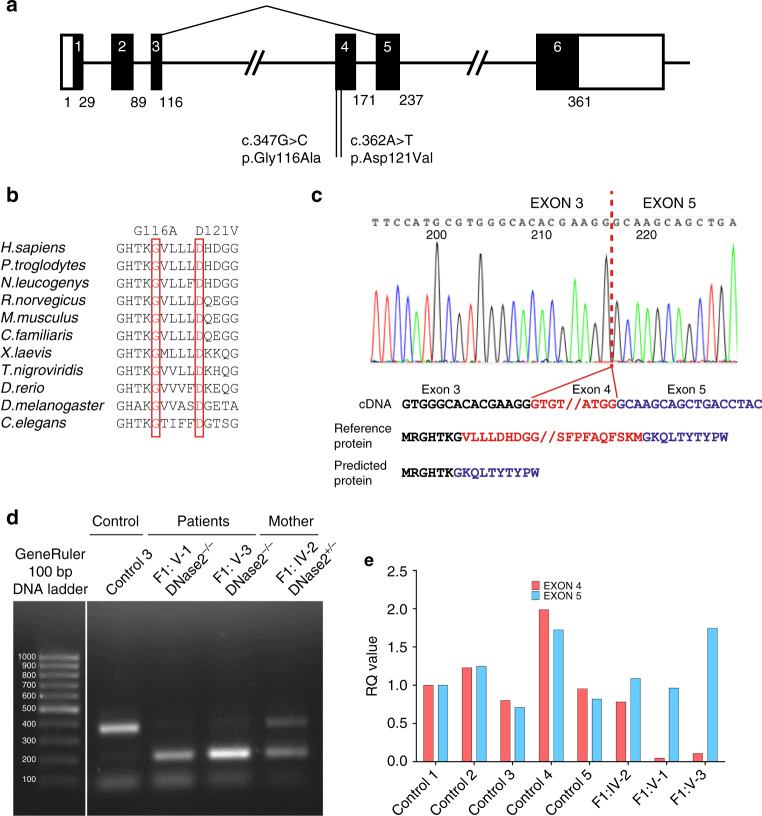
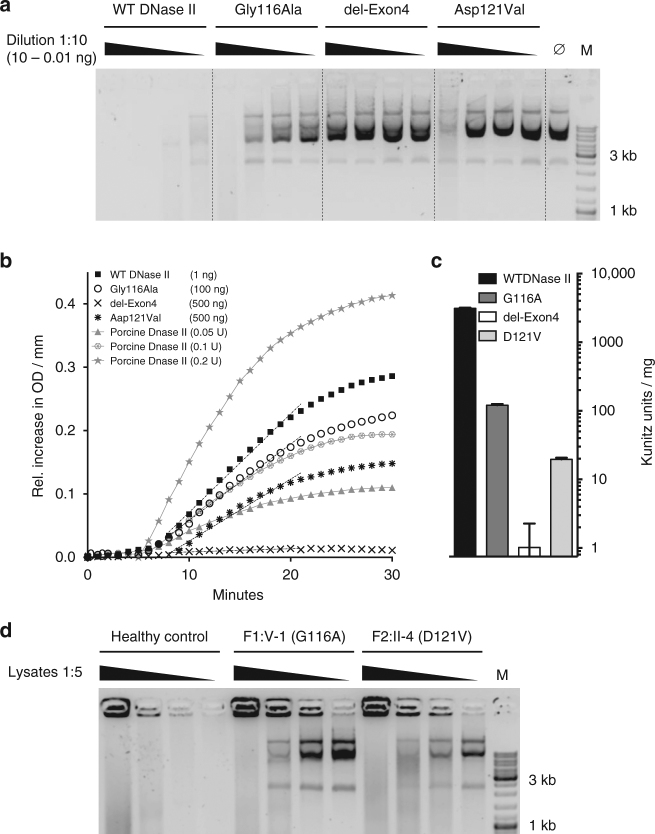
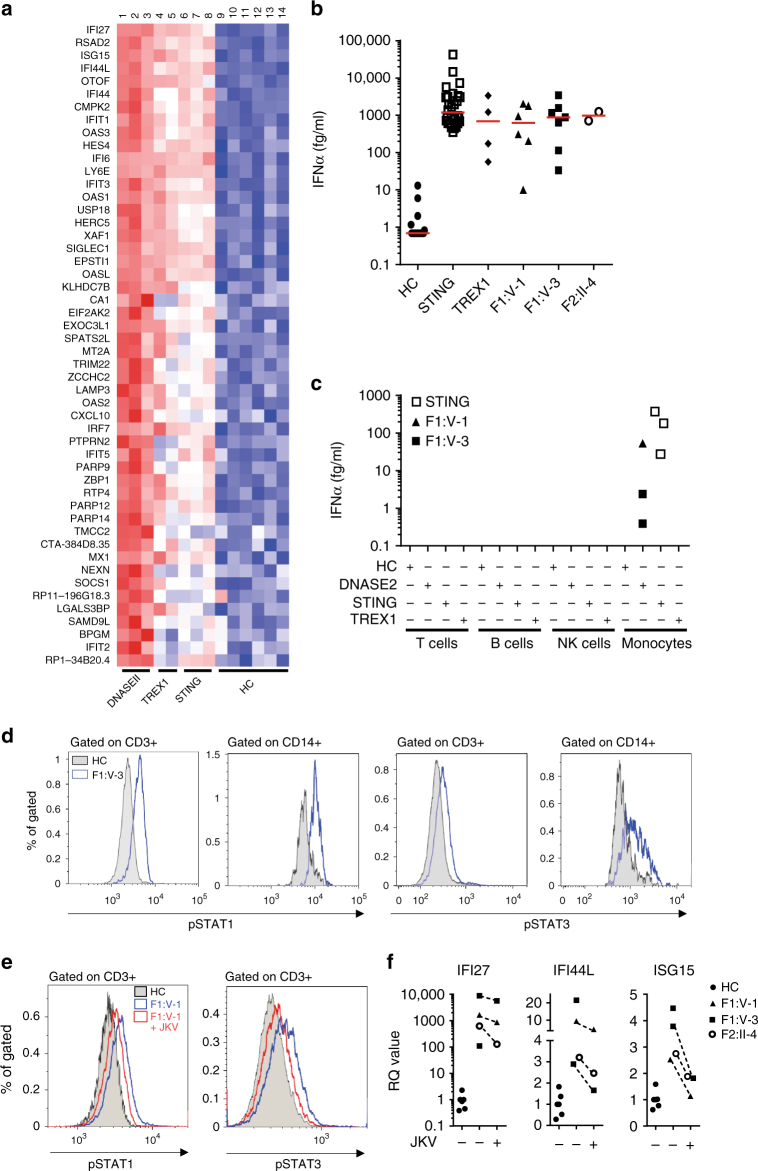
Microbial nucleic acid recognition serves as the major stimulus to an antiviral response, implying a requirement to limit the misrepresentation of self nucleic acids as non-self and the induction of autoinflammation. By systematic screening using a panel of interferon-stimulated genes we identify two siblings and a singleton variably demonstrating severe neonatal anemia, membranoproliferative glomerulonephritis, liver fibrosis, deforming arthropathy and increased anti-DNA antibodies. In both families we identify biallelic mutations in DNASE2, associated with a loss of DNase II endonuclease activity. We record increased interferon alpha protein levels using digital ELISA, enhanced interferon signaling by RNA-Seq analysis and constitutive upregulation of phosphorylated STAT1 and STAT3 in patient lymphocytes and monocytes. A hematological disease transcriptomic signature and increased numbers of erythroblasts are recorded in patient peripheral blood, suggesting that interferon might have a particular effect on hematopoiesis. These data define a type I interferonopathy due to DNase II deficiency in humans.
微生物核酸识别是抗病毒反应的主要刺激因素,这意味着需要限制将自身核酸错误地表示为非自身,并诱导自身炎症。通过使用干扰素刺激基因的面板进行系统筛选,我们鉴定出两个兄弟姐妹和一个单倍体,他们表现出严重的新生儿贫血、膜增生性肾小球肾炎、肝纤维化、变形性关节炎和增加的抗 DNA 抗体。在两个家族中,我们都鉴定出 DNASE2 的双等位基因突变,与 DNA 内切酶 II 活性丧失相关。我们使用数字 ELISA 记录干扰素 α 蛋白水平升高,通过 RNA-Seq 分析增强干扰素信号,并在患者淋巴细胞和单核细胞中持续上调磷酸化 STAT1 和 STAT3。在患者外周血中记录到血液疾病转录组特征和红细胞数量增加,表明干扰素可能对造血有特殊影响。这些数据定义了一种由于人类 DNASE2 缺乏引起的 I 型干扰素病。