Intensive Care Unit, Taicang Affiliated Hospital of Soochow University, Taicang 215400, China.
Intensive Care Unit, The Second Affiliated Hospital of Soochow University, Suzhou 215004, China.
Biomed Res Int. 2017;2017:3906032. doi: 10.1155/2017/3906032. Epub 2017 Nov 12.
To investigate the effects of target temperature management on hemodynamic changes, inflammatory and immune factors, and clinical outcomes of sepsis patients with fever.
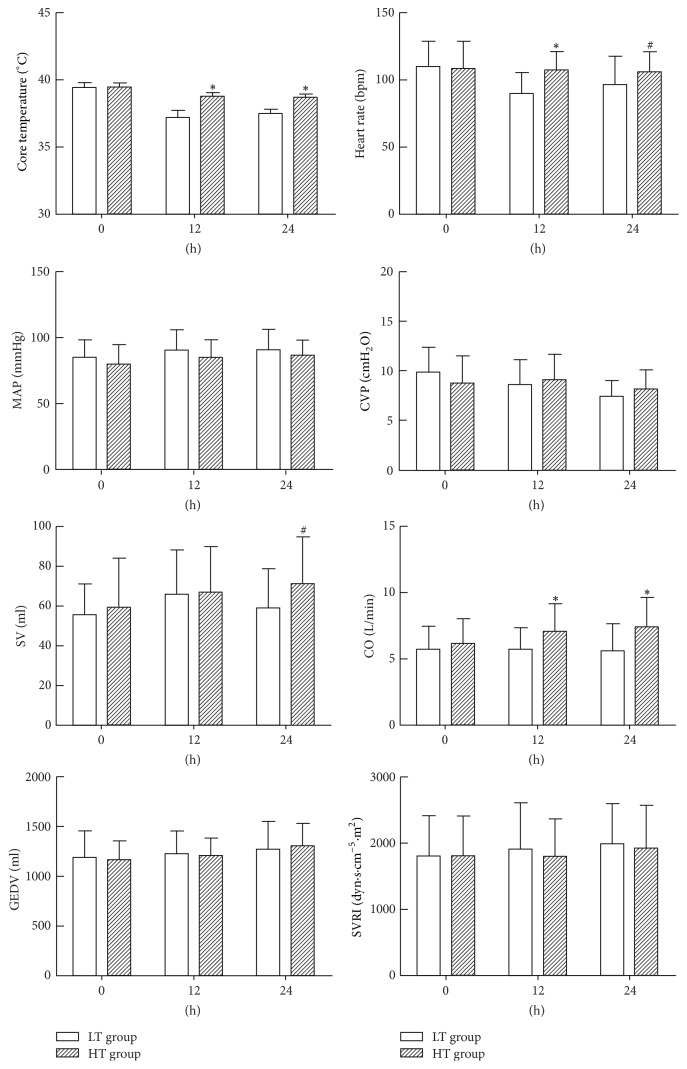
Patients diagnosed with sepsis with a core temperature of ≥39°C were randomly divided into two groups: a low-temperature group (LT group: 36.5°C-38°C) and a high-temperature group (HT group: 38.5°C-39.5°C). A target core temperature was achieved within 6 hrs posttreatment and maintained for 24 hrs. Then, the hemodynamic changes, inflammatory and immune factors, and clinical outcomes were evaluated.
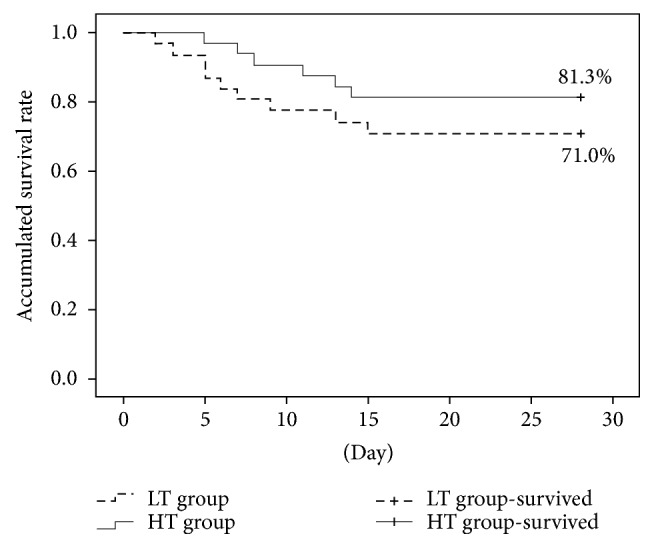
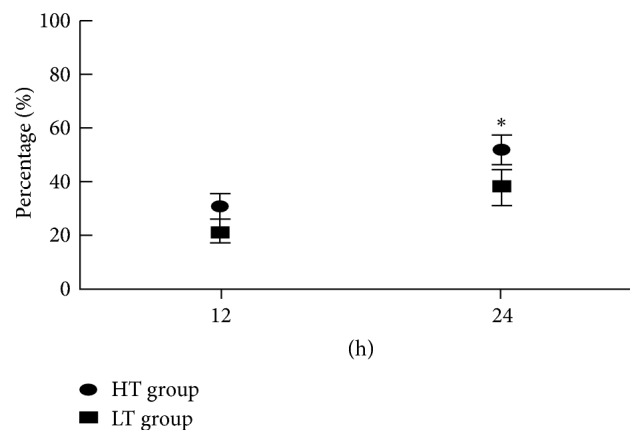
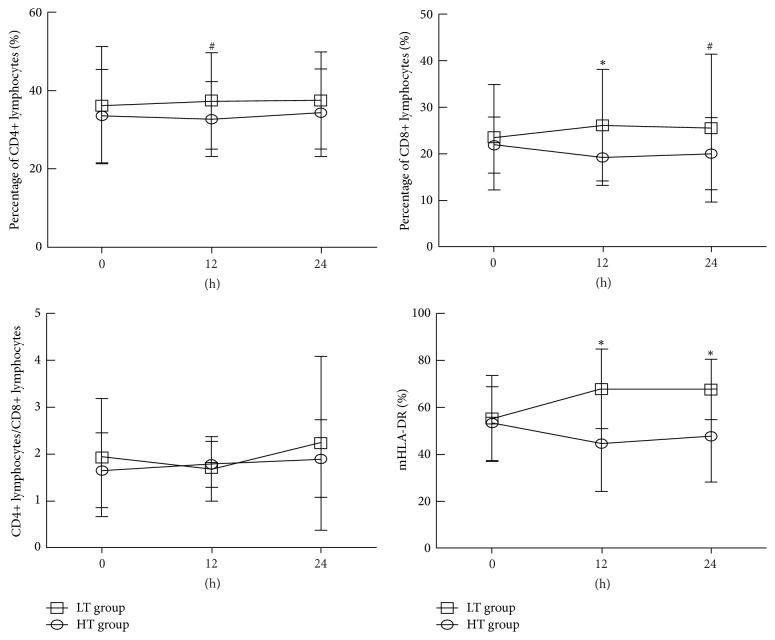
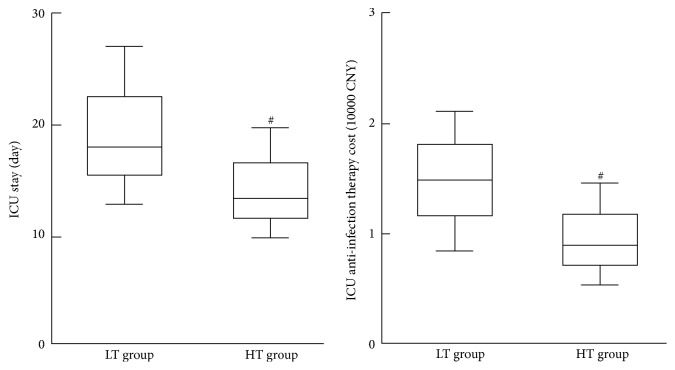
Compared with the HT group, C-reactive protein (CRP), procalcitonin (PCT), interleukin-6 (IL-6), and tumor necrosis factor- (TNF-) showed a significant decrease in the LT group ( < 0.05). In contrast, IL-4 and IL-10 were higher in the LT group than in the HT group ( < 0.05). The CD4-T lymphocyte (CD4+), CD8-T lymphocyte (CD8+), and monocytic human leukocyte antigen-DR (mHLA-DR) in the LT group were higher than in the HT group ( < 0.05). The ICU stay and the anti-infection treatment costs were higher in the LT group ( < 0.05).
Low-temperature management of patients resulted in a low level of proinflammatory cytokines. Excessive temperature control in sepsis patients with fever may be harmful.
探讨目标温度管理对发热性脓毒症患者血流动力学变化、炎症和免疫因子及临床结局的影响。
将体温≥39°C 的脓毒症患者随机分为两组:低温组(LT 组:36.5°C-38°C)和高温组(HT 组:38.5°C-39.5°C)。治疗后 6 小时内将目标核心温度达到并维持 24 小时。然后评估血流动力学变化、炎症和免疫因子以及临床结局。
与 HT 组相比,LT 组 C 反应蛋白(CRP)、降钙素原(PCT)、白细胞介素-6(IL-6)和肿瘤坏死因子-(TNF-)显著降低(<0.05)。相反,LT 组 IL-4 和 IL-10 高于 HT 组(<0.05)。LT 组 CD4-T 淋巴细胞(CD4+)、CD8-T 淋巴细胞(CD8+)和单核细胞人类白细胞抗原-DR(mHLA-DR)高于 HT 组(<0.05)。LT 组 ICU 入住时间和抗感染治疗费用均高于 HT 组(<0.05)。
患者低温管理导致促炎细胞因子水平降低。发热性脓毒症患者过度体温控制可能有害。