Faculty of Biosciences and Aquaculture, Nord University, 8049 Bodø, Norway
Department of Arctic Biology, The University Centre in Svalbard, N-9171 Longyearbyen, Norway.
Biol Lett. 2017 Dec;13(12). doi: 10.1098/rsbl.2017.0588.
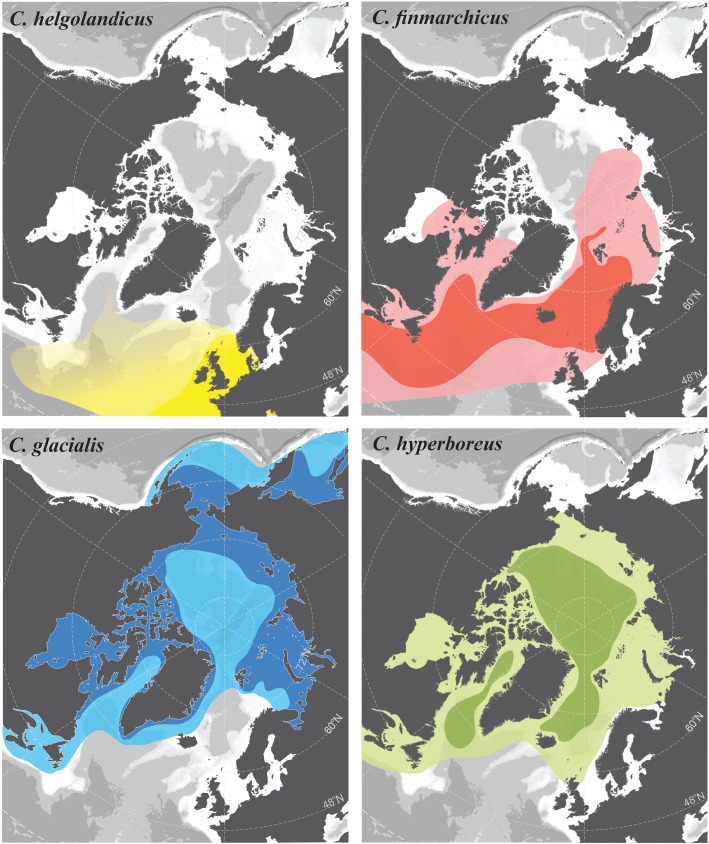
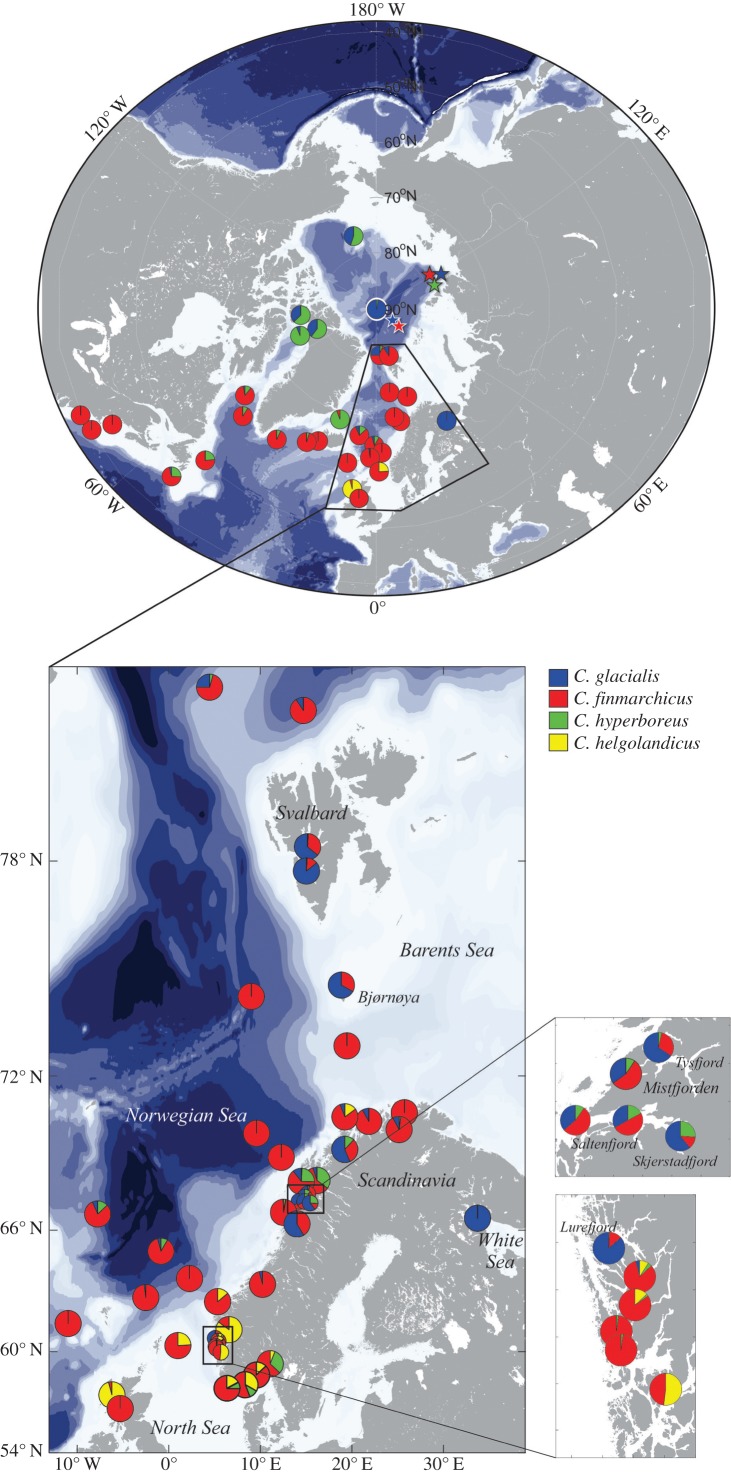
Planktonic copepods of the genus play a central role in North Atlantic/Arctic marine food webs. Here, using molecular markers, we redrew the distributional ranges of species inhabiting the North Atlantic and Arctic Oceans and revealed much wider and more broadly overlapping distributions than previously described. The Arctic shelf species, , dominated the zooplankton assemblage of many Norwegian fjords, where only has been reported previously. In these fjords, high occurrences of the Arctic species were also found. Molecular markers revealed that the most common method of species identification, prosome length, cannot reliably discriminate the species in Norwegian fjords. Differences in degree of genetic differentiation among fjord populations of the two species suggested that is a more permanent resident of the fjords than We found no evidence of hybridization between the species. Our results indicate a critical need for the wider use of molecular markers to reliably identify and discriminate these morphologically similar copepod species, which serve as important indicators of climate responses.
浮游桡足类在北大西洋/北极海洋食物网中起着核心作用。在这里,我们使用分子标记重新绘制了栖息在北大西洋和北冰洋的桡足类物种的分布范围,揭示了比以前描述的更广泛和更广泛的重叠分布。北极大陆架物种 ,在许多挪威峡湾的浮游动物组合中占主导地位,而以前只报道过 。在这些峡湾中,还发现了大量的北极物种 。分子标记表明,最常用的物种鉴定方法——前体长度,不能可靠地区分挪威峡湾中的物种。两种物种的峡湾种群之间遗传分化程度的差异表明, 比 更永久地居住在峡湾中。我们没有发现这两个物种之间杂交的证据。我们的研究结果表明,迫切需要更广泛地使用分子标记来可靠地识别和区分这些形态相似的桡足类物种,这些物种是气候变化的重要指示物。