Department of Anatomy and Neurobiology, University of Maryland School of Medicine, Baltimore, MD, USA.
Department of Pharmacology, University of Maryland School of Medicine, Baltimore, MD, USA.
Neuron. 2017 Dec 20;96(6):1327-1341.e6. doi: 10.1016/j.neuron.2017.11.037.
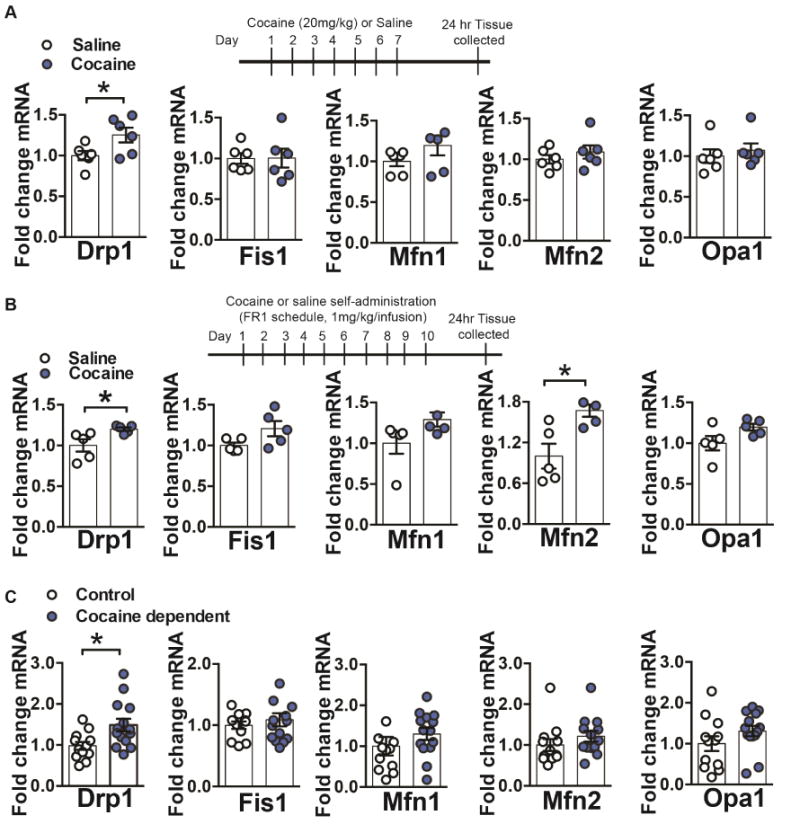
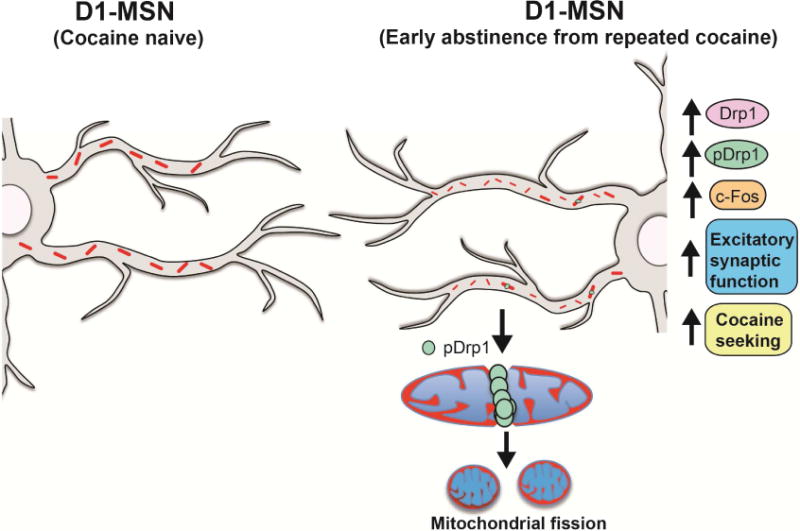
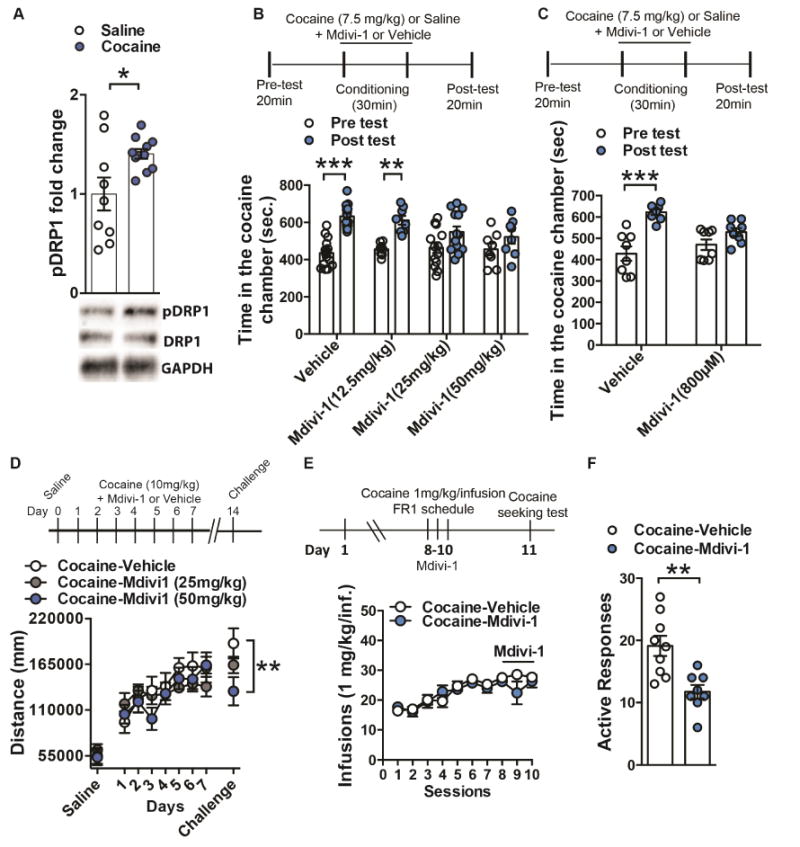
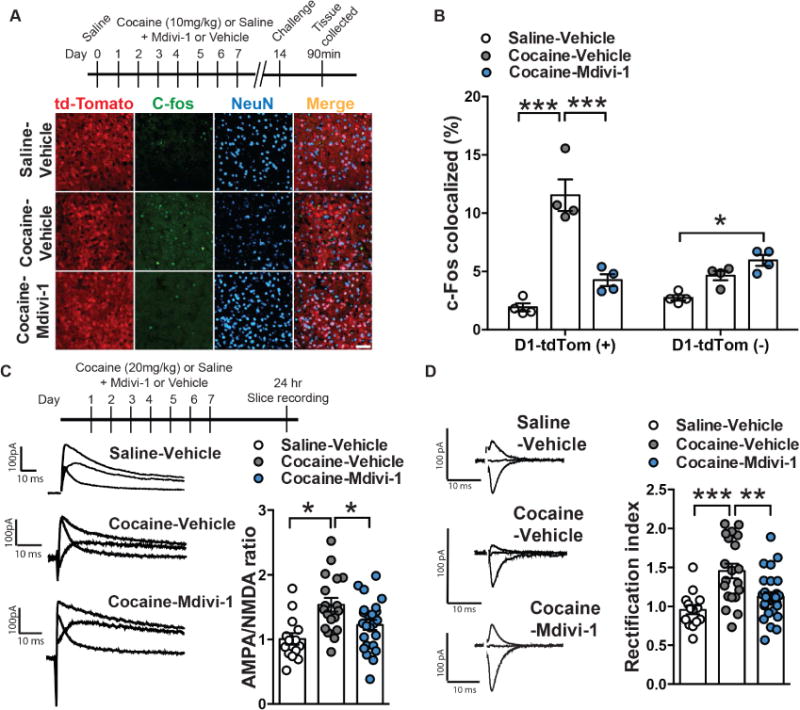
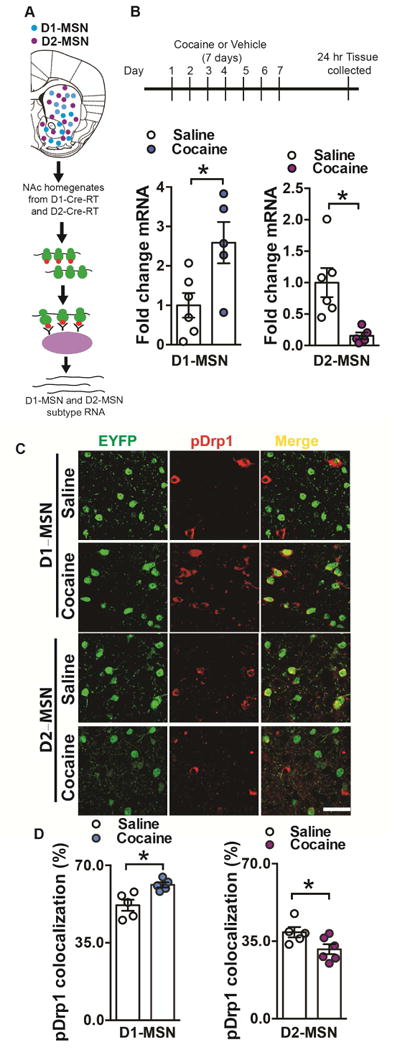
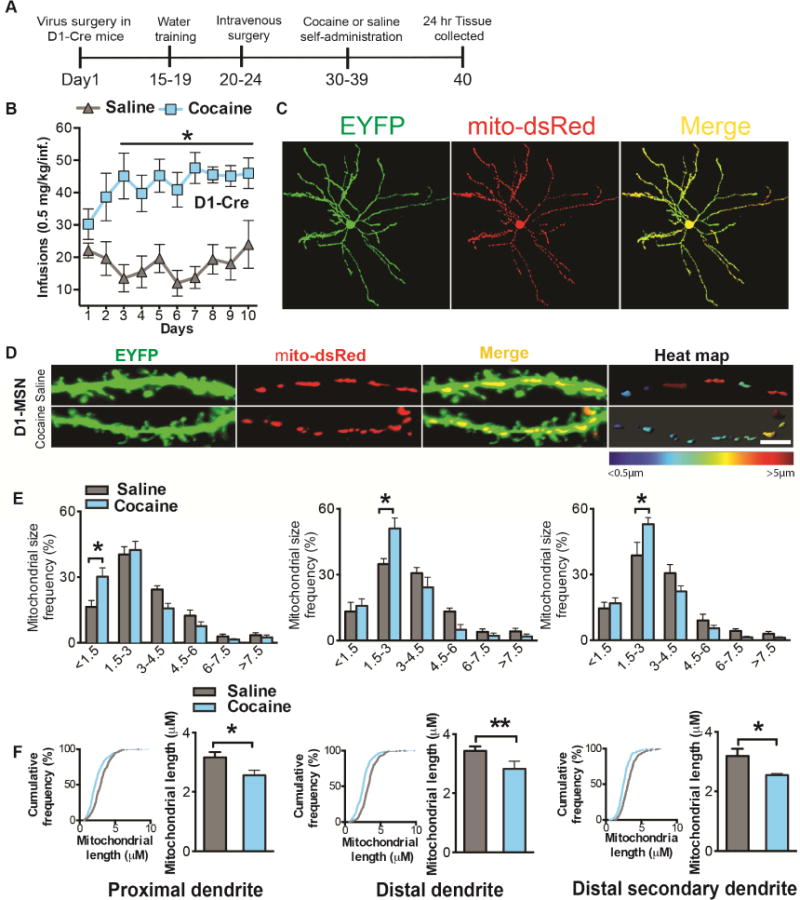
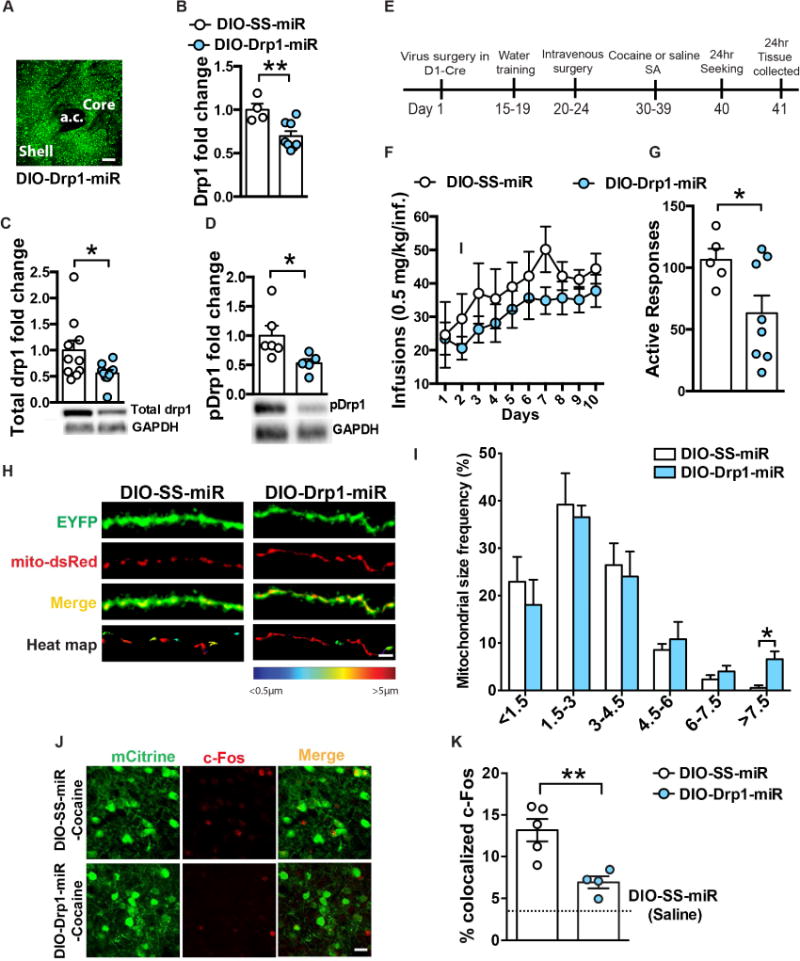
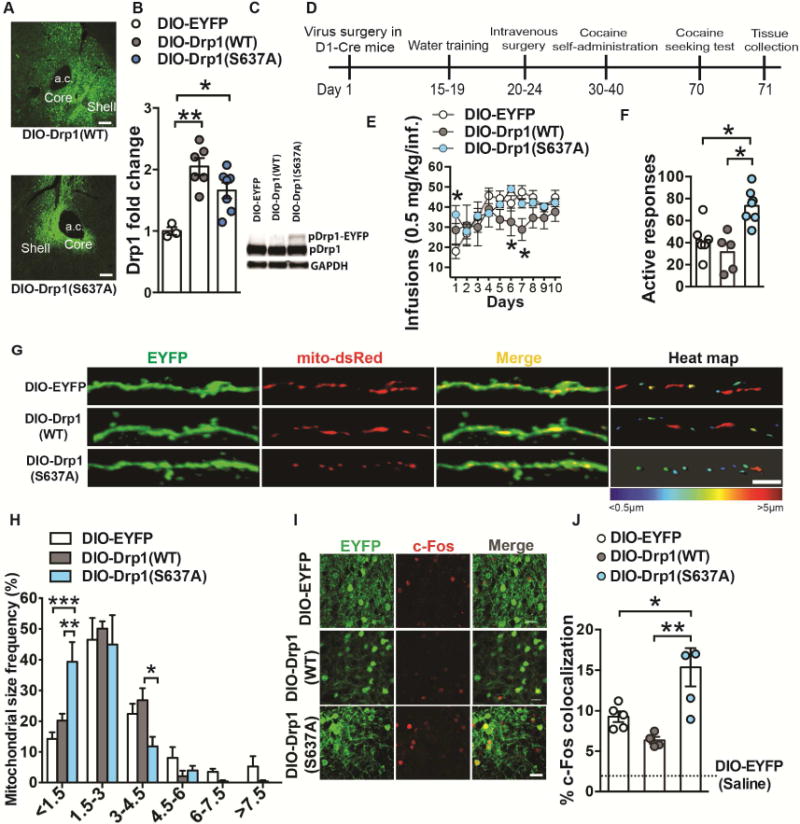
Altered brain energy homeostasis is a key adaptation occurring in the cocaine-addicted brain, but the effect of cocaine on the fundamental source of energy, mitochondria, is unknown. We demonstrate an increase of dynamin-related protein-1 (Drp1), the mitochondrial fission mediator, in nucleus accumbens (NAc) after repeated cocaine exposure and in cocaine-dependent individuals. Mdivi-1, a demonstrated fission inhibitor, blunts cocaine seeking and locomotor sensitization, while blocking c-Fos induction and excitatory input onto dopamine receptor-1 (D1) containing NAc medium spiny neurons (MSNs). Drp1 and fission promoting Drp1 are increased in D1-MSNs, consistent with increased smaller mitochondria in D1-MSN dendrites after repeated cocaine. Knockdown of Drp1 in D1-MSNs blocks drug seeking after cocaine self-administration, while enhancing the fission promoting Drp1 enhances seeking after long-term abstinence from cocaine. We demonstrate a role for altered mitochondrial fission in the NAc, during early cocaine abstinence, suggesting potential therapeutic treatment of disrupting mitochondrial fission in cocaine addiction.
大脑能量代谢稳态的改变是可卡因成瘾大脑中的一种关键适应,但可卡因对能量的基本来源——线粒体的影响尚不清楚。我们发现在反复可卡因暴露后和可卡因依赖个体的伏隔核(NAc)中,与线粒体分裂相关的蛋白 1(Drp1)增加,线粒体分裂的介质。已经证明,分裂抑制剂 Mdivi-1 可以减轻可卡因的觅药行为和运动敏化,同时阻断 c-Fos 的诱导和多巴胺受体 1(D1)含有 NAc 中间神经元(MSNs)上的兴奋性输入。在 D1-MSN 中,Drp1 和促进分裂的 Drp1 增加,与反复可卡因后 D1-MSN 树突中小线粒体增加一致。D1-MSN 中的 Drp1 敲低可阻断可卡因自我给药后的觅药行为,而增强促进分裂的 Drp1 可增强长期戒断可卡因后的觅药行为。我们证明了在早期可卡因戒断期间,NAc 中线粒体分裂的改变在可卡因成瘾中起着作用,这表明在可卡因成瘾中破坏线粒体分裂可能是一种潜在的治疗方法。