Neuroscience Research Center, Faculty of Medicine, Shahid Beheshti University of Medical Sciences, Tehran, Iran.
Faculty of Medicine, Shahid Beheshti University of Medical Sciences, Tehran, Iran.
CNS Neurosci Ther. 2024 Aug;30(8):e14897. doi: 10.1111/cns.14897.
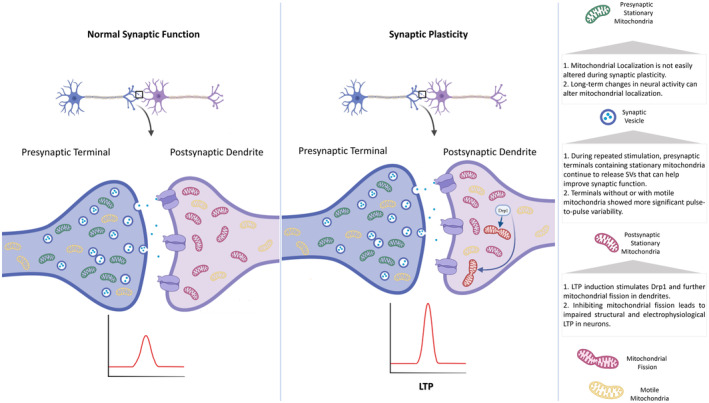
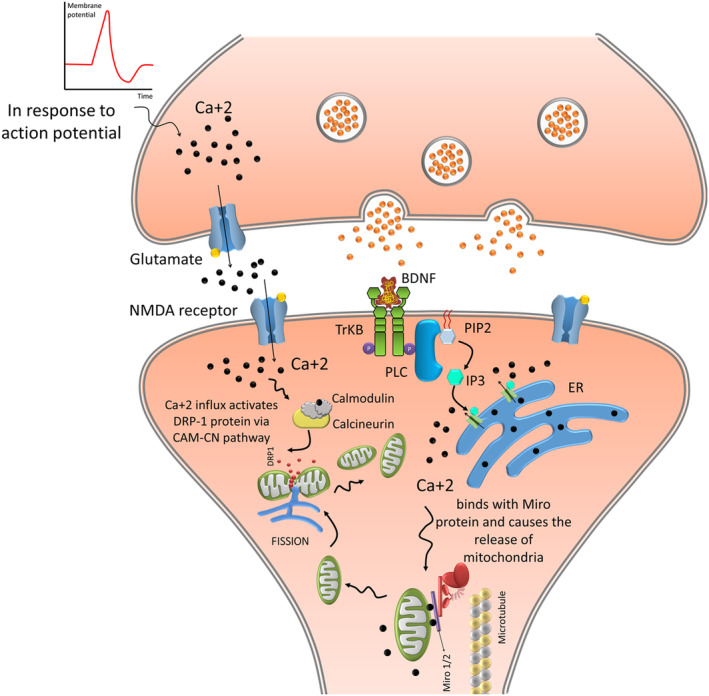
Synaptic plasticity is believed to underlie the cellular and molecular basis of memory formation. Mitochondria are one of the main organelles involved in metabolism and energy maintenance as plastic organelles that change morphologically and functionally in response to cellular needs and regulate synaptic function and plasticity through multiple mechanisms, including ATP generation, calcium homeostasis, and biogenesis. An increased neuronal activity enhances synaptic efficiency, during which mitochondria's spatial distribution and morphology change significantly. These organelles build up in the pre-and postsynaptic zones to produce ATP, which is necessary for several synaptic processes like neurotransmitter release and recycling. Mitochondria also regulate calcium homeostasis by buffering intracellular calcium, which ensures proper synaptic activity. Furthermore, mitochondria in the presynaptic terminal have distinct morphological properties compared to dendritic or postsynaptic mitochondria. This specialization enables precise control of synaptic activity and plasticity. Mitochondrial dysfunction has been linked to synaptic failure in many neurodegenerative disorders, like Alzheimer's disease (AD). In AD, malfunctioning mitochondria cause delays in synaptic vesicle release and recycling, ionic gradient imbalances, and mostly synaptic failure. This review emphasizes mitochondrial plasticity's contribution to synaptic function. It also explores the profound effect of mitochondrial malfunction on neurodegenerative disorders, focusing on AD, and provides an overview of how they sustain cellular health under normal conditions and how their malfunction contributes to neurodegenerative diseases, highlighting their potential as a therapeutic target for such conditions.
突触可塑性被认为是记忆形成的细胞和分子基础。线粒体是参与代谢和能量维持的主要细胞器之一,作为可塑性细胞器,它们可以根据细胞的需求改变形态和功能,并通过多种机制调节突触功能和可塑性,包括 ATP 生成、钙稳态和生物发生。神经元活动的增加增强了突触效率,在此期间,线粒体的空间分布和形态发生了显著变化。这些细胞器在前突触和后突触区聚集以产生 ATP,这对于几种突触过程(如神经递质释放和再循环)是必需的。线粒体还通过缓冲细胞内钙来调节钙稳态,这确保了适当的突触活动。此外,与树突或后突触线粒体相比,突触前末梢中的线粒体具有独特的形态特性。这种特化使突触活动和可塑性的精确控制成为可能。线粒体功能障碍与许多神经退行性疾病(如阿尔茨海默病)中的突触功能障碍有关。在 AD 中,功能失调的线粒体导致突触囊泡释放和再循环延迟、离子梯度失衡以及主要的突触功能障碍。本综述强调了线粒体可塑性对突触功能的贡献。它还探讨了线粒体功能障碍对神经退行性疾病的深远影响,重点关注 AD,并概述了它们在正常条件下维持细胞健康的方式,以及它们的功能障碍如何导致神经退行性疾病,突出了它们作为这些疾病治疗靶点的潜力。