Plant Germplasm and Genomics Center, Germplasm Bank of Wild Species, Kunming Institute of Botany, Chinese Academy of Sciences, Kunming, Yunnan, 650201, China.
Comparative Plant and Fungal Biology, Royal Botanic Gardens, Kew, Richmond, Surrey, TW9 3AB, UK.
BMC Plant Biol. 2017 Dec 21;17(1):260. doi: 10.1186/s12870-017-1199-8.
Heterogeneous rates of molecular evolution are universal across the tree of life, posing challenges for phylogenetic inference. The temperate woody bamboos (tribe Arundinarieae, Poaceae) are noted for their extremely slow molecular evolutionary rates, supposedly caused by their mysterious monocarpic reproduction. However, the correlation between substitution rates and flowering cycles has not been formally tested.
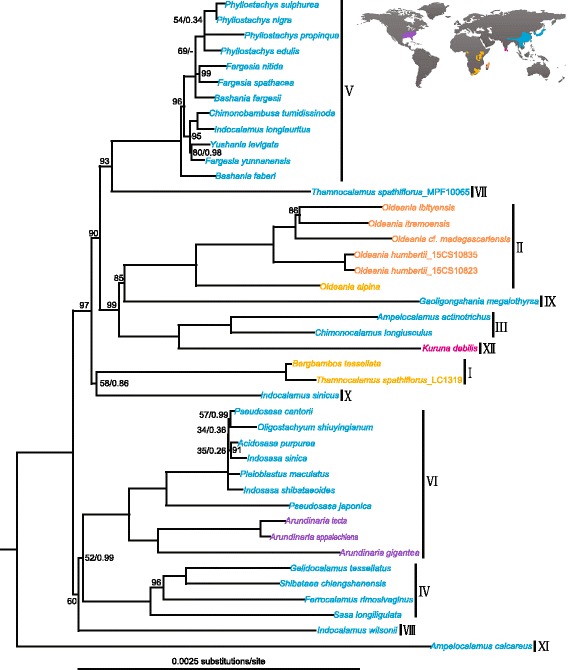
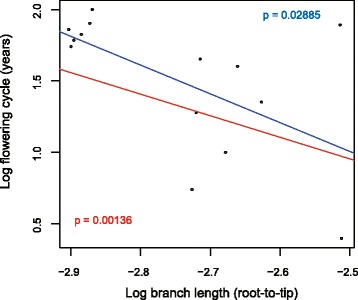
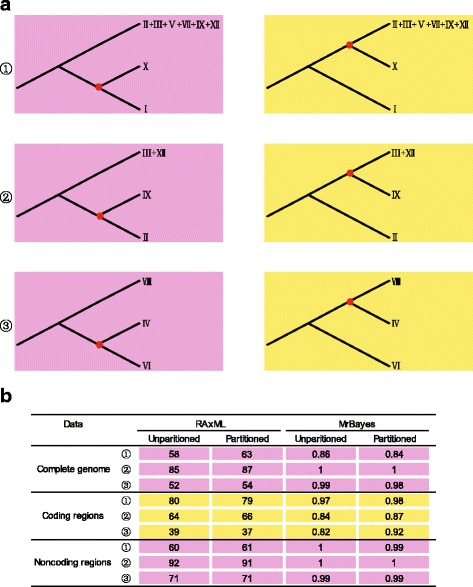
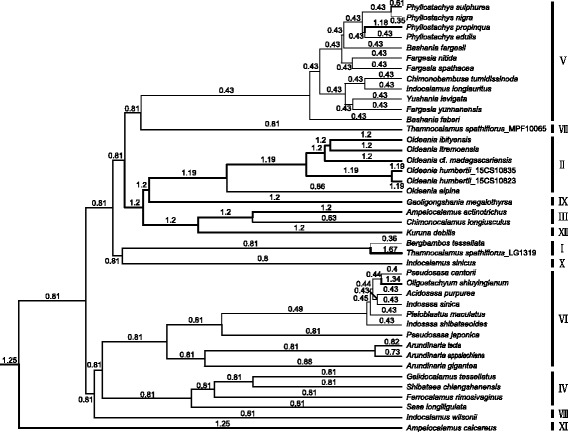
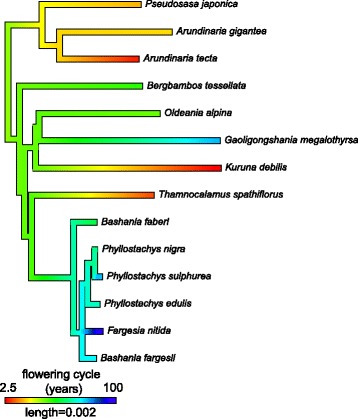
Here we present 15 newly sequenced plastid genomes of temperate woody bamboos, including the first genomes ever sequenced from Madagascar representatives. A data matrix of 46 plastid genomes representing all 12 lineages of Arundinarieae was assembled for phylogenetic and molecular evolutionary analyses. We conducted phylogenetic analyses using different sequences (e.g., coding and noncoding) combined with different data partitioning schemes, revealing conflicting relationships involving internodes among several lineages. A great difference in branch lengths were observed among the major lineages, and topological inconsistency could be attributed to long-branch attraction (LBA). Using clock model-fitting by maximum likelihood and Bayesian approaches, we furthermore demonstrated extensive rate variation among these major lineages. Rate accelerations mainly occurred for the isolated lineages with limited species diversification, totaling 11 rate shifts during the tribe's evolution. Using linear regression analysis, we found a negative correlation between rates of molecular evolution and flowering cycles for Arundinarieae, notwithstanding that the correlation maybe insignificant when taking the phylogenetic structure into account.
Using the temperate woody bamboos as an example, we found further evidence that rate heterogeneity is universal in plants, suggesting that this will pose a challenge for phylogenetic reconstruction of bamboos. The bamboos with longer flowering cycles tend to evolve more slowly than those with shorter flowering cycles, in accordance with a putative generation time effect.
分子进化的异速率在整个生命之树上普遍存在,给系统发育推断带来了挑战。温带木本竹子(竹亚科,禾本科)以其极其缓慢的分子进化速率而闻名,据推测这是由于其神秘的单性生殖繁殖方式所致。然而,替代率与开花周期之间的相关性尚未经过正式测试。
本文报道了 15 种温带木本竹子的叶绿体基因组的新测序结果,其中包括首次从马达加斯加代表中测序得到的基因组。组装了包含 12 个竹亚科谱系的 46 个叶绿体基因组的数据集,用于系统发育和分子进化分析。我们使用不同的序列(例如编码和非编码序列)以及不同的数据分区方案进行了系统发育分析,揭示了涉及几个谱系的节点之间存在冲突的关系。在主要谱系中观察到分支长度存在很大差异,拓扑不一致性可归因于长枝吸引(LBA)。通过最大似然法和贝叶斯方法进行时钟模型拟合,我们进一步证明了这些主要谱系之间存在广泛的速率变化。加速主要发生在物种多样性有限的隔离谱系中,在该部落的进化过程中总共发生了 11 次速率转变。通过线性回归分析,我们发现竹亚科的分子进化率与开花周期之间存在负相关,尽管在考虑系统发育结构时,这种相关性可能并不显著。
以温带木本竹子为例,我们发现了更多证据表明植物中的速率异质性普遍存在,这表明这将对竹子的系统发育重建构成挑战。开花周期较长的竹子比开花周期较短的竹子进化得更慢,这与推测的世代时间效应一致。