He Jing, Jin Yiting, Zhou Mingxia, Li Xiaoyan, Chen Wanna, Wang Yiwei, Gu Siwen, Cao Yun, Chu Chengyu, Liu Xiuping, Zou Qiang
Department of General Surgery, Huashan Hospital, Fudan University, Shanghai, China.
Department of Gastroenterology, Xinhua Hospital, School of Medicine, Shanghai Jiao Tong University, Shanghai, China.
Cancer Sci. 2018 Mar;109(3):642-655. doi: 10.1111/cas.13478. Epub 2018 Feb 1.
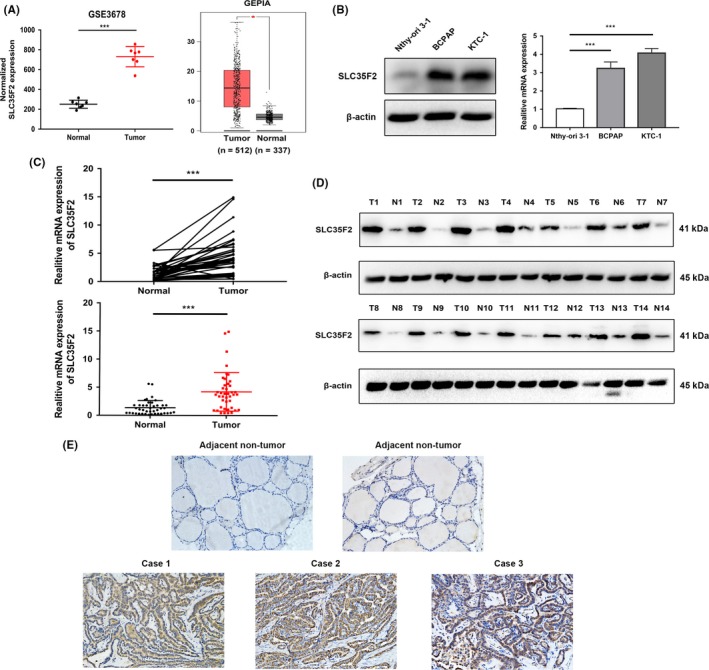
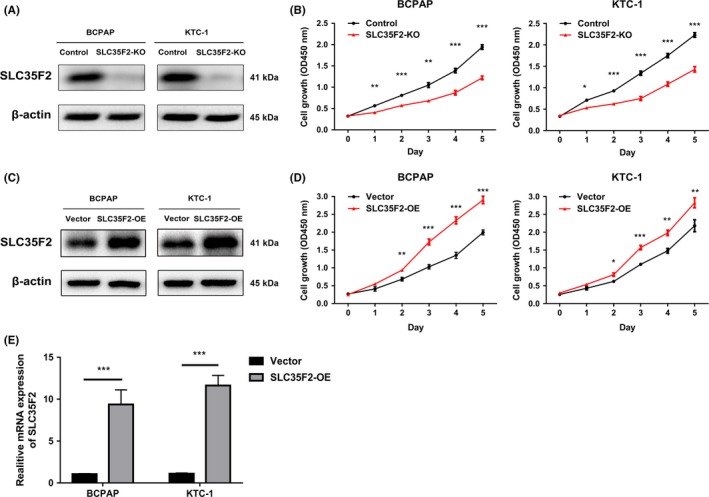
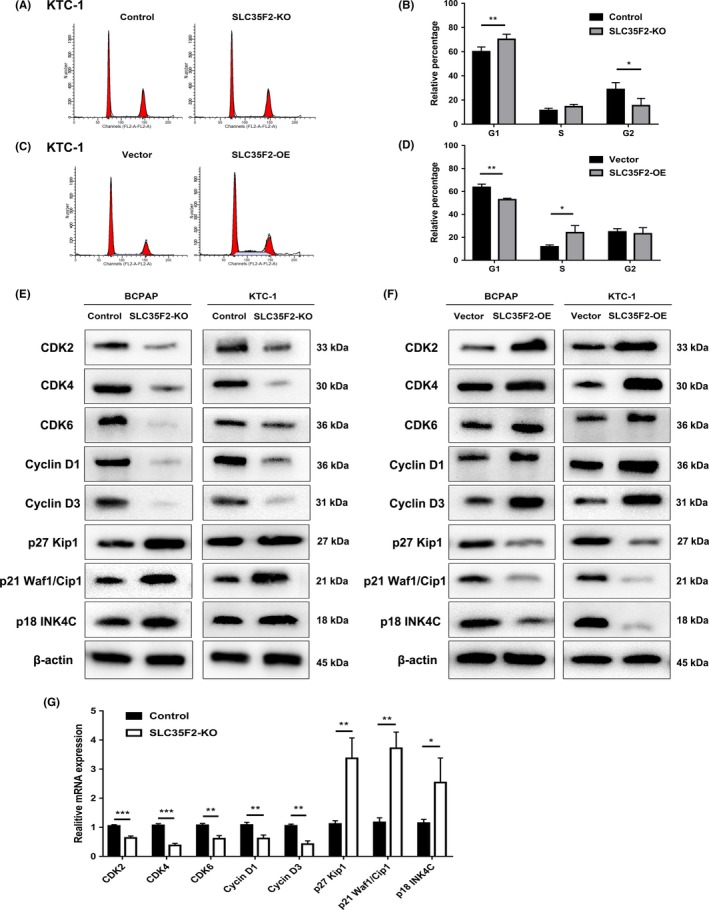
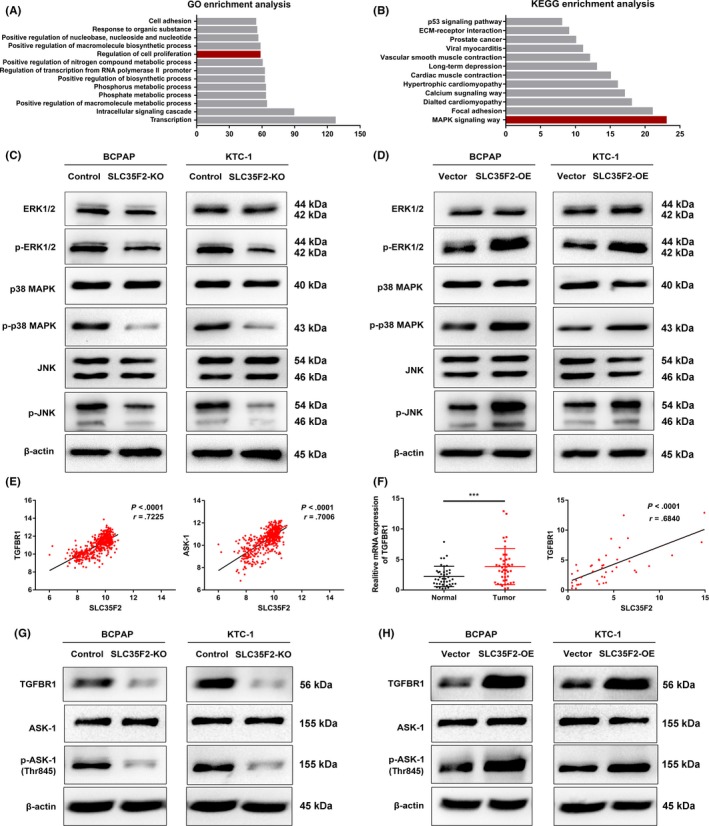
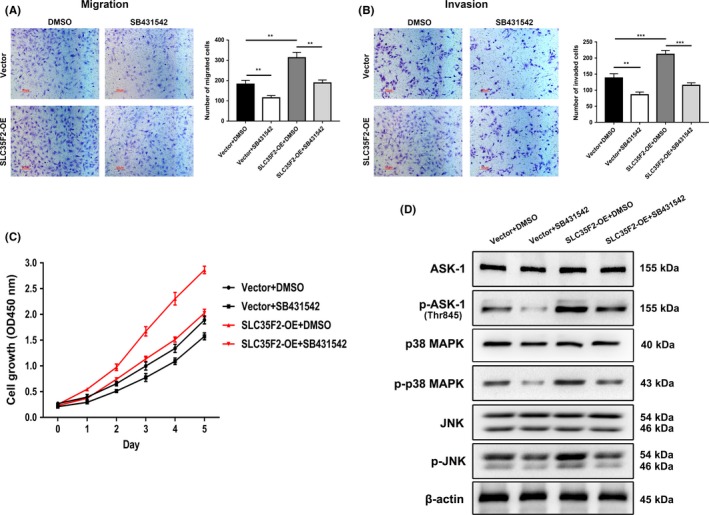
Solute carrier family members control essential physiological functions and are tightly linked to human diseases. Solute carrier family 35 member F2 (SLC35F2) is aberrantly activated in several malignancies. However, the biological function and molecular mechanism of SLC35F2 in papillary thyroid carcinoma (PTC) are yet to be fully explored. Here, we showed that SLC35F2 was prominently upregulated in PTC tissues at both protein and mRNA expression level compared with matched adjacent normal tissues. Besides, the high expression of SLC35F2 was significantly associated with lymph node metastasis in patients with PTC. CRISPR/Cas9-mediated knockout of SLC35F2 attenuated the tumorigenic properties of PTC, including cell proliferation, migration and invasion and induced G1 phase arrest. In contrast, ectopic expression of SLC35F2 brought about aggressive malignant phenotypes of PTC cells. Moreover, SLC35F2 expedited the proliferation and migration of PTC cells by targeting transforming growth factor-β type I receptor (TGFBR1) and phosphorylation of apoptosis signal-regulating kinase 1 (p-ASK-1), thereby activating the mitogen-activated protein kinase signaling pathway. The malignant behaviors induced by overexpression of SLC35F2 could be abrogated by silencing of TGFBR1 using a specific inhibitor. We conducted the first study on SLC35F2 in thyroid cancer with the aim of elucidating the functional significance and molecular mechanism of SLC35F2. Our findings suggest that SLC35F2 exerts its oncogenic effect on PTC progression through the mitogen-activated protein kinase pathway, with dependence on activation of TGFBR-1 and apoptosis signal-regulating kinase 1.
溶质载体家族成员控制着基本的生理功能,并且与人类疾病紧密相关。溶质载体家族35成员F2(SLC35F2)在多种恶性肿瘤中异常激活。然而,SLC35F2在甲状腺乳头状癌(PTC)中的生物学功能和分子机制尚未得到充分探索。在此,我们发现与配对的相邻正常组织相比,SLC35F2在PTC组织中的蛋白质和mRNA表达水平均显著上调。此外,SLC35F2的高表达与PTC患者的淋巴结转移显著相关。CRISPR/Cas9介导的SLC35F2基因敲除减弱了PTC的致瘤特性,包括细胞增殖、迁移和侵袭,并诱导G1期阻滞。相反,SLC35F2的异位表达导致PTC细胞出现侵袭性恶性表型。此外,SLC35F2通过靶向转化生长因子-β I型受体(TGFBR1)和凋亡信号调节激酶1的磷酸化(p-ASK-1)来加速PTC细胞的增殖和迁移,从而激活丝裂原活化蛋白激酶信号通路。使用特异性抑制剂沉默TGFBR1可消除SLC35F2过表达诱导的恶性行为。我们首次对甲状腺癌中的SLC35F2进行了研究,旨在阐明SLC35F2的功能意义和分子机制。我们的研究结果表明,SLC35F2通过丝裂原活化蛋白激酶途径对PTC进展发挥致癌作用,依赖于TGFBR-1和凋亡信号调节激酶1的激活。