Slack Cathy
School of Life and Health Sciences, Aston University, Aston Triangle, Birmingham, UK.
Nutr Healthy Aging. 2017 Dec 7;4(3):195-205. doi: 10.3233/NHA-160021.
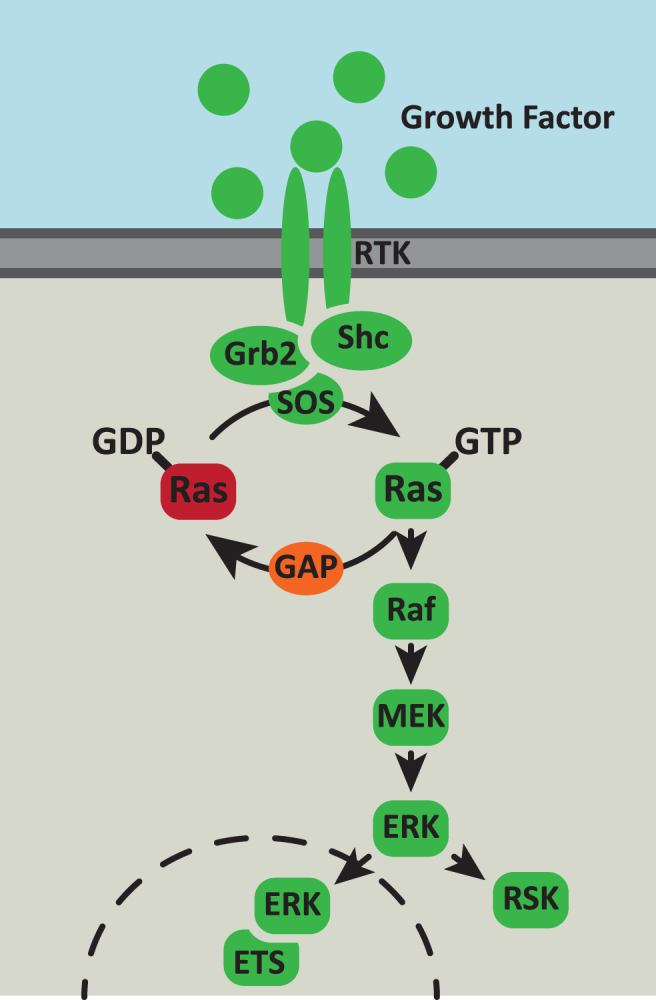
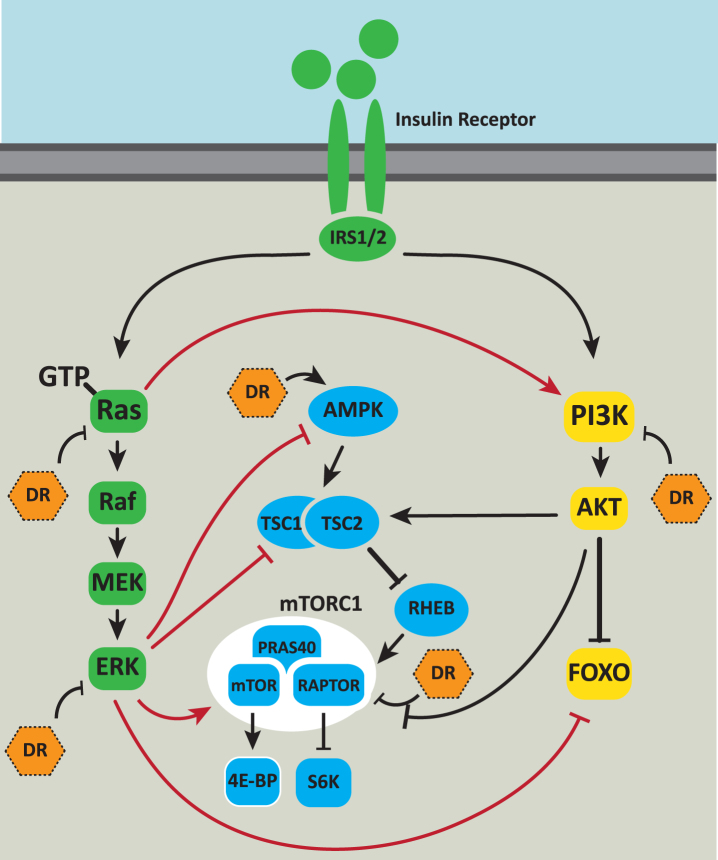
Aberrant signal transduction downstream of the Ras GTPase has a well-established role in tumorigenesis. Mutations that result in hyperactivation of Ras are responsible for a third of all human cancers. Hence, small molecule inhibitors of the Ras signal transduction cascade have been under intense focus as potential cancer treatments. In both invertebrate and mammalian models, emerging evidence has also implicated components of the Ras signaling pathway in aging and metabolic regulation. Here, I review the current evidence for Ras signaling in these newly discovered roles highlighting the interactions between the Ras pathway and other longevity assurance mechanisms. Defining the role of Ras signaling in maintaining age-related health may have important implications for the development of interventions that could not only increase lifespan but also delay the onset and/or progression of age-related functional decline.
Ras GTP酶下游的异常信号转导在肿瘤发生中具有公认的作用。导致Ras过度激活的突变占所有人类癌症的三分之一。因此,作为潜在的癌症治疗方法,Ras信号转导级联的小分子抑制剂一直备受关注。在无脊椎动物和哺乳动物模型中,新出现的证据也表明Ras信号通路的成分与衰老和代谢调节有关。在这里,我回顾了Ras信号在这些新发现作用中的当前证据,突出了Ras通路与其他长寿保障机制之间的相互作用。明确Ras信号在维持与年龄相关健康方面的作用,可能对开发不仅可以延长寿命,还能延缓与年龄相关功能衰退的发生和/或进展的干预措施具有重要意义。