Snetselaar Reinier, van Batenburg Aernoud A, van Oosterhout Matthijs F M, Kazemier Karin M, Roothaan Suzan M, Peeters Ton, van der Vis Joanne J, Goldschmeding Roel, Grutters Jan C, van Moorsel Coline H M
Department of Pulmonology, St Antonius ILD Center of Excellence, St Antonius Hospital, Nieuwegein, the Netherlands.
Department of Pathology, St Antonius ILD Center of Excellence, St Antonius Hospital, Nieuwegein, the Netherlands.
PLoS One. 2017 Dec 27;12(12):e0189467. doi: 10.1371/journal.pone.0189467. eCollection 2017.
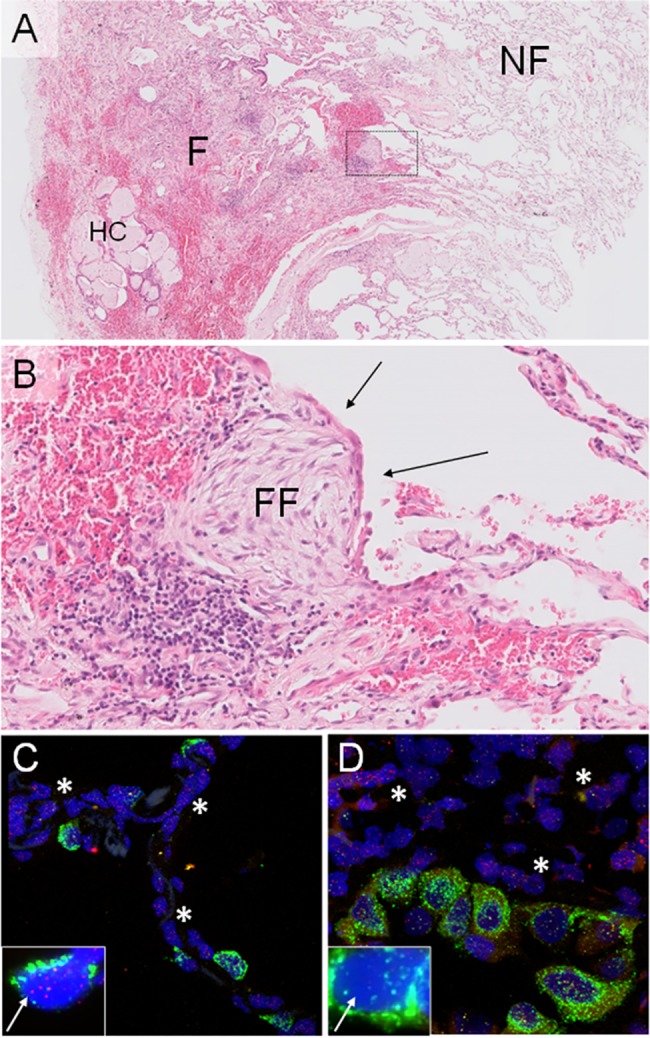
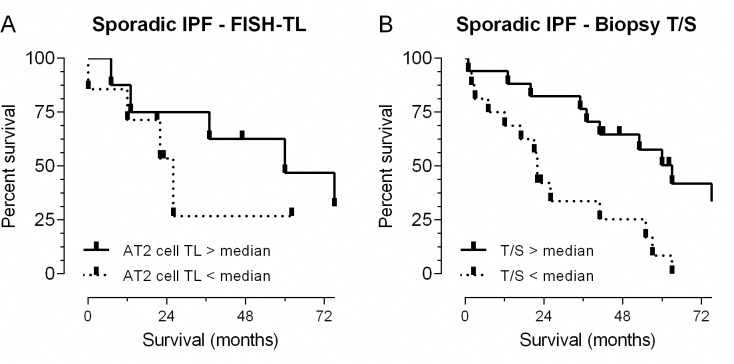
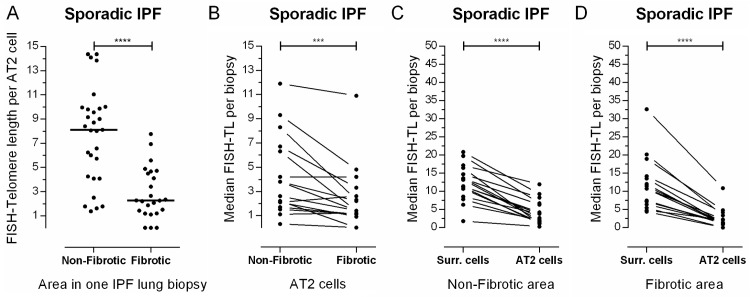
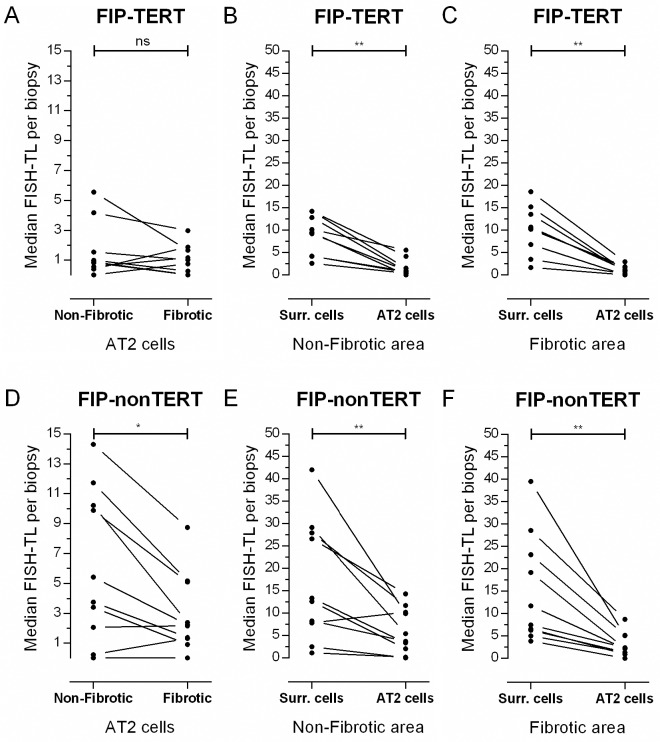
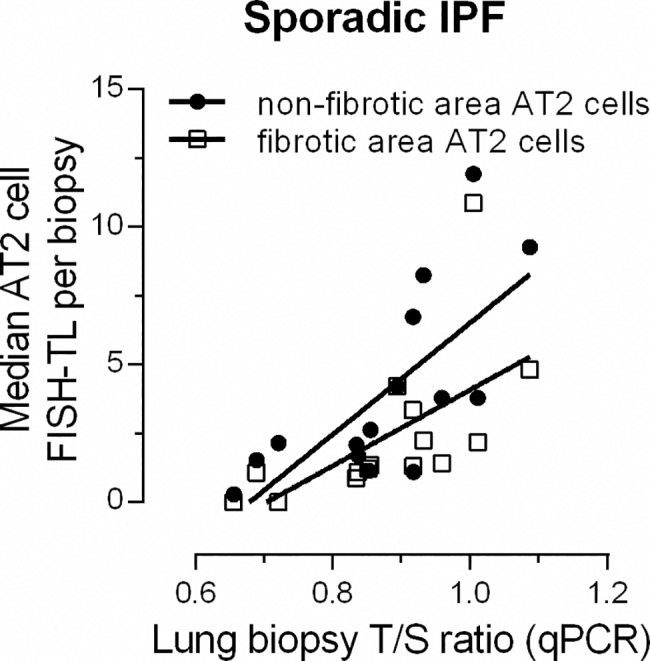
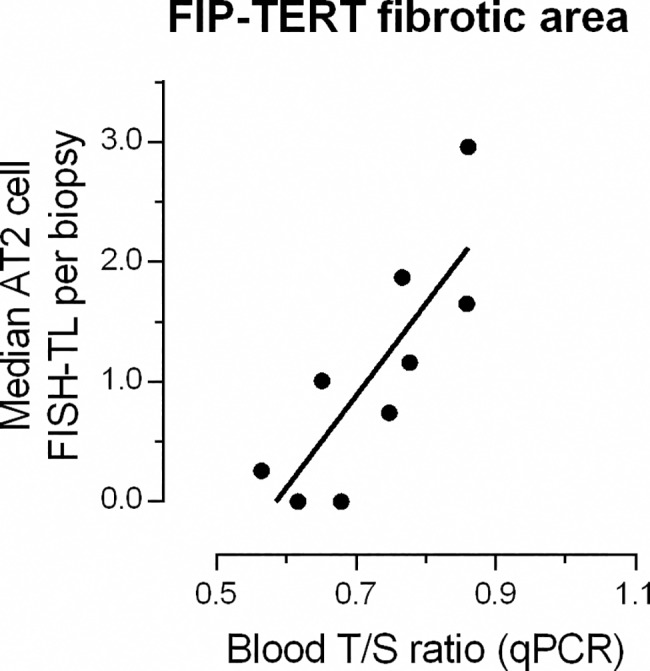
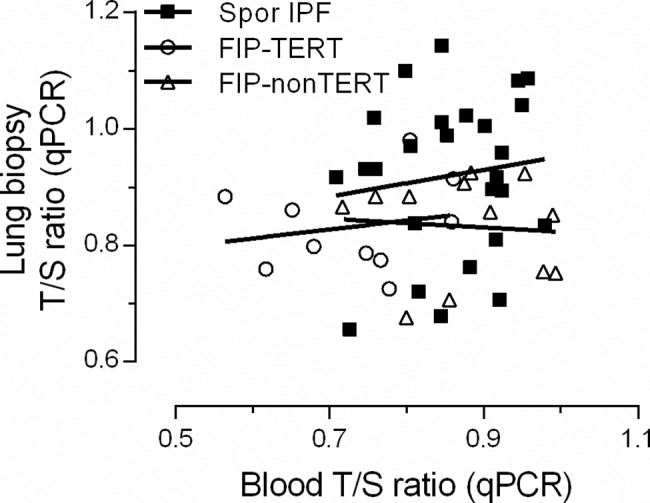
Telomere maintenance dysfunction has been implicated in the pathogenesis of Idiopathic Pulmonary Fibrosis (IPF). However, the mechanism of how telomere length is related to fibrosis in the lungs is unknown. Surgical lung biopsies of IPF patients typically show a heterogeneous pattern of non-fibrotic and fibrotic areas. Therefore, telomere length (TL) in both lung areas of patients with IPF and familial interstitial pneumonia was compared, specifically in alveolar type 2 (AT2) cells. Fluorescent in situ hybridization was used to determine TL in non-fibrotic and fibrotic areas of 35 subjects. Monochrome multiplex quantitative polymerase chain reaction (MMqPCR) was used for 51 whole lung biopsies and blood TL measurements. For sporadic IPF subjects, AT2 cell TL in non-fibrotic areas was 56% longer than in fibrotic areas. No such difference was observed in the surrounding lung cells. In subjects carrying a telomerase reverse transcriptase (TERT) mutation, AT2 cell TL was significantly shorter than in sporadic subjects. However, no difference in surrounding cell TL was observed between these subject groups. Finally, using biopsy MMqPCR TL measurements, it was determined that IPF subjects with shortest lung TL had a significantly worse survival than patients with long TL. This study shows that shortening of telomeres critically affects AT2 cells in fibrotic areas, implying TL as a cause of fibrogenesis. Furthermore, short lung telomere length is associated with decreased survival.
端粒维持功能障碍与特发性肺纤维化(IPF)的发病机制有关。然而,端粒长度与肺纤维化之间的关系机制尚不清楚。IPF患者的外科肺活检通常显示非纤维化和纤维化区域的异质性模式。因此,比较了IPF患者和家族性间质性肺炎患者两个肺区域的端粒长度(TL),特别是在2型肺泡(AT2)细胞中。采用荧光原位杂交技术测定35例受试者非纤维化和纤维化区域的TL。采用单色多重定量聚合酶链反应(MMqPCR)对51例全肺活检组织和血液TL进行检测。对于散发性IPF受试者,非纤维化区域的AT2细胞TL比纤维化区域长56%。在周围肺细胞中未观察到这种差异。在携带端粒酶逆转录酶(TERT)突变的受试者中,AT2细胞TL明显短于散发性受试者。然而,在这些受试者组之间,周围细胞TL没有差异。最后,通过活检MMqPCR TL测量,确定肺TL最短的IPF受试者的生存率明显低于TL长的患者。这项研究表明,端粒缩短严重影响纤维化区域的AT2细胞,这意味着TL是纤维化形成的一个原因。此外,肺端粒长度短与生存率降低有关。